



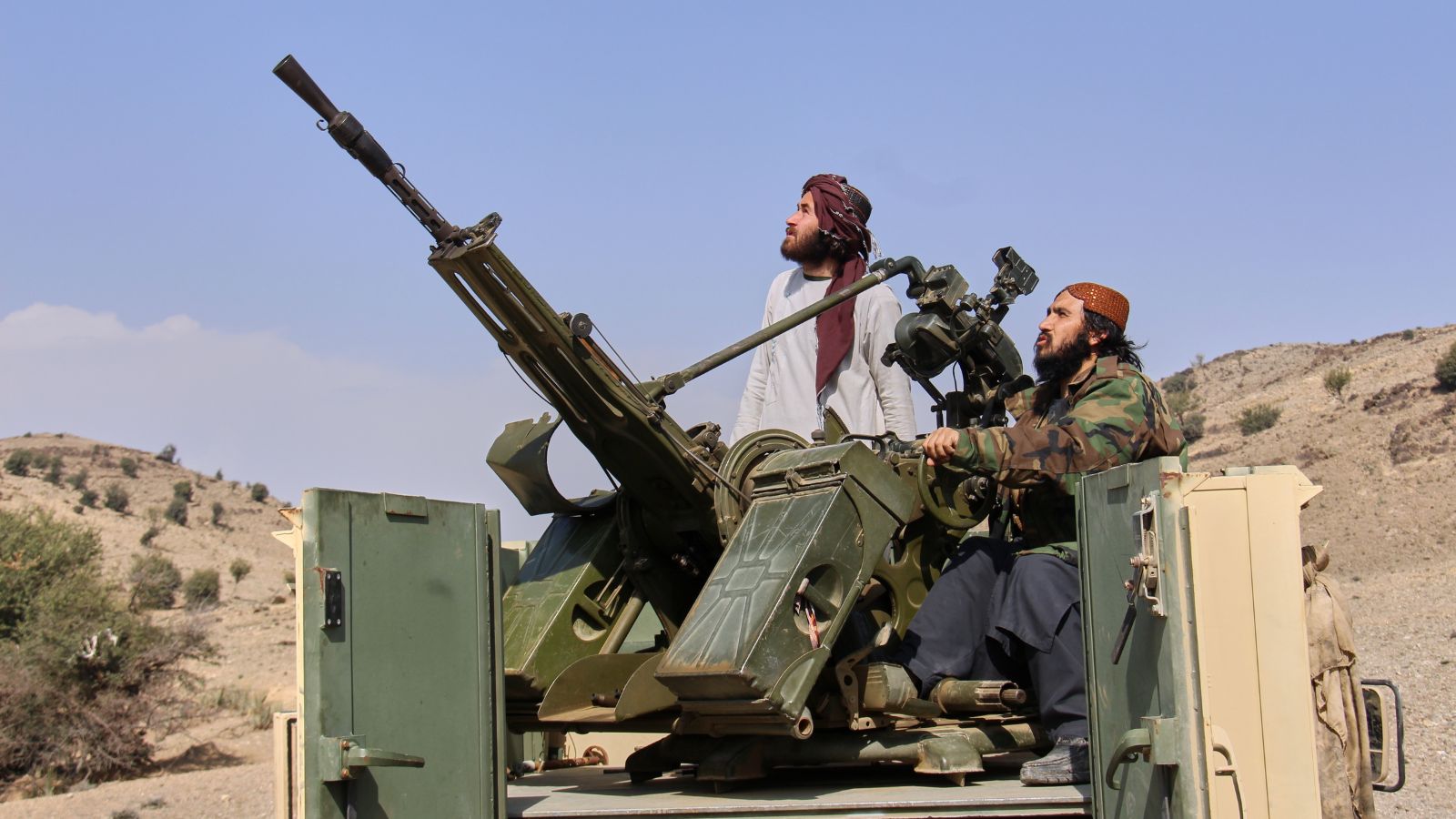
On February 27, the Pakistan Air Force (PAF) bombed Kabul, Paktia and Kandahar in Afghanistan just hours after a cross-border attack by Afghan forces. Pakistan’s Defence Minister Khawaja Asif then declared that although Islamabad “made every effort, both directly and through friendly countries, to keep the situation stable,” “open war” now exists between Pakistan and Afghanistan’s Taliban government. Russia and Iran called upon both sides to halt the war and offered mediation. India condemned the PAF’s bombing.
Afghanistan claimed its February 26 cross-border attack was retaliation for Pakistan’s Operation Ghazab-lil-Haq (which reportedly killed 133 Afghan Taliban fighters and injured over 200) — which Pakistan averred was “retaliatory”. The reality is that there have been 70 to 80 tit-for-tat attacks by both sides ever since the US-led forces withdrew from Afghanistan in 2021, with tensions peaking after the deadly clash in October 2025.

The fighting between these two Muslim nations, both largely Sunni, surprises many who believe that both enjoyed a close, symbiotic relationship. The reality is that there’s no love lost between the two, with the roots of a festering animosity embedded in the region’s demographics and the Durand Line.
Mountains divide communities, and in Afghanistan, this division is aggravated even today by the lack of a robust inland transportation system. Hence, Afghanistan, rarely integrated as a complete nation; it has Tajiks with ties to Tajikistan, Uzbeks with ties to Uzbekistan, Pashtuns astride the Durand Line, pro-Iranian Hazaras, etc.
Pakistan too is a fractious state comprising Punjab, Sindh, Balochistan, Khyber Pakhtunkhwa Province (KPP; formerly NWFP), and Federally Administered Tribal Areas (FATA). Some (like the Baloch and the Pashtuns) continue to harbour autonomous tendencies. This is evident from the fact that even after 78 years of independent existence, Pakistan has not been able to consolidate itself around a singular identity.
Yet, in both Afghanistan and Pakistan, Pashtuns matter. In Afghanistan, at over 42 per cent of the population, Pashtuns are the largest ethnic group; next are Tajiks at 27 per cent, followed by Uzbeks at 9 per cent and Hazaras also at 9 per cent. In Pakistan, they are the second-largest ethnic group, concentrated mostly in Pakistan’s tribal areas. The Taliban is predominantly a Pashtun movement. However, neither the Pashtuns nor the Taliban are monolithic.
Approximately two-thirds of Afghan Pashtuns belong to the Ghilzai and Durrani tribal confederations. Historically, the Durranis have provided political leaders, and the Ghilzais, the fighters. Almost all of Afghanistan’s rulers have been from the Durrani tribe. However, post-9/11 Afghanistan saw strange groupings: Durrani fighters under a Ghilzai (Mullah Omar), fighting against the Afghan government led by a Durrani (former president Hamid Karzai), whose military had a sizable Tajik component. In Pakistan, Pashtuns in the Army and the Frontier Corps participated in operations against the Taliban.
Before 1947, the Pashtuns didn’t want to join Pakistan. Abdul Ghaffar (Frontier Gandhi), a Pashtun, founded the “Khudai Khidmatgar” movement for an independent state of Pashtunistan across the Durand Line. Their struggle failed, and Partition split the Pashtuns astride the Durand Line between Afghanistan and the Provincially Administered Tribal Areas (PATA). Since then, despite ethnic, linguistic and religious commonalities, Pakistan-Afghanistan relations have been characterised by mutual mistrust and animosity.
Post-1947, Afghanistan continued its efforts to integrate the Pashtun areas of Pakistan. After Pakistan allied with the USA during the Cold War, Afghanistan and the USSR fuelled the Pashtunistan movement. Pakistan then began nurturing Pashtuns as militants to divert their attention from ethnonationalism. After the USSR invaded Afghanistan in December 1979, the CIA, along with the Saudi General Intelligence Directorate and China, enrolled the Pashtuns in large numbers as “mujahideen” and bankrolled the war in Afghanistan through Pakistan.
The Soviets withdrew in 1989, and after President Najibullah’s regime fell in 1992, the seven “mujahideen” parties took over Afghanistan. Many Afghan Islamic clerics/students/erstwhile mujahideen, mostly Pashtuns, saw this “mujahideen” government as fractured, weak, corrupt, and anti-Pashtun. So, in 1993-94, they formed the Taliban under Mullah Muhammad Omar. In the interim, Pakistan began sponsoring terrorism in India.
Pakistan, looking for access to Central Asia and to stymie Indian influence in Afghanistan, actively supported the Taliban, who took over Afghanistan in 1996. Shunned by the international community, the Taliban played host to Al-Qaeda, which conducted the 9/11 attacks. The USA’s post-9/11 military action ended the Taliban’s rule, and its commanders and cadres sought safe haven in Pakistan’s tribal areas.
Although the Quetta Shura under Mullah Omar provided the nucleus for running the Taliban till his death in 2013, Pakistan was able to exercise control over the Afghan Taliban because the latter and their logistics were at the mercy of Pakistan.
After the US-led forces withdrew from Afghanistan in 2021, the Taliban returned, and the latent hatred and mistrust of Pakistan resurfaced. Pakistan has been accusing Afghanistan of failing to curb militant groups conducting attacks within Pakistan, which the Taliban government denies. The situations in Afghanistan and Kashmir are also linked. Whenever Afghanistan is in turmoil, Pakistan foments trouble in Kashmir, and when relations with Kabul turn nasty, Pakistan seeks to improve ties with India. We need to watch out for that.
The writer, a retired Army officer, was the principal director in the National Security Council Secretariat

