



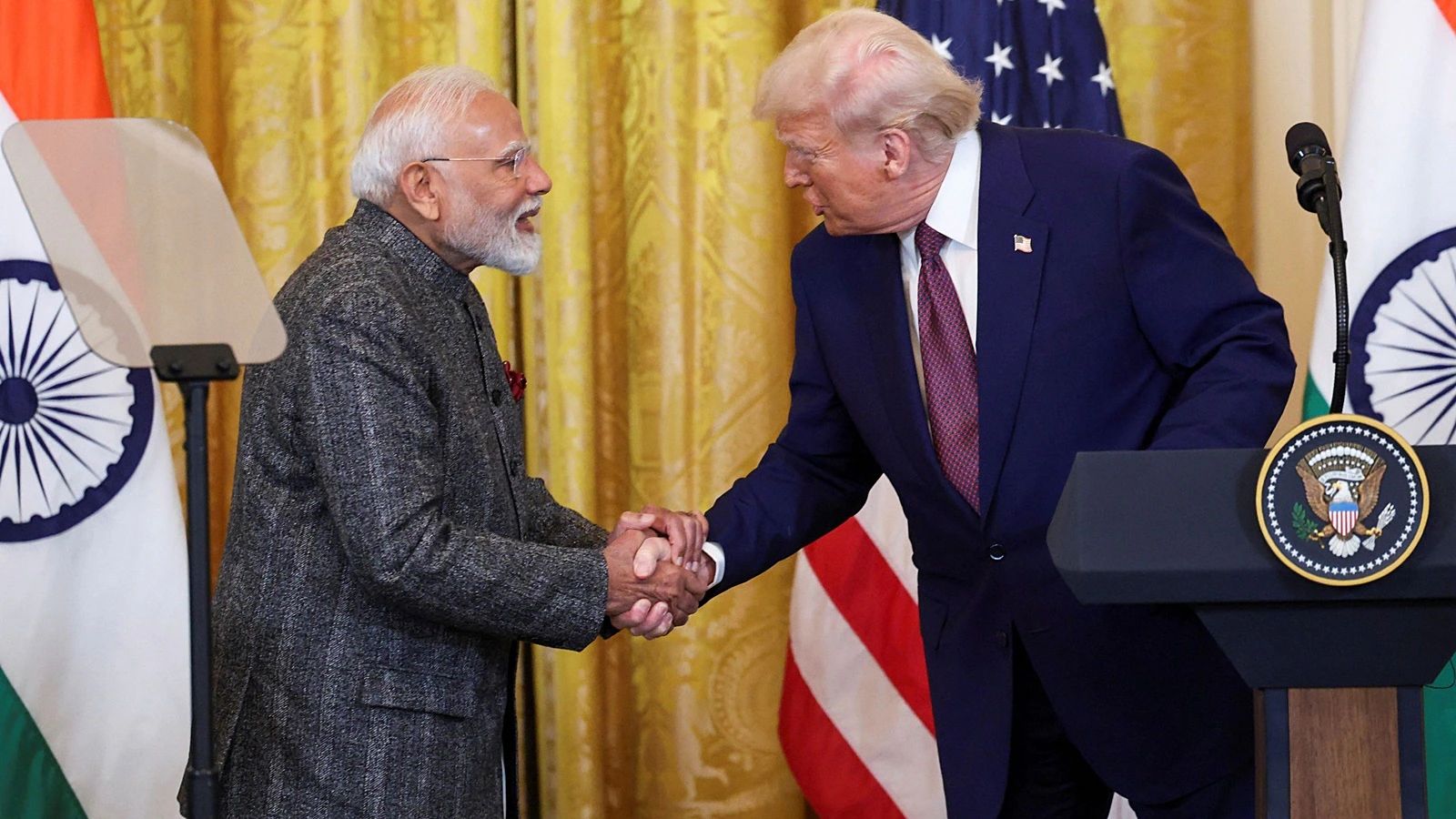
US Under Secretary of War for Policy Elbridge Colby’s recent remarks in New Delhi clarify the evolving character of India-US relations. The framework on offer is not rooted in legacy ideas of partnership, but in a pragmatic alignment of interests shaped by contemporary geopolitical and economic priorities. For India, this moment calls for shedding inherited assumptions and adjusting to a more explicit and demanding American doctrine.

The current trajectory reflects a coherent approach. Defence cooperation continues to expand through joint exercises, logistics arrangements, and co-production initiatives. At the same time, economic engagement is marked by firm negotiation on market access, tariffs, and regulatory practices. These are not separate strands. They are components of a single policy that links strategic cooperation with economic outcomes. The US is aligning its instruments of power in a coordinated manner, ensuring that gains in one domain reinforce leverage in another.
The US seeks to strengthen India’s capacity in the Indo-Pacific in ways that contribute to a stable balance of power. In parallel, it expects economic engagement to produce concrete gains. This reflects a broader shift in American policy toward interest-based alignment, where cooperation across sectors is calibrated to deliver measurable results. Partnerships are assessed not by intent or rhetoric, but by their ability to generate outcomes that serve clearly defined national interests.
For India, this approach presents both opportunity and responsibility. Closer defence ties can enhance deterrence and accelerate capability development, particularly if accompanied by meaningful technology access and co-production. Sustained engagement with advanced defence ecosystems can also contribute to domestic industrial growth, provided it is structured to build indigenous capacity rather than deepen dependence. Economic engagement with the US offers scale, capital, and innovation, but requires careful negotiation to ensure domestic priorities are protected and policy space is not unduly constrained.
India retains agency in navigating this landscape. Its strategy of engaging multiple partners remains relevant, but it must now operate within a framework where expectations are more clearly defined and outcomes more closely scrutinised. This requires disciplined bargaining, institutional coordination, and clarity about national objectives. It also requires a willingness to make trade-offs explicit, rather than subsuming them under broad narratives of strategic partnership.
The need to shed earlier shibboleths is particularly important. Long-standing assumptions about non-alignment, moral positioning, and broad-based convergence with major powers are less useful in a context where partners prioritise specific outcomes over general alignment. Adjusting to this reality does not imply abandoning autonomy. It requires redefining autonomy in operational terms, as the ability to choose, negotiate, and recalibrate engagement across domains without compromising core interests.
Politically, this shift creates new pressures. Prime Minister Narendra Modi has emphasised India’s strategic autonomy and elevated global role. As engagement with the US deepens under more explicit and transactional terms, there is potential for domestic backlash unless the resulting policies are made politically and economically palatable. Sections of industry, agriculture, and strategic communities may respond adversely to perceived concessions on market access, regulatory change, or defence procurement. Managing these responses will require careful sequencing of policy decisions, transparent communication, and demonstrable gains that justify the terms of engagement.
The political challenge is compounded by earlier projections of expansive agency. Assertions about India’s ability to shape outcomes independently have raised expectations that may not fully align with the constraints of a more interest-driven external environment. Reconciling these expectations with the practical compromises inherent in closer alignment will be essential. Failure to do so could expose gaps between narrative and policy, creating openings for criticism and resistance.
Colby’s articulation points to a wider transformation in US strategy. The emphasis is on alignment without formal alliance structures, where partners contribute to shared objectives while retaining flexibility. This model places a premium on capability, consistency, and delivery. It also implies that cooperation will be accompanied by pressure when interests diverge, making the relationship more demanding but also more transparent.
For India, the priority is to adapt effectively to this emerging framework. That involves moving beyond older conceptual frameworks, negotiating from a position of clarity, and ensuring that external partnerships reinforce long-term national strength. It also requires building domestic consensus around the terms of engagement, so that external alignment is supported by internal resilience.
The relationship with the US can serve India’s interests, provided it is managed with precision and a clear sense of both limits and opportunities. Adapting to the new doctrine will not diminish India’s agency. It will test how effectively that agency is exercised.
The writer is a research fellow at the Takshashila Institute

