



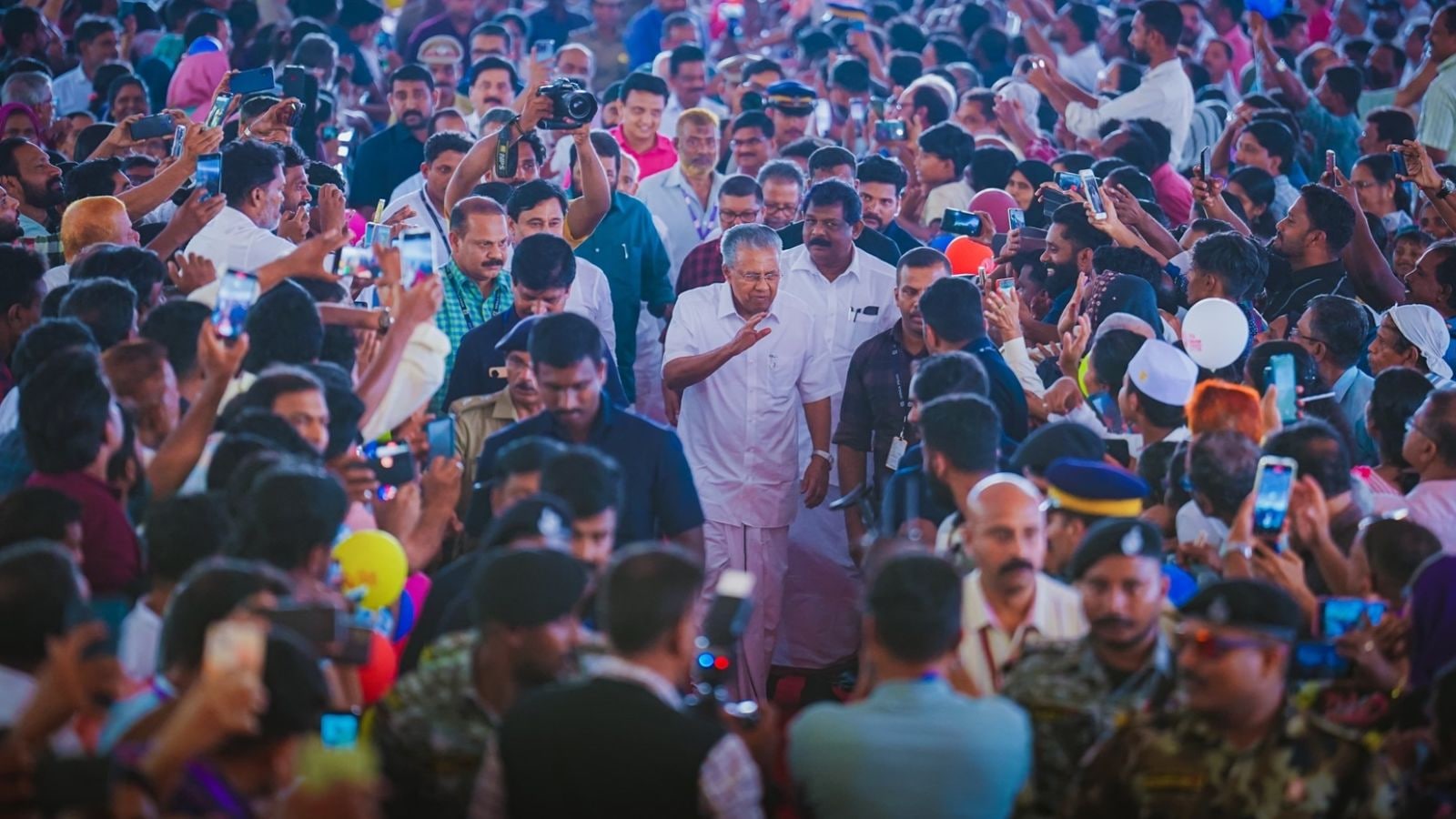
Kerala goes to the polls on April 9. From a national point of view, the results on May 4 may appear to be of limited significance, as two competing fronts — the CPI(M)-led LDF and the Congress-led UDF — are both part of the INDIA bloc. The BJP, meanwhile, appears unlikely to secure a significant number of seats, let alone form the government. However, at the level of Kerala politics, this election is highly consequential. The Left is keen to retain power in what remains the only communist-led government in the country, while Congress and its allies seek to end an unusually prolonged period out of office. Even though it is not a contender for government formation, the BJP’s performance will tell us more about the future of Kerala politics, especially the durability of its bipolar competition.

Future of Bipolar Politics
Kerala is known for a remarkably durable bipolar competition between two coalitions, the LDF and the UDF, which have alternated in state power over the past five decades. The LDF, primarily comprising communist and socialist parties along with factions of the Kerala Congress, has articulated a politics of class alongside a relatively firm commitment to secularism. The UDF, led by Congress and anchored in an alliance of upper-caste Hindus, Christians, and Muslims through the IUML, has often relied on more communitarian political articulations. The roots of this bipolarity can be traced back to the Liberation Struggle against the first communist ministry, when radical socialist measures, particularly land reforms, led to a consolidated opposition of landed and communitarian elites behind Congress. While these coalitions have become increasingly porous, the system has endured, anchored in a broad commitment to secular politics that has kept the BJP outside this electoral dynamic.
However, the 2021 elections disrupted this entrenched pattern. For the first time in the state’s history, an incumbent government, the Pinarayi Vijayan-led LDF, not only secured a second term but did so with an increased mandate of 99 seats. Vijayan became the first chief minister to remain in office for a decade, making an exception to the law of anti-incumbency in Kerala politics.
The LDF is now attempting to convert this exception into a new pattern and appears confident of retaining power by organising its campaign around its record in office. Despite a pressing economic crisis, a fiscally uncooperative and often hostile Union government, and repeated natural disasters, its campaign squarely rests on achievements centred on welfare and development. This includes the expansion of social security pensions to nearly 60 lakh beneficiaries, five lakh houses under LIFE mission, strengthening of public education and the health system, and major infrastructural development largely financed through Kerala Infrastructure Investment Fund Board (KIIFB). The government also highlights achievements such as the eradication of extreme poverty, expansion of national highways, and, most recently, a Rs 300 crore township for Wayanad landslide survivors.
However, recent events have unsettled this confidence. There has been an unprecedented rise of rebel candidates, many of them senior CPI(M) leaders across the state, most notably G Sudhakaran, a former minister and one of the party’s most prominent figures. The UDF has sought to capitalise on this by backing LDF rebels in several constituencies.
Moreover, the 2025 civic elections, in which Congress secured a clear majority in most local bodies except district panchayats, suggest the persistence of anti-incumbency, placing the LDF in a far from comfortable position.
Existential fight for the Congress and UDF
Following victories in recent by-elections as well as strong performances in parliamentary and local elections, the Congress-led UDF appears to be a revitalised front. However, this impression has been undermined by at least three factors that are increasingly becoming apparent.
First, a weakening of its traditional social coalition. The UDF historically brought together upper-caste Hindus, Muslims, and Syrian Christians, functioning as a broad platform of community representation. That base now shows signs of strain. Organisations such as the Nair Service Society and the SNDP have distanced themselves, accusing Congress of minority appeasement, particularly over its association with Jamaat-e-Islami Hind, a move that has also not gone down well with prominent Sunni Muslim organisations.
Second, leadership struggles continue to plague the party. Multiple senior leaders, including Leader of Opposition V D Satheeshan, Ramesh Chennithala, and K C Venugopal, have been seen as contenders for the chief ministerial position. This has exposed deep internal divisions, most visibly in the delay in finalising candidate lists. While competing power centres and overlapping claims to leadership have long been part of Congress’s political culture, what is distinctive about the current crisis is that the conflict is now among leaders who lack broad popular support. With the passing of Oommen Chandy and the withdrawal of A K Antony from active politics, the party has been struggling to project credible faces, marking the present moment as one of crisis rather than generational transition.
Third, Congress has struggled to articulate a coherent ideological and programmatic narrative as an alternative to that of the LDF. Unable to effectively counter the LDF’s campaign centred on governance achievements, its electoral strategy has increasingly relied on issues such as Sabarimala, which no longer seem to carry the same electoral steam.
BJP at crossroads
While the BJP remains far from emerging as a serious contender for state power, it has succeeded in breaking its earlier electoral isolation in certain pockets and has made several constituencies triangular contests. For a long time, the party relied on overt communal polarisation, which yielded limited electoral returns. It has now begun recalibrating its strategy, attempting to reach out to Christian communities while recognising the demographic constraints it faces in the state.
With the appointment of Rajeev Chandrasekhar at the helm, who is an outsider to the BJP’s traditional ideological base, as well as to the state politics, the BJP is also seeking to appeal to the expanding middle class and its technocratic aspirations. This shift is further reflected in its alliance with the corporate-owned Twenty20 party. It is too early to assess the effectiveness of this strategic repositioning, and there are few clear signs of immediate resonance. However, its first-ever parliamentary victory in Thrissur and its success in civic polls in the state capital indicate that the party is successful in partially converting its long-standing organisational presence into electoral gains.
In constituencies such as Manjeshwaram, Palakkad, Thrissur, and Nemom in Thiruvananthapuram, the BJP has emerged as a serious contender, and its prospects may improve further if the Congress fails to effectively consolidate anti-LDF votes. While its progress remains slow, the BJP has become an increasingly consequential electoral force. Its performance in this election will have important implications for the future of Kerala’s bipolar coalition system, which has long underpinned the state’s political, economic, and social stability.
The writer is assistant professor of Social Sciences at NLSIU, Bengaluru

