



As human populations grow, it is important to find ways to convert wasted biomass into edible products.
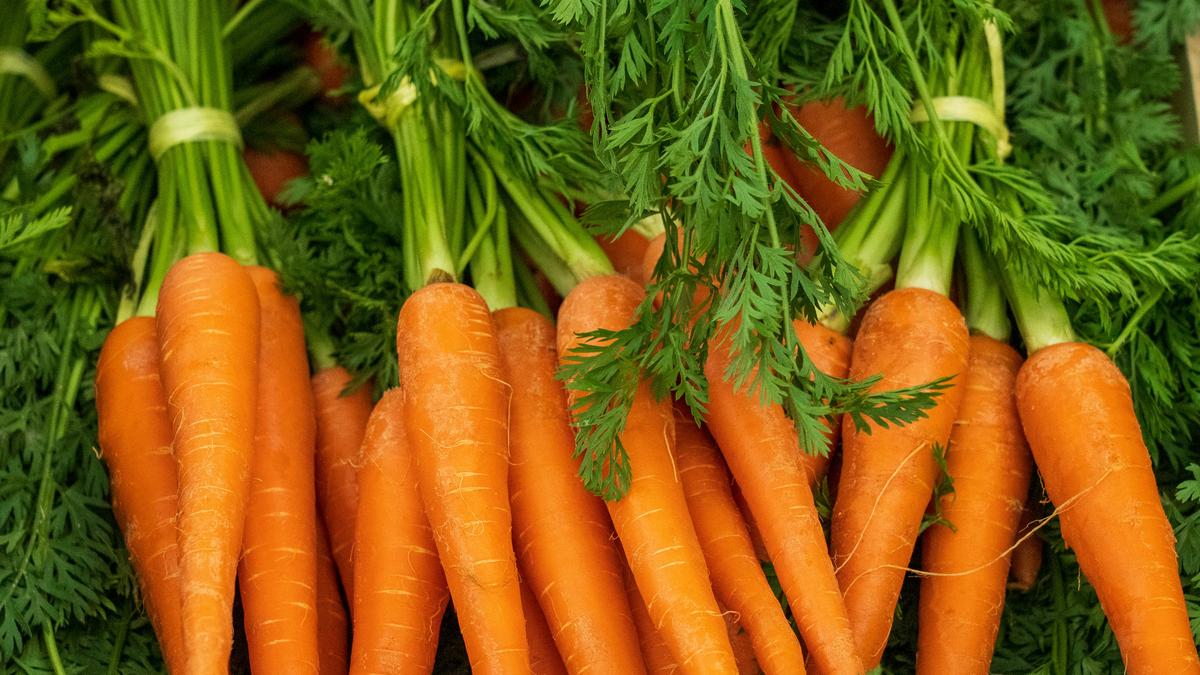
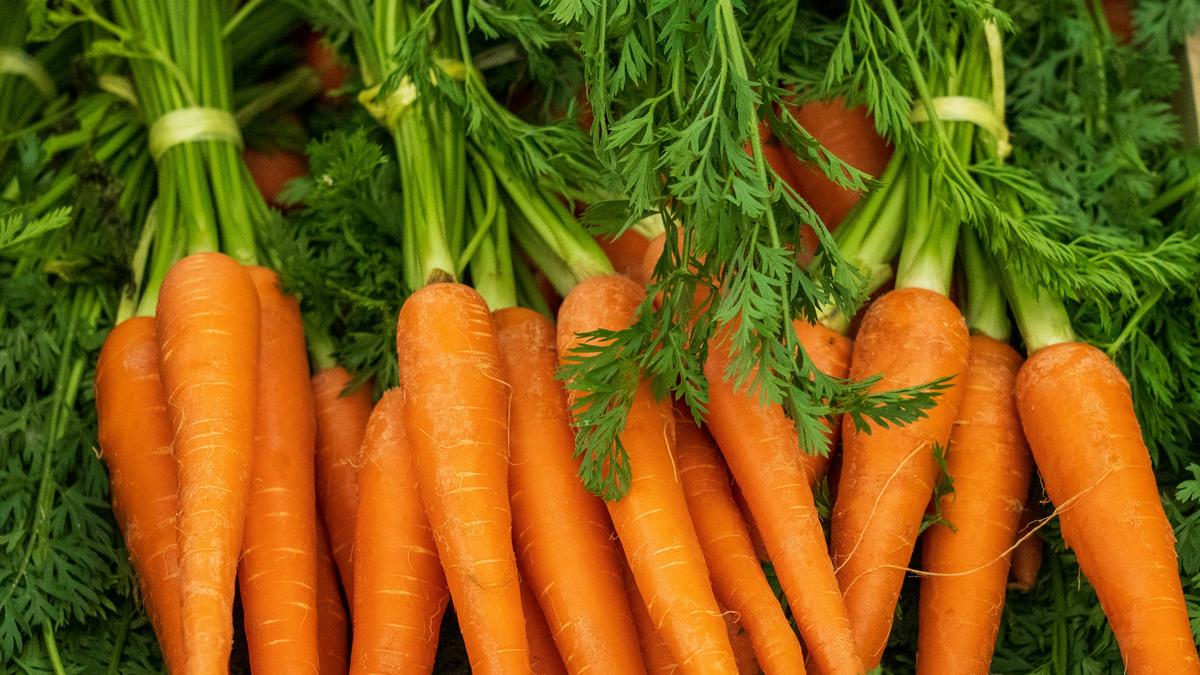
| Photo Credit: Nick Fewings/Unsplash
As the global population increases, the need for more sustainable and nutritious food sources becomes greater. In this context, the book Biomass Conversion and Sustainable Biorefinery edited by Lubis et al. in 2024,highlights recent advances in using wasted biomass from conversion and biorefinery concepts and discusses how biomass waste and by-products can be minimised by systematic reuse. The World Health Organization has pointed out that as populations grow, it is important to find ways to convert the wasted biomass into edible products.
We use a variety of vegetables, eggs, and meat in our meals and discard the inedible parts as waste. One such vegetable we use is carrots, and while doing so, we discard its skin and bits of its head and bottom (i.e. the crown and the root tip). We also use parts of carrots to prepare sweets, where again we waste small portions as leftovers or for being inedible. An article by Gagan J. Kaur et al., titled ‘Assessment Carrot Rejects and Wastes for Food Product and as a Biofuel’ and published in the aforementioned book, discusses this issue in detail.
It is in the same context that a paper published in December 2025 in the Journal of Agricultural and Food Chemistry (doi:10.1021/acs.jafc.5c11223), by an international group of authors, led by Martin Gand of the Institute of Food Chemistry at Giessen University in Germany, proposes the use of fungi to utilise carrot waste. Fungi (the plural of fungus) are a diverse kingdom of life, distinct from plants and animals, primarily due to their unique strategies for acquiring nutrients.
Specifically, unlike plants, fungi do not perform photosynthesis. They also do not have roots using which they can grow. Instead they obtain food from external sources; but unlike animals, fungi do not ingest their food before digesting it. Instead, they release powerful enzymes into their environment to break down organic matter and then absorb the resulting nutrients from their surroundings using mycelia, a root-like structure of fungi that forms a thread-like network.
Their specialised method of eating allows them to thrive in various environments and underpins their ecological roles. They also have the remarkable ability to break down almost every organic material, including food wastes that are not digested by us.
A common example of a fungus is mushroom, which is used to make soups, curry, pasta, and pizzas. And it is totally vegetarian and rich in vitamins and antioxidants. Mushrooms are fungi that grow using the available external material, which includes food wastes. We also use mushrooms frequently in our diets, particularly when advised by nutritionists. The December 2025 study group tested more than 100 types of mushrooms from various countries and found them remarkably efficient at clearing off indigestible wastes.
The researchers focused on wastes that are discarded from carrots, and how fungi digest them and produce edible material. For instance, the team subsequently turned the mycelia of pink oyster mushrooms that had grown on carrot waste into “vegan patties” that could replace soy in some recipes.
While many of us use carrots in our diets (including in curries, salads, as crunchy snacks, and in sweets), chefs and dieticians advise that we need to use more mushrooms in these preparations for their health benefits. Our future food security may well depend on the transformation of food waste into high-quality proteins and vitamins by fungi.
dbala@lvpei.org
Published – March 06, 2026 05:30 am IST

