



Watching Netflix’s rendering of Orhan Pamuk’s The Museum of Innocence, I was struck by the audacity of archiving desire. In the series, Pamuk gives us a man who archives desire with feverish devotion. The protagonist, Kemal, collects 4,213 cigarette butts smoked by the woman he loves. He preserves earrings, salt shakers, a quince grater, etc. Objects become relics, and longing becomes exhibition. It is dramatic, obsessive, almost operatic in its intensity.

It occurred to me that if Istanbul could enshrine love in a museum, India would store it inside a steel almirah. Ours is not a love that announces itself. It settles into shelves, wraps itself in cloth, and locks quietly.
A Sheep, A Doily, A Television
In our house, the porcelain sheep came first. White ceramic, slightly chipped, bought from a mela sometime in the late 1990s. It stood on our bulky Panasonic television, perched over a crocheted doily my mother insisted made the TV look decent. When the television was replaced by a flat screen, the sheep did not leave. It was simply moved to the top of the Godrej almirah.
Objects in Indian homes are rarely discarded. They are reassigned.
The Watch That Refused to Move
On the second shelf of that steel cupboard rests my daadu’s (grandpa’s) HMT Kohinoor watch with a cream dial. The strap is stiff with time. Every morning at precisely 6.30, he would wind it. That metallic click was the first sound of the day, before tea or before tuning in to good old Doordarshan.
It was such a small ritual, almost invisible. Yet, now it feels monumental. When he passed away, the watch stopped. No one repaired it. When I once suggested we get it fixed, my father said softly, “Let it stay like this.” The watch had kept time for him. It had fulfilled its purpose.
Turkish love, in Pamuk’s telling, is expansive and theatrical. Indian love is restrained, almost stubbornly practical. We do not display our longing in glass vitrines. We tuck it into metal boxes. And yet the devotion is no less fierce.
The Archive of Endurance
Open any middle-class almirah, and you will find a layered archive of survival. A wedding saree wrapped in muslin. Old passport-sized photographs with unnatural blue backdrops. A bank passbook carefully updated in ink.
The Godrej Storewel, heavy and faintly musty, is not merely storage. It is an assurance. It smells of iron and memory.
The Key That Opens Nothing
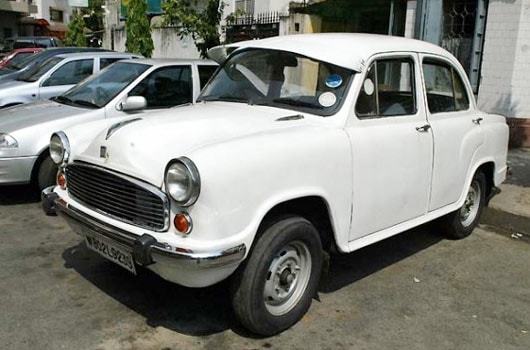
There is also, in most Indian homes, a key that opens nothing anymore. It once belonged to an Ambassador or a Premier Padmini. The car has been sold, and the garage stands empty. But the key sits inside a biscuit tin labelled Important.
For a generation raised during the Licence Raj, acquiring a car was not consumption. It was a conquest. Waiting lists stretched for years. When the vehicle finally arrived, neighbours gathered, and sweets were distributed.
Partition fractured millions of lives, and objects became portable homelands. Families crossed borders carrying trunks, utensils, sewing machines. Even those untouched directly inherited that caution. Scarcity marked decades. Goods were hard won. To discard was to disrespect effort.
Minimalism is aesthetic, but memory is ancestral. Every Indian home also has the biscuit dabba (tin) that no longer contains biscuits. Instead, it holds buttons, thread spools, safety pins, foreign coins, spare keys, SIM cards from defunct networks. Next to it sits a drawer of wires that belong to phones long gone.
“Kaam aa jaayega,” someone says whenever a cleanup is proposed. It might be of use. The phrase is less about utility and more about philosophy. It is hope shaped by history.
The Weight of What Remains
We now live in a time of abundance. Post-liberalisation India upgrades phones annually. We stream instead of storing DVDs. Our cloud contains thousands of photographs. Memory has become digital, searchable, weightless. And yet digital memory feels fragile. You can delete it. You can forget a password. You can lose it in a malfunction.
A steel almirah demands physical negotiation. It creaks open. It smells of iron. It requires a key.
When I hold my grandpa’s watch, I do not just remember him. I remember the sound of the cuckoo bird singing morning’s glory in the hills, I remember the way sunlight fell across the grey mountains. I remember the particular calm of early mornings in the ancestral house. The object does not simply represent memory. It carries an atmosphere.
If a Museum of Innocence were built in Old Delhi, it might house refugee trunks and fountain pens used to sign ration forms. In Kolkata, tram tickets are pressed inside old novels. In Mumbai, suburban train passes from 1998 and film posters from single screen theatres. None of these would look extraordinary in isolation. Together, they would feel profound.
Pamuk’s museum is romantic and fevered. Ours would be tender and unspectacular. His is about obsession. Ours is about endurance.
Look at your own home. What is the oldest object you own? A landline bill from 2001. A pressed hibiscus flower in a school notebook. A medal from Class V. Why is it still there? Perhaps because throwing it away would mean admitting that the moment has fully passed. And we are not ready for that. In India, love is rarely loud. It is embedded in habit, in repair, in refusal to discard.
The porcelain sheep still stands on top of our almirah. It has outlived 3-4 televisions and several paint jobs. It remains faintly ridiculous and fiercely irreplaceable. Open the cupboard beneath it, and you will find a watch that does not tick and yet keeps time.
That is our museum, no matter how uncurated, unadvertised or unyielding.
The writer is a Gurgaon-based writer and Research Scholar at MDU, Rohtak

