



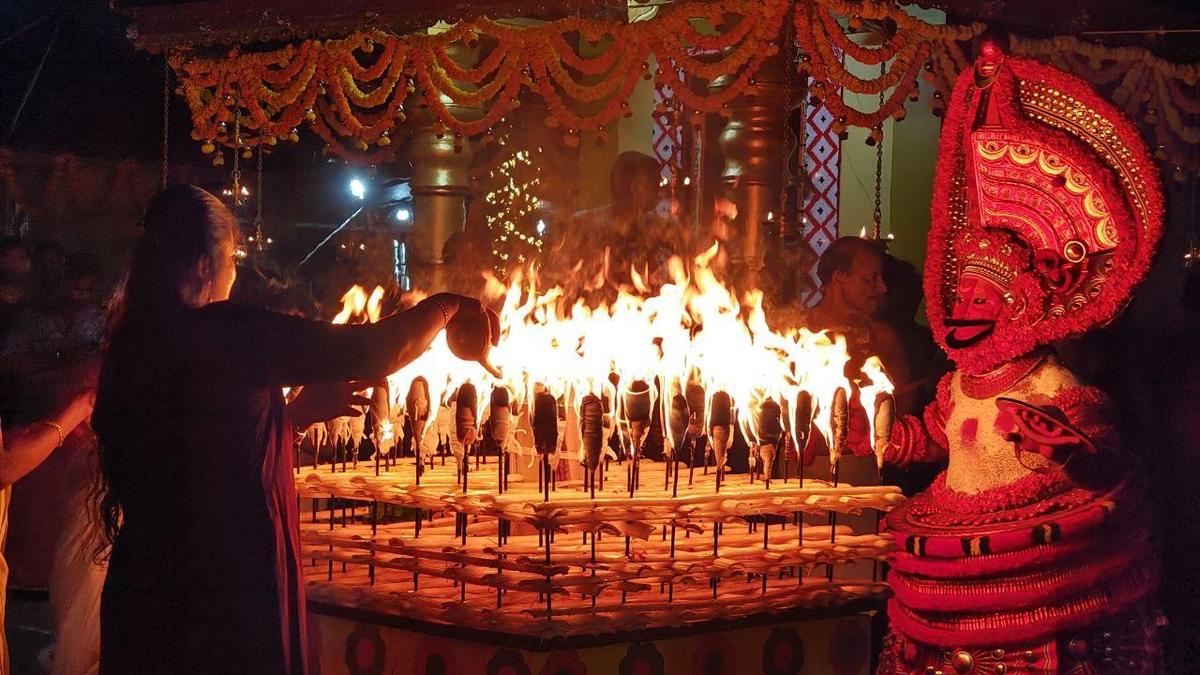
An hour before sunrise Vinu Peruvannan is finally set to play god.
Clad in crimson and black, donning heavy headgear speckled with wild geranium flowers, his torso covered in ashes, he holds up a mirror. His transition to a Kathivanoor Veeran Theyyam, a ferocious Thiyya warrior-turned-deity, is complete.

This sight alone makes my 488-kilometre journey from Thiruvananthapuram to Kannur, to experience my first-ever Theyyam at the Sree Kathivanoor Veeran temple, at Kavvayi, a 40-kilometre bus ride from the city centre, worth it. The final stretch of the Kaliyatta Maholsavam, a grand, multi-day, often triennial ritualistic Theyyam festival, is underway and fortunately I get there early enough to find myself a seat..
Helpers from the Thalikaran Tharavadu, considered the avakashikal (heirs) of the temple, fling palm-leaf torches outside the room. Amidst the beats of the chenda, the artiste moves backwards into the field in a menacing motion, preparing to perform his tale of valour, heartbreak and rebellion. The chronicles of Kathivanoor Veeran, sung by two helpers, which resounded across the arena all night, have now been replaced by quick beats of the drum.
Kathivanoor Veeran is one among the 456 theyyakolams (types of Theyyams) in Kerala, each entrenched in local myth. North Kerala’s Theyyams are between the 10th day of the Malayalam month of Thulam (mid-October) and Edavappathi (mid-June). “There are over 1,000 Theyyam festivals in a season across North Kerala,” says Santhosh Vengara, a tour guide specialised in Theyyam tours since 2010. They draw more and more tourists every year.

Each of these Theyyam performances involves rites that celebrate local lore – from fasting to the artiste returning to his “human self”, differing in preparation and presentation. Though the art form is rooted in the caste system, it brings in a temporary reversal of hierarchies, with performers from historically marginalised communities, including Vannan, Malayan, Velan, Mavilan, Panan, Pulaya, and Anjoottan, donning the roles of gods. Children belonging to Theyyam-performing families start preparing as early as seven years and transition into playing major Theyyams.
In pictures: Experiencing Theyyam in Kerala
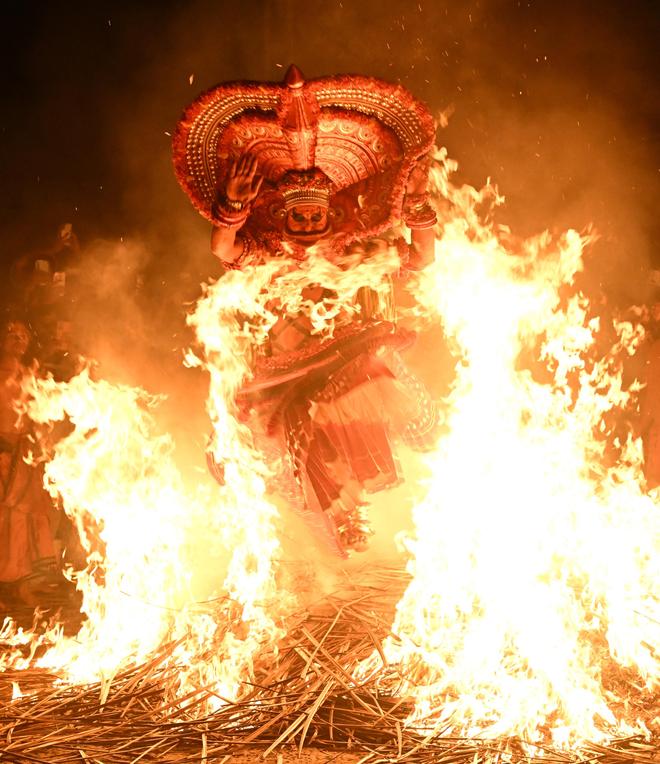
Theyyam is performed only by men who morph into gods, adorning headdresses with colourful feathers and faces painted in vivid hues.
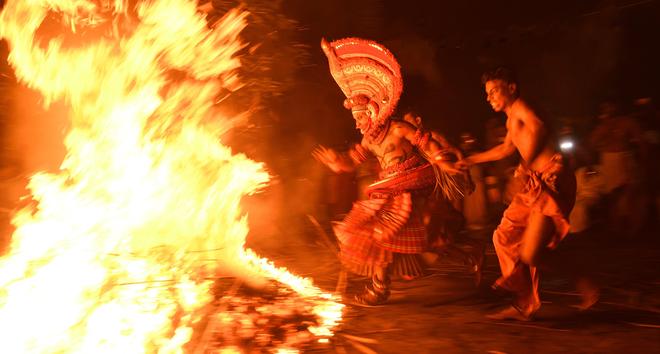
They dance around shrines to the loud beats of the Chenda and the sounds of the cymbals and bless devotees.
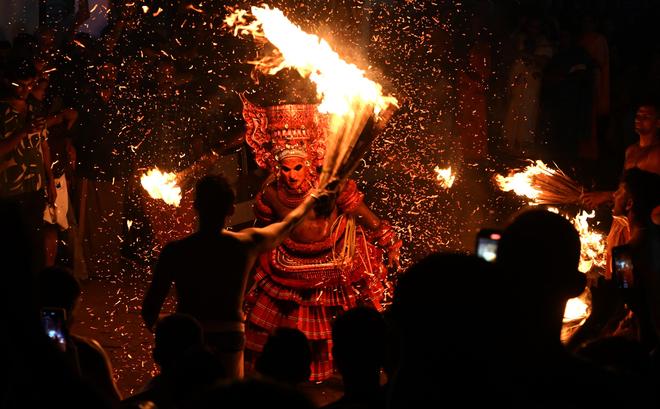
The sacred ritual also includes walking on fire.
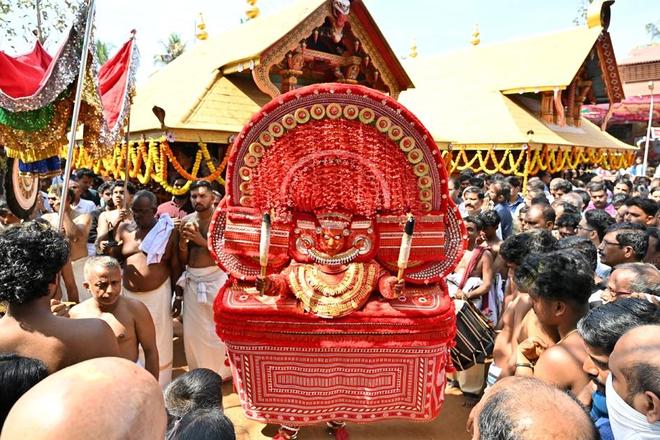
Theyyam performances are an annual ritual. Performers in elaborate crimson gear blend movements of Kalaripayattu and dramatic rituals.
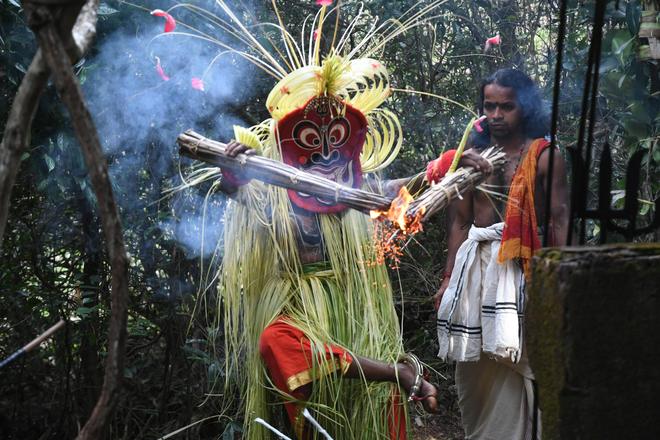
Theyyam being a ritualistic art form, travellers are expected to respect local customs and traditions, which now include restrictions on photography.
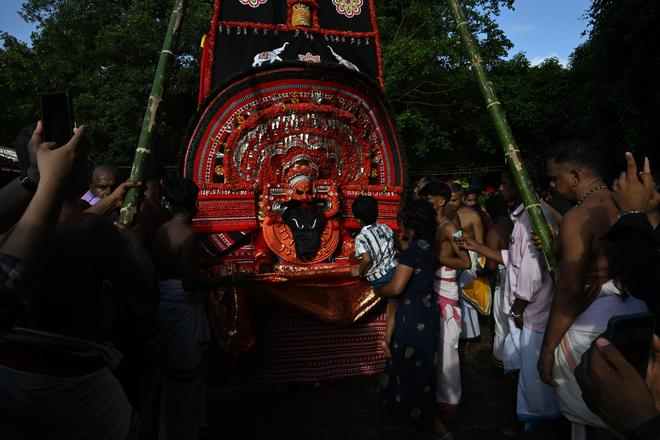
Each of these Theyyam performances involve rites that celebrate local lore. Though the art form is rooted in the caste system, it brings in a temporary reversal of hierarchies, with performers from historically marginalised communities.
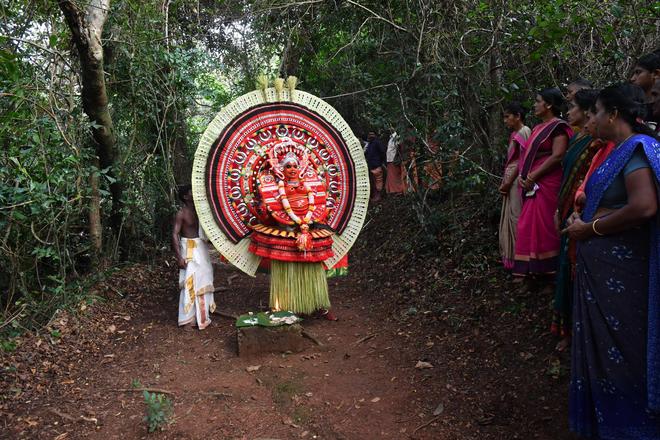
The art form ties together the physical and metaphysical, uniting man and God, played out in an overwhelming multi-sensory experience.
1/3
Vinu, a renowned artiste, is a member of the Vannan caste. He is known for his performances as Kathivanoor Veeran, Kandanar Kelan, Thottumkara Bhagavathy and Nedubaliyan Theyyams. As his transformation begins, he is surrounded by six artistes playing the chenda, and an entire village waiting for his warrior act.
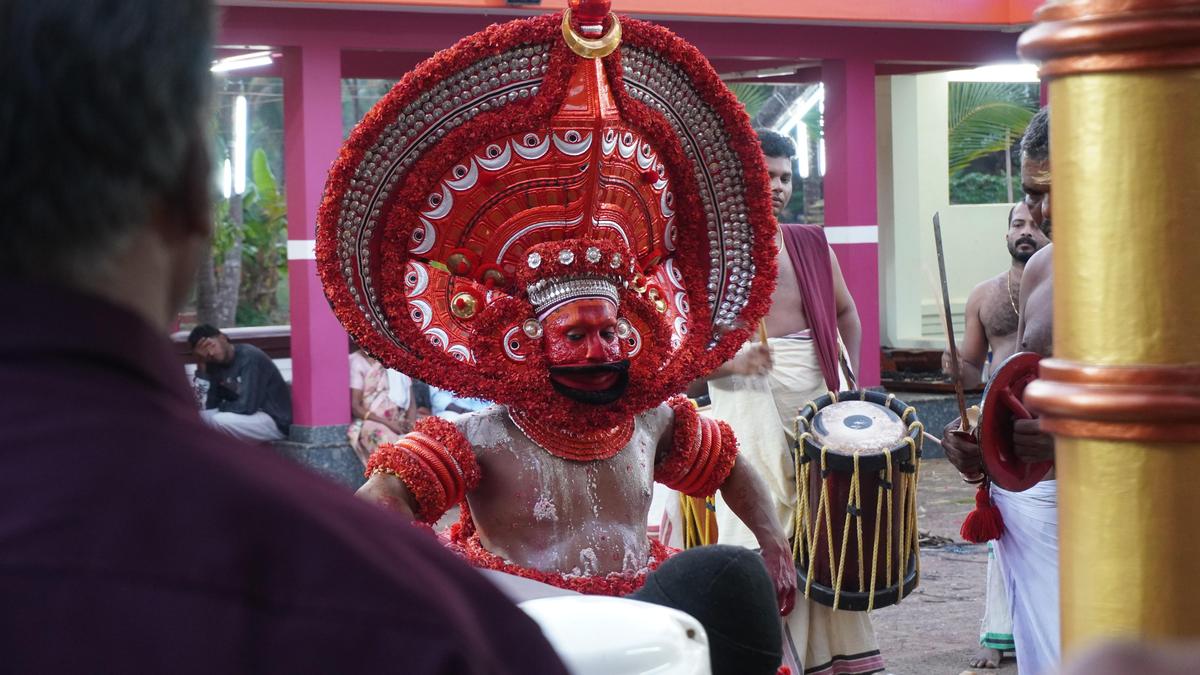
Kathivanoor Veeran Theyyam
| Photo Credit:
Nainu Oommen
The story of Mandhappan
The Theyyam ritual begins with thottam, a sung ballad that narrates the life of rebellious Mandhappan, who becomes a skilled kalaripayattu warrior. He marries Chemmarathy, who curses him in anger before a battle. Though he wins the bout, he is ultimately betrayed and killed. Balan Peruvannan, a senior Theyyam artiste and member of the Thalikaran Tharavadu, tells me the story, adding that “His body is said to have been cut into 64 pieces; in grief, Chemmarathy leaps into his pyre. And through death, Mandhappan becomes Kathivanoor Veeran, the deity.”
Witnessing a Theyyam requires preparation — understanding the characters and their stories from a human lens rather than a perspective of reverence. The art form ties together the physical and metaphysical, uniting man and God, played out in an overwhelming multi-sensory experience.
Following thottam, rituals called vellattam and payattu take place, which may not be present for all the Theyyams. This stage represents the deity’s youth.
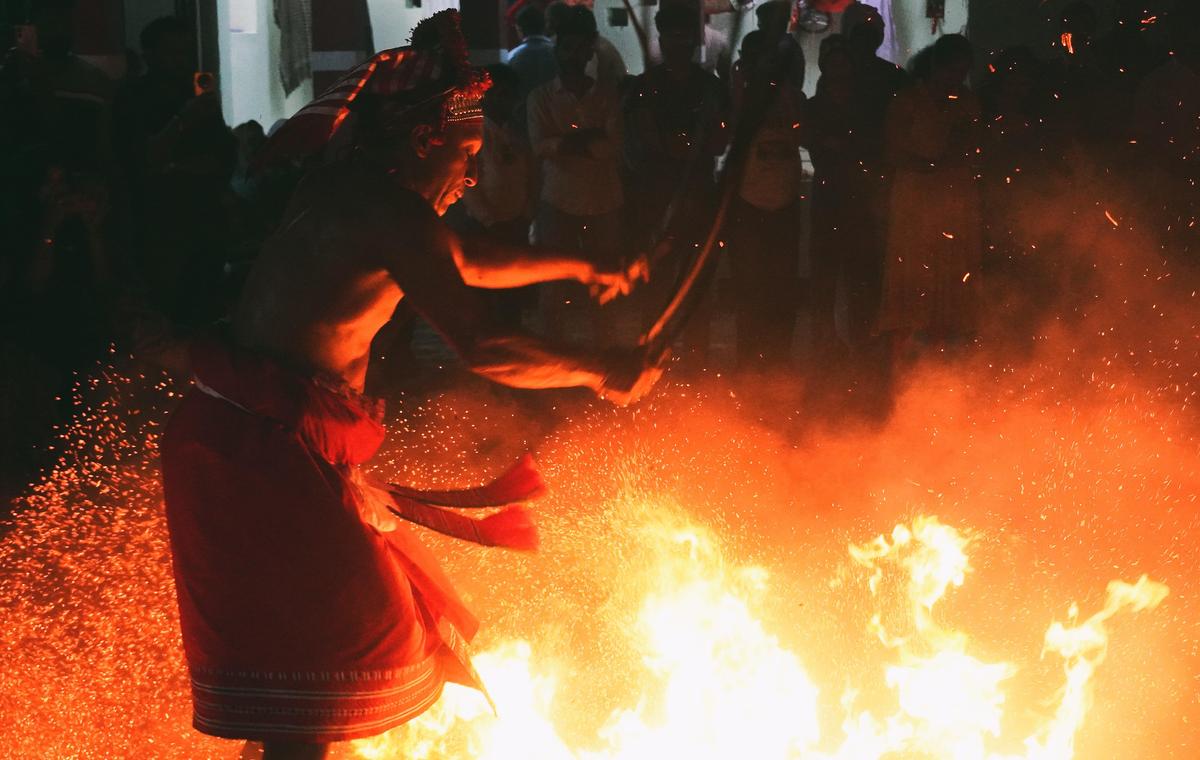
Kathivanoor Veeran during Payattu
| Photo Credit:
Nainu Oommen
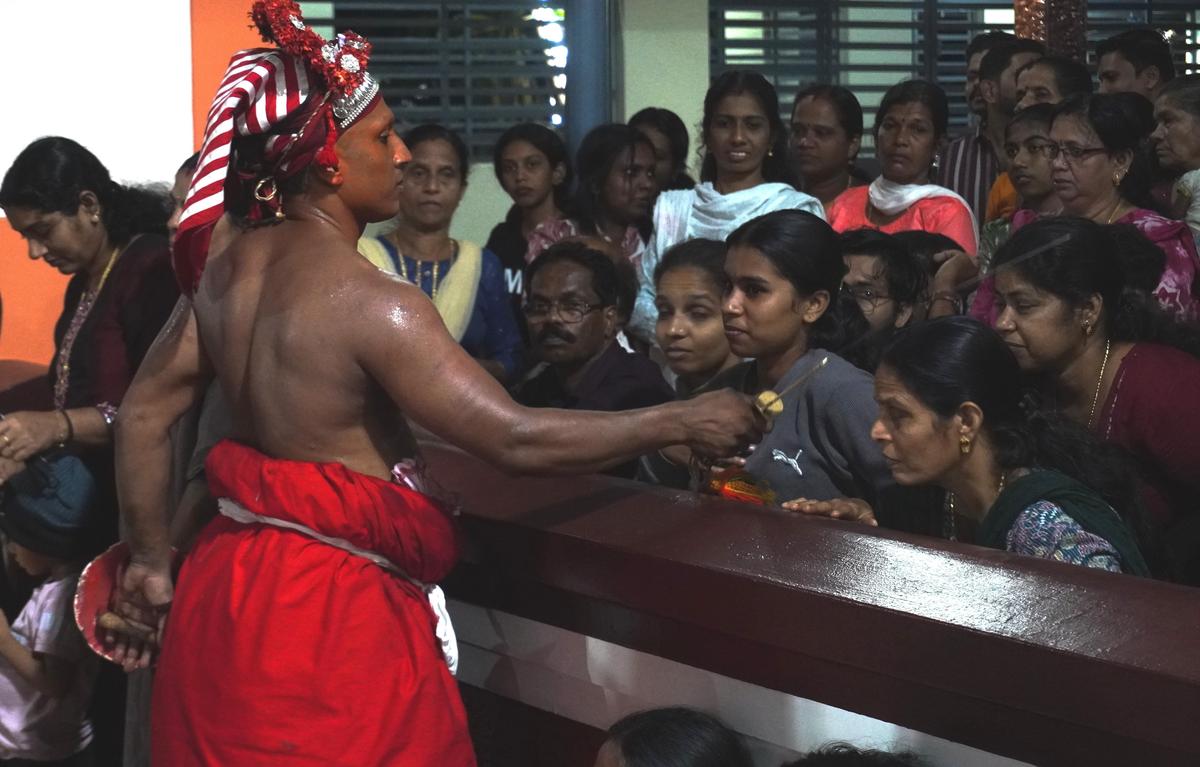
Kathivanoor Veeran Theyyam Kathivanoor Veeran Theyyam blessing a devotee after Vellattam
| Photo Credit:
Nainu Oommen
Gurukkal Theyyam
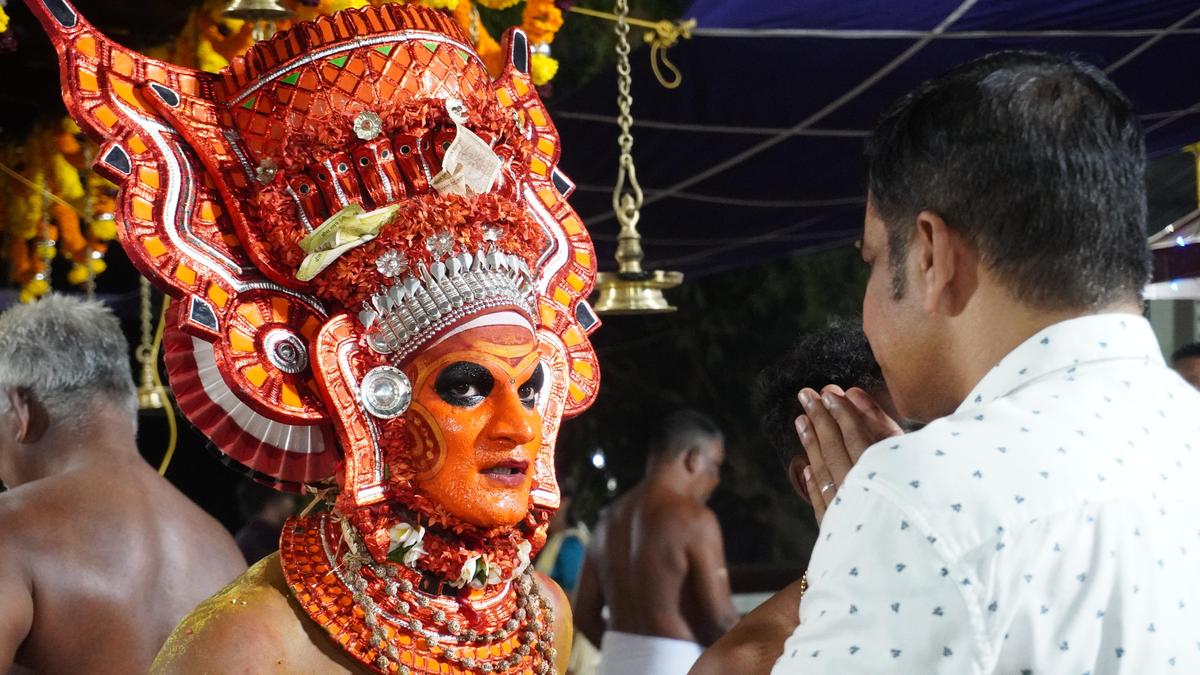
Gurukkal Theyyam blessing a devotee during Velattam
| Photo Credit:
Nainu Oommen
Following the end of the Kathivanoor Veeran’s payattu, another Theyyam enters the arena – Gurukkal Theyyam.
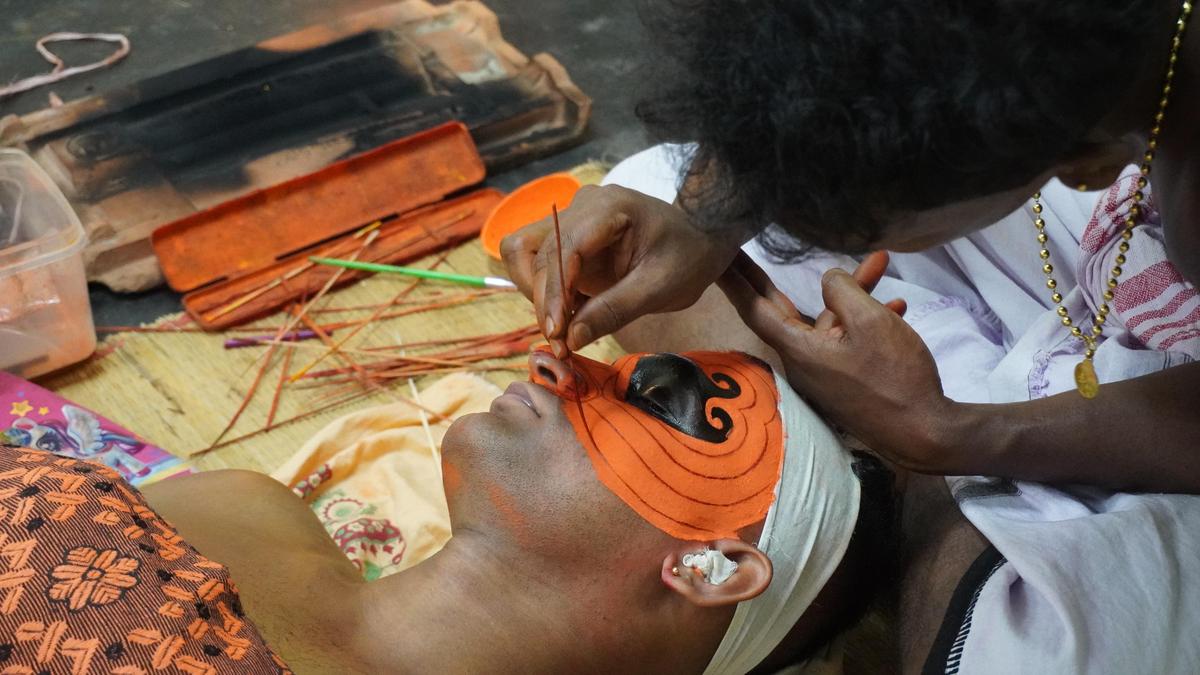
Gurukkal Theyyam during Mukhamezhuthu
| Photo Credit:
Nainu Oommen
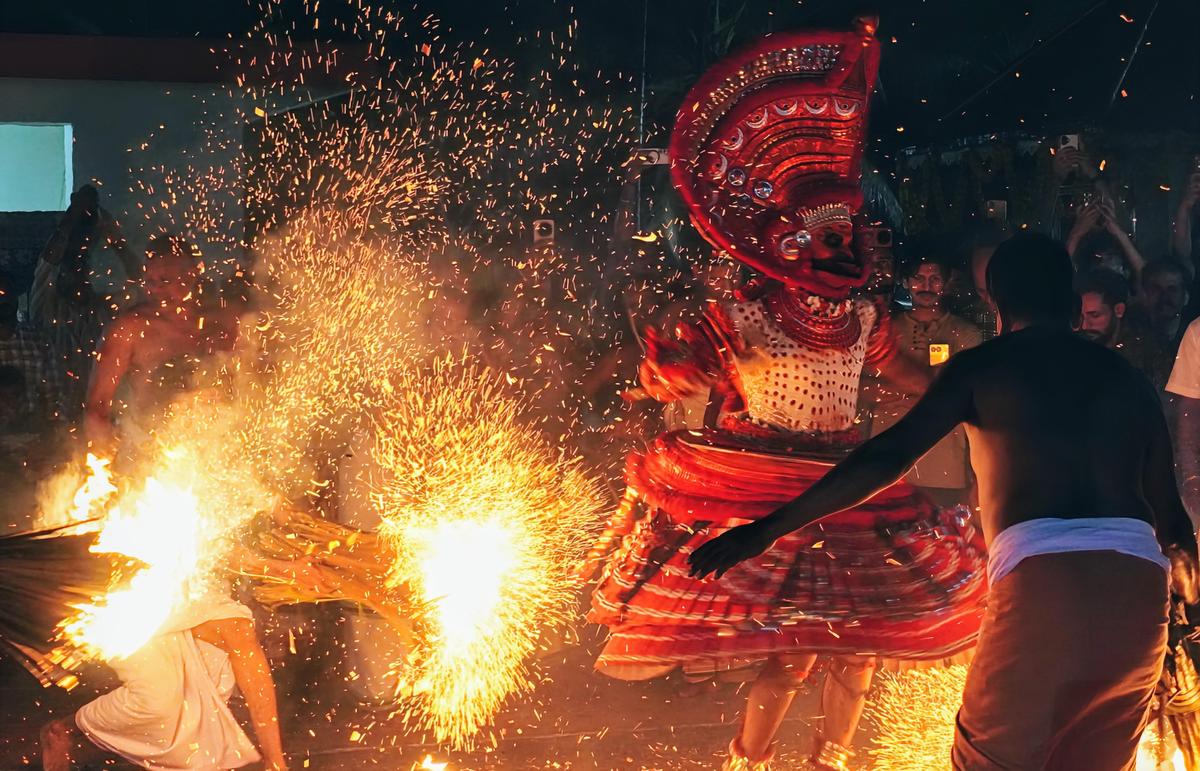
Gurukkal Theyyam amidst embers
| Photo Credit:
Nainu Oommen
Gurukkal Theyyam is believed to be the spirit of a skilled tantric minister, Kunhiraman, who was called to treat the sickness of a Veeryakolath king from Koodali. The legend says that Kunhiraman Gurukkal was rewarded by the king for saving him and sent home with two bodyguards, who, out of envy, murdered him. “It is said that Gurukkal’s books flew back to the king and told him what had ensued”, says Balan.
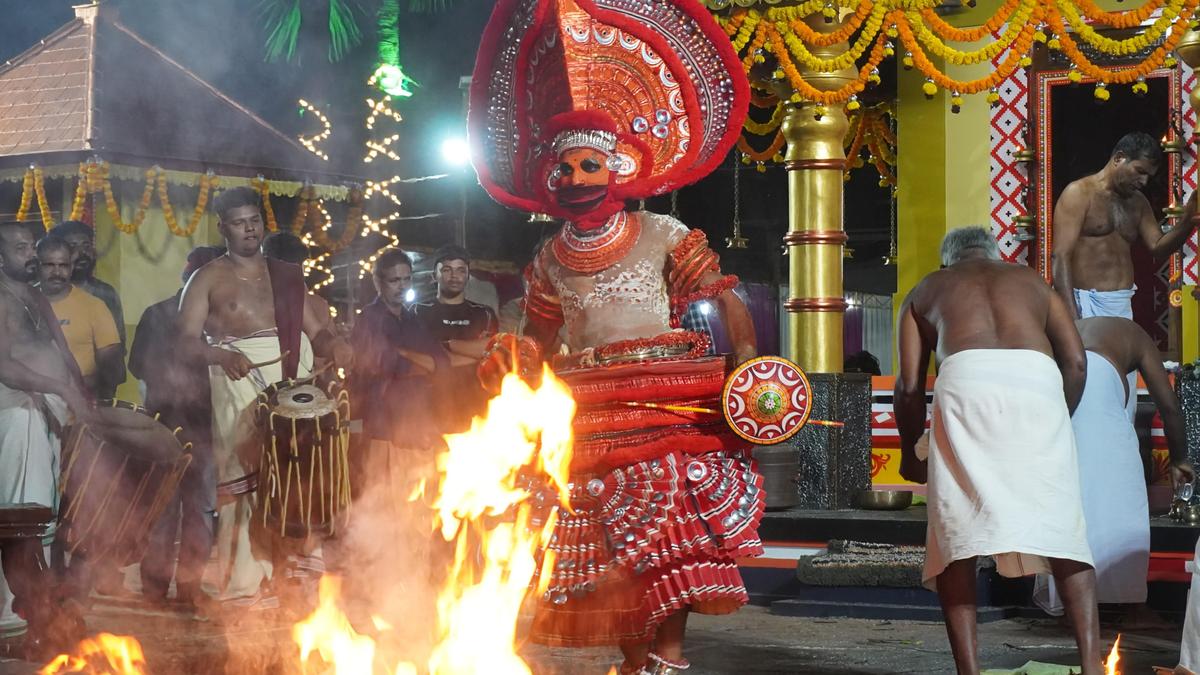
Gurukkal Theyyam in its final stage
| Photo Credit:
Nainu Oommen
Kaliyattam, the culmination
The time is a few minutes past 1am. “Get some sleep while you can before the kaliyattam (main performance),” Balan says, reminding me that Kathivanoor Veeran will enter the performance arena soon. I choose to sleep on the temple floor, determined not to miss anything, only to wake up next to a few others — some of them I identify as chenda players and helpers from the previous evening.
There is silence as Vinu transforms into the warrior-turned-God inside a covered dressing room during his mukhathezhuttu (makeup and transformation). This takes place for four to six hours.
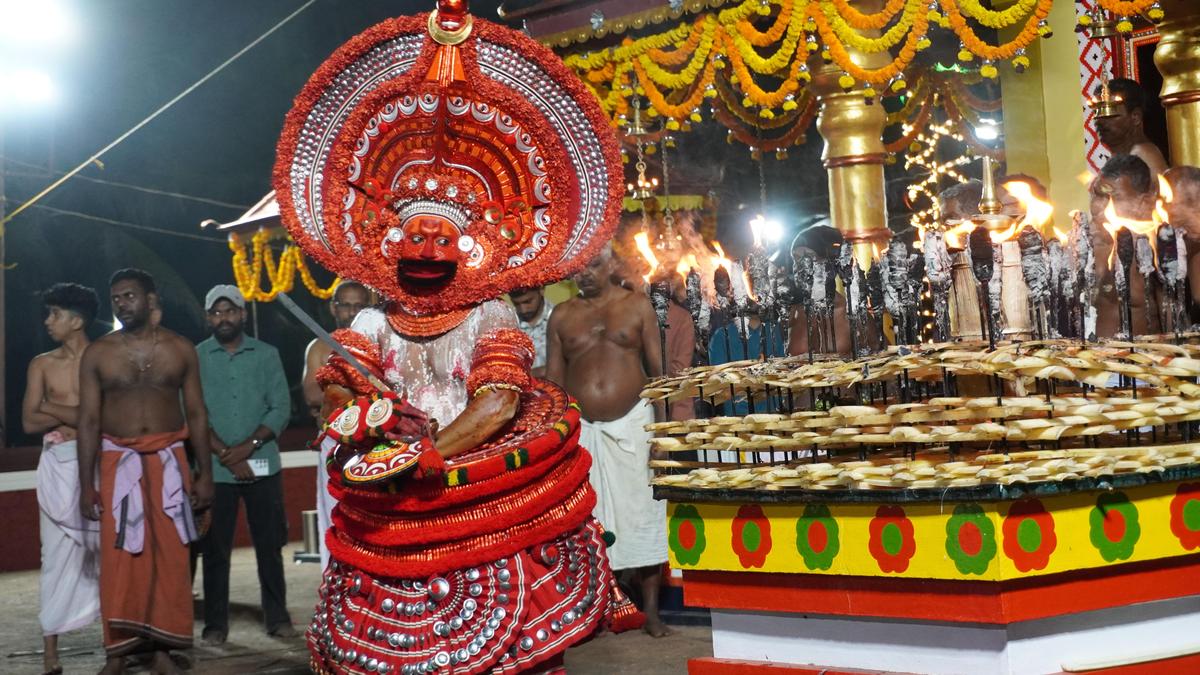
Kathivanoor Veeran Theyyam during Kaliyattam
| Photo Credit:
Nainu Oommen
During the Kaliyattam or culmination of the performance, the artiste’s transformation to God is said to be complete.
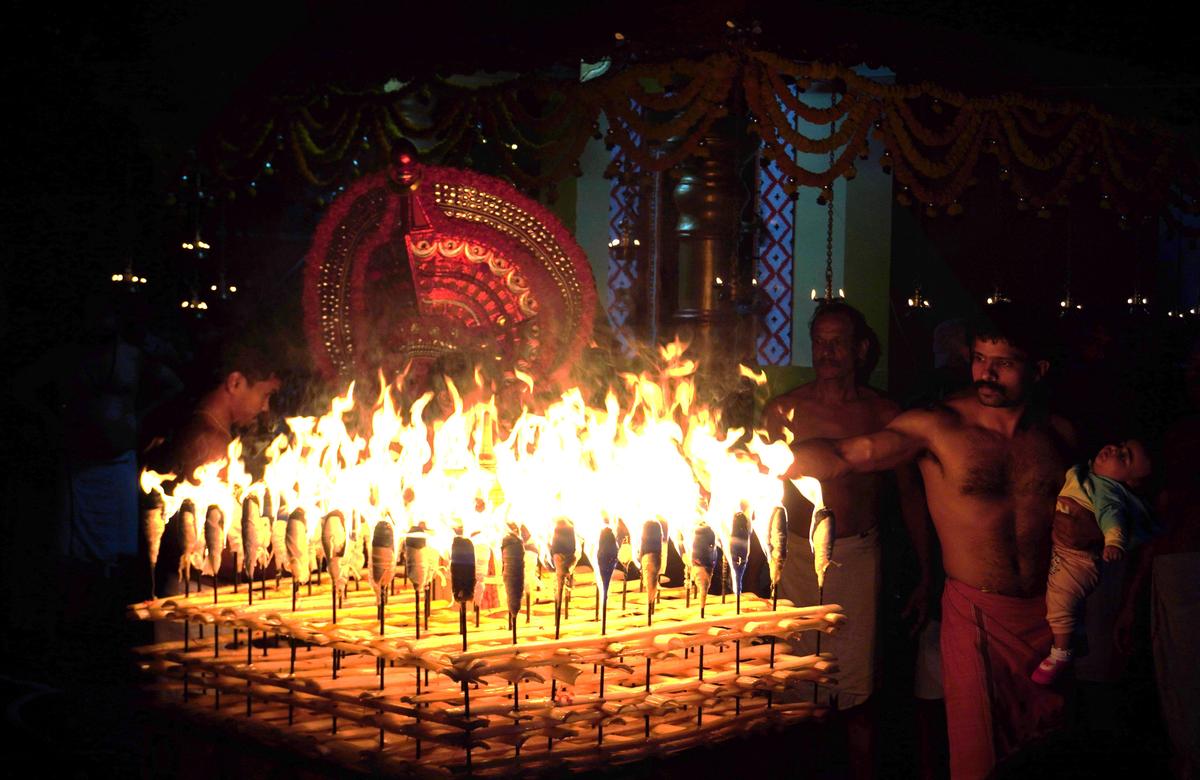
Devotees during Kathivanoor Veeran Theyyam Kaliyattam
| Photo Credit:
Nainu Oommen
Simultaneously, in an unnerving sight, devotees walk towards the lamp to pour more oil into the torches, as an offering to the God. The freshly stoked fire is further aggravated, with men and women (even carrying children) walking towards the fire in a sign of devotion. Parents carry their infants to the pyre on one arm.
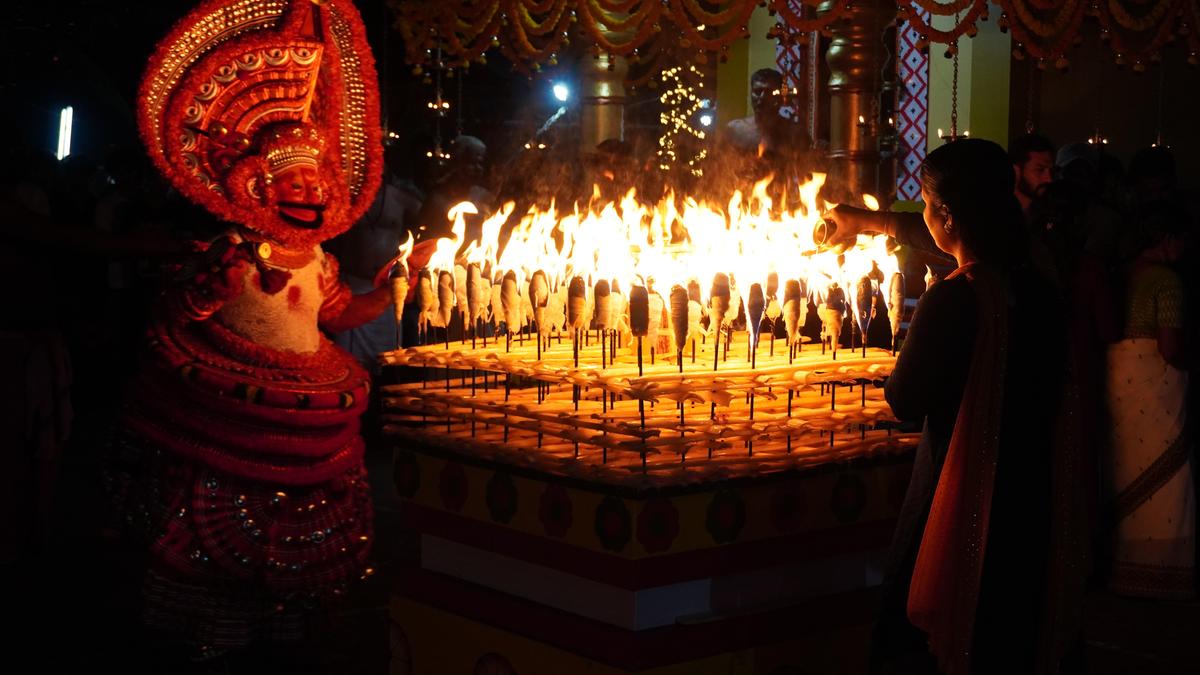
Kathivanoor Veeran Theyyam during Kaliyattam
| Photo Credit:
Nainu Oommen
With a sword and shield in his hand, the Kathivanoor Veeran further dances around the rousing fire till the sun rises in Kavvayi. The aggressive movements die down as the Theyyam turns gentle, blessing his devotees.
The rhythm of the ritual slows down, but not for long. Two roosters are brought to the Theyyam for sacrifice. He breaks their necks — silence follows in the courtyard.
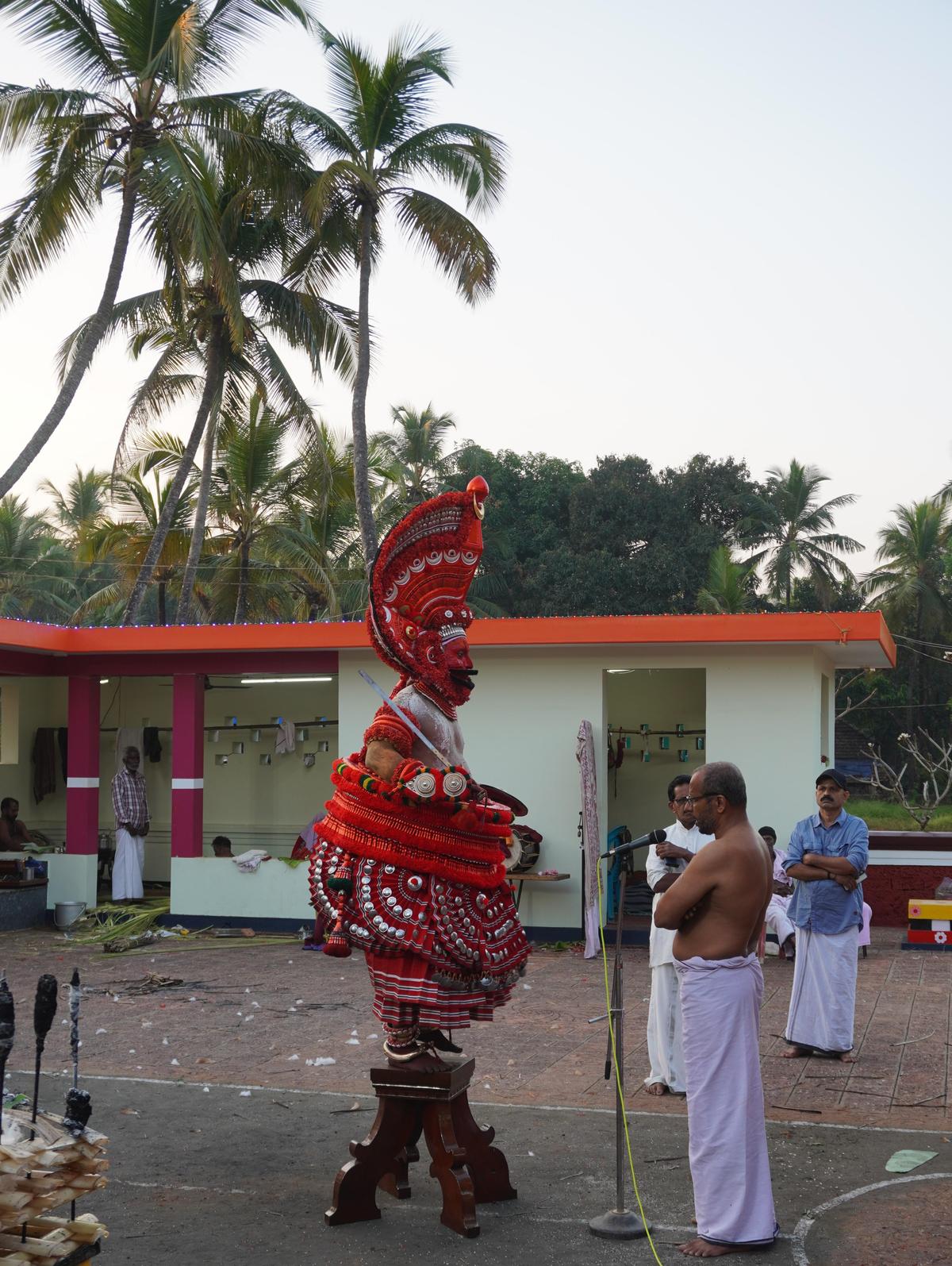
Kathivanoor Veeran Theyyam being narrated his life story for the last time
| Photo Credit:
Nainu Oommen
A ritualistic performance
Following the sacrifice, Kathivanoor Veeran faces the consecration, standing on a wooden stool. And for the last time, his tale of love, bravery, heartbreak, and betrayal is narrated to him. Only a few helpers from the previous night, including Balan, are left in the courtyard, cleaning the ashes from the arena. “Visitors often do not stay for the entirety of the festivals, missing rituals like vellattam and other rites before and after the main performance, for a lot of them it’s just about capturing the visual,” says Santhosh.
As the rites progress, the artiste shall soon return to his humane self, until his next divine evocation. “For us, the performance ends with us apologising to God for any mistakes we have made during the act,” says Balan. He points out that these “gods” work in professions such as carpentry, painting, and umbrella repair during the off-season. Loading the headgear and other trinkets for the next performance into an auto, he says, “We are humans at the end of the day.”
How to attend a theyyam performance
Theyyam performances are a regular occurrence from mid-October to early June in northern Kerala. However, they don’t follow a fixed schedules.
The performances are mostly open to the public and usually happen at sacred groves, ancestral homes, and village shrines.
Kerala Tourism website issues a Theyyam calendar every year, which lists locations of the temples, dates of the performances and details of the contact persons. A schedule of Theyyam performances are also available on dtpckannur.com
Tour companies also offer curated Theyyam experiences for travellers, priced from ₹4,000

