



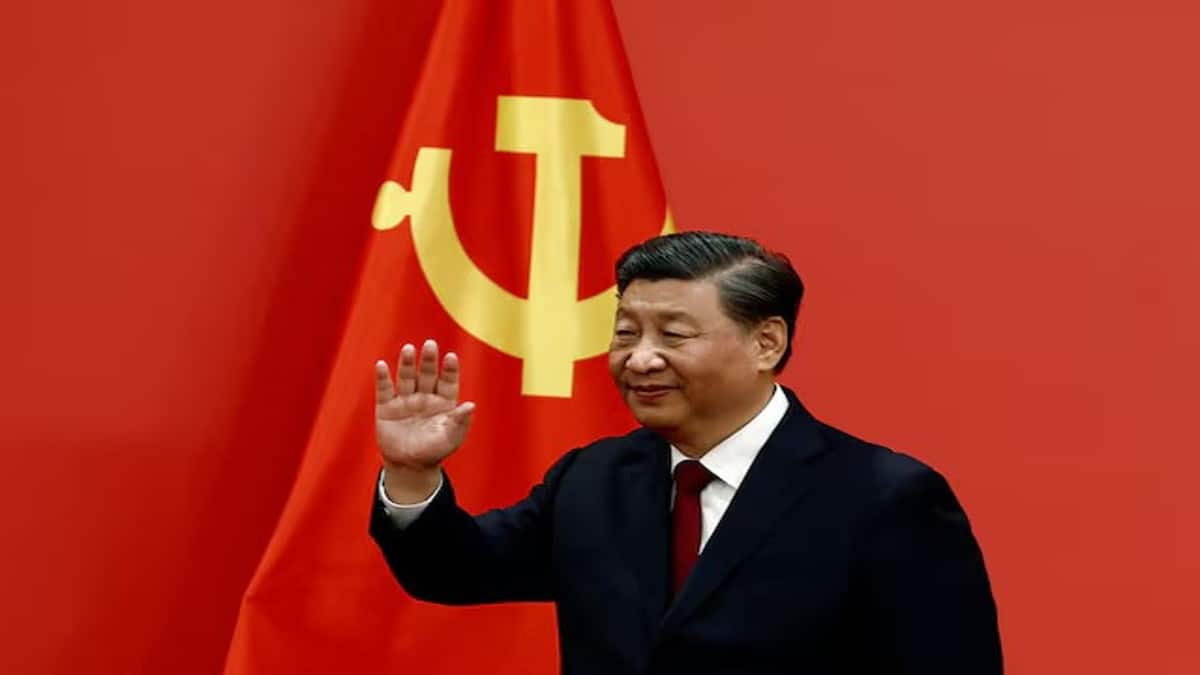
For much of the past four decades, the Chinese Communist Party (CCP) impressed the world not because it was democratic, but because it was adaptive. It learnt from mistakes, tolerated internal debate, and crucially allowed decentralised experimentation. That adaptive capacity is now under unprecedented strain.
Since the end of the Mao era in 1978, the CCP has passed through three distinct phases of governance. The first was post-revolutionary consolidation under Deng Xiaoping and his successors; the second, an oligarchic but technocratic one-party system geared towards construction and growth; and the third, the current phase under Xi Jinping, marked by extreme centralisation of power.
The danger today is not that China has returned to Maoism. It is that Xi has attempted to govern a complex, ageing, middle-income society using a rigid power structure that is fundamentally ill-suited to complexity.
From Revolution to Results
After Mao’s death, the CCP reinvented itself. Ideology was demoted; performance became legitimacy. Deng Xiaoping, Jiang Zemin, and Hu Jintao built a system of “collective leadership” in which power was deliberately fragmented at the top and fiercely competitive at the bottom.
Local officials were promoted based on economic outcomes: GDP growth, investment, and employment. Policy experimentation at the provincial and municipal level was not only tolerated but encouraged. While corruption existed, it was contained within a competitive framework that rewarded results.
This model transformed China. It industrialised at breathtaking speed, integrated selectively into the global economy, and created a professional technocratic elite. The CCP became less a revolutionary vanguard and more a managerial coalition.
The Limits of Oligarchic Stability
By the 1990s and early 2000s, however, the system developed its own pathologies. Authority became fragmented across ministries, regions, and interest groups, a phenomenon Chinese officials themselves described as “nine dragons managing the water”.
While this fragmentation allowed internal checks, it also diluted central directives and entrenched corruption. For party elites, this was not healthy pluralism but the early warning signs of loss of control. The fear was not inefficiency alone, but regime decay.
It was this anxiety, not ideological nostalgia, that set the stage for Xi Jinping.
Xi’s Centralisation Project
Since 2013, Xi has systematically dismantled the collective leadership model. Anti-corruption campaigns neutralised rival power centres. Decision-making authority was pulled sharply upward. The Politburo Standing Committee shifted from deliberation to execution. The State Council was hollowed out into an administrative arm.
This is often misunderstood as a return to Mao-style dictatorship. Structurally, it is not. Mao thrived on chaos and mobilisation; Xi seeks order, precision, and control. Where Mao destroyed institutions, Xi has refined them: law enforcement, surveillance, and digital governance have been weaponised into a comprehensive system of social management.
Xi’s ambition is to build a hyper-efficient, centralised “super-Leviathan”: a state capable of eliminating corruption, disciplining bureaucracy, mobilising resources, and achieving national rejuvenation without reliance on the West.
The Central Paradox
Here lies the core contradiction.
Xi is attempting to manage the most complex phase of China’s development: slowing growth, demographic decline, rising social expectations, and using the most rigid power structure in the Party’s history.
At this stage, governance requires decentralised problem-solving, rapid feedback, and tolerance for local initiative. Instead, the system now rewards only political loyalty. Errors are forgiven if intentions align with the centre; initiative is punished if it appears autonomous.
The rational response for officials is risk aversion. Better to do nothing than to do the wrong thing.
Governance by Paralysis
The consequences are increasingly visible. Decision-making has become vertically dependent, with local governments awaiting explicit instructions even when policies are clearly failing. Information flows upward in filtered, sanitised form. The leadership hears good news—whether it is true or not.
This produces contradictions that confuse both domestic and foreign actors. Beijing calls for foreign investment, while security agencies launch aggressive espionage investigations. Private enterprise is praised rhetorically, while cash-strapped local governments seize assets and pursue extraterritorial enforcement.
These are not policy accidents. They are symptoms of excessive centralisation combined with institutional self-protection.
Demography and the Economy: The Real Stress Tests
China’s deepest vulnerabilities lie in population decline and economic stagnation. Falling birth rates, rapid ageing, youth unemployment, and deflation cannot be solved through slogans or administrative commands.
Infrastructure can be built by fiat. Babies cannot.
Under earlier models, officials competed to deliver growth. Today, political reliability outweighs performance. Addressing fertility, employment, or social welfare requires financial risk and accountability—while inaction is politically safer. Governance thus defaults to non-decision.
A System Built Like Tempered Glass
From a systems perspective, Xi’s China prioritises rigidity over resilience. It can absorb enormous pressure—but lacks elasticity. Like tempered glass, it appears strong until it suddenly shatters once a critical threshold is crossed.
By suppressing negative feedback and incremental correction, the system risks discovering its failures only when they become irreversible. Gradual decline may transform into abrupt rupture.
What Comes Next
Xi’s governance model is not merely personal; it reflects a collective elite response to perceived existential threats. It is an instinctive historical reversion, not a strategic innovation.
China’s future depends on whether this centralised system can reintroduce internal correction mechanisms, tolerate limited decentralisation, and restore administrative flexibility before demographic and economic pressures peak.
Without that adjustment, the strength of today’s China may conceal a growing fragility beneath the surface—one that will matter not just to Beijing, but to India and the world.
(The author is a University of Bath-based sinologist and the first Asian deputy mayor of the city of Bath, UK. The views expressed in the above piece are personal and solely those of the author. They do not necessarily reflect the views of Firstpost.)
End of Article

