



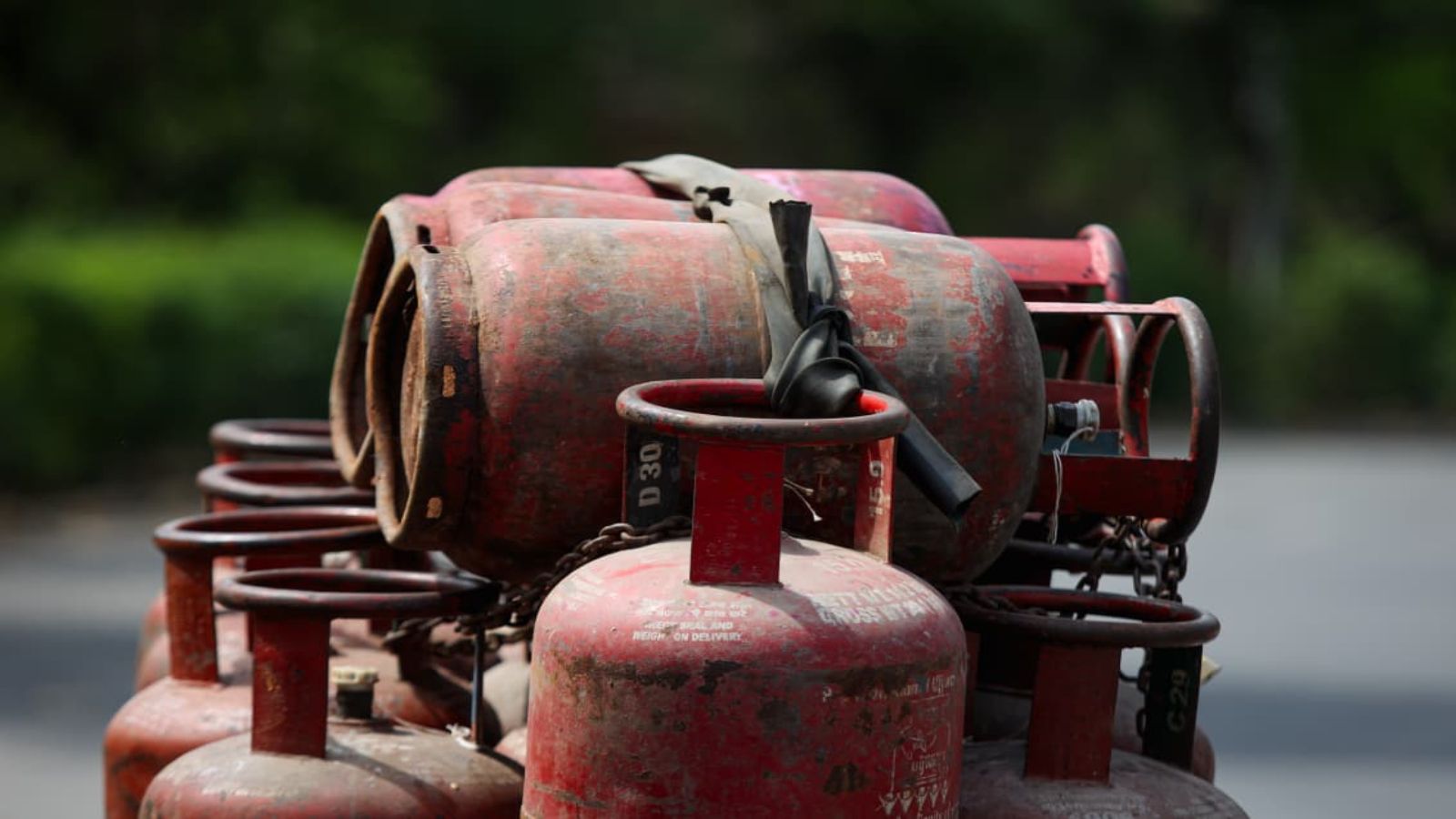
On February 28, the United States and Israel launched strikes on Iran, setting off a conflict that has since closed the Strait of Hormuz, sent crude oil past $119 a barrel, and pushed the rupee to an all-time low. India is not a party to this war. Yet on March 7, the government raised the price of a domestic LPG cylinder by Rs 60, a quiet notification that carried a loud message: A war India did not start has begun sending it the bill.

India is the world’s second-largest LPG importer, consuming 31.3 million metric tonnes annually while producing barely 41 percent domestically. Ninety percent of its LPG imports transit the Strait of Hormuz. But the LPG crisis is only the entry point to a far larger economic story.
The energy shock and its consequences
India spent $137 billion on crude oil imports in FY2025. Before the war, Brent crude averaged around $66 per barrel. ICRA estimates that every $10 increase adds $12 to $13 billion to the annual import bill. If oil sustains $110 to $115 through FY27, the oil trade deficit could surge to $220 billion and push the current account deficit beyond 3.1 percent of GDP, the territory of serious external imbalances that force difficult choices on monetary policy, fiscal spending and exchange rate management simultaneously.
Higher fuel prices cascade immediately into transportation costs, raising the price of food, cement, medicines and manufactured goods. Road freight moves over 65 per cent of India’s domestic cargo. When diesel rises, consumer inflation follows within weeks. India’s oil prices are formally deregulated, but the government has repeatedly shown a willingness to lean on state-owned oil marketing companies to absorb costs rather than pass them through. That quiet subsidy erodes OMC balance sheets, crowds out investment in domestic energy production, and defers fiscal reckoning rather than preventing it.
The rupee, the markets and the lesson of 1991
The rupee has fallen to Rs 92.48 against the dollar, its lowest ever, despite RBI intervention drawing on reserves that stood at $728 billion before the war and have since fallen sharply. Foreign portfolio investors have pulled over Rs 57,000 crore from Indian equities since the conflict began. India has been here before. In 1990, Iraq’s invasion of Kuwait triggered an oil price spike, a collapse in remittances and a foreign exchange crisis that brought India within days of sovereign default. The Chandra Shekhar government was forced to pledge gold reserves to the Bank of England; the Narasimha Rao government that followed completed the airlift of 47 tonnes of gold to raise emergency foreign exchange. The scale of India’s economy today is vastly larger, but the structural dependence on Gulf energy and Gulf earnings has not diminished. If anything, it has deepened.
Nine million Indians in the Gulf
Approximately 8.9 million Indian nationals work in the Gulf Cooperation Council countries, sending home nearly $50 billion annually in remittances. These flows are not abstract macroeconomic data. They sustain household consumption, fund education and healthcare, and underwrite small enterprises across Kerala, Tamil Nadu, Bihar, Uttar Pradesh and Rajasthan. Any disruption to GCC labour markets, whether through conflict, economic contraction or supply chain breakdown, would simultaneously reduce foreign exchange inflows, weaken rural demand and strain state-level fiscal balances in some of India’s most politically sensitive regions.
India’s bilateral trade with the GCC stood at $178.56 billion in FY2024-25, and the exposure is concentrated in sectors where substitution is difficult. Gems and jewellery, India’s largest non-petroleum export to the UAE, depend on Dubai as both a processing hub and a re-export gateway. India’s chemical exports to the GCC run into hundreds of millions of dollars annually. Fertiliser imports from the Gulf underpin the entire kharif agricultural cycle. A sustained disruption threatens not just trade balances but food security.
The way forward
The vulnerabilities this war has exposed are not new. They have been documented, debated and deferred for years. What is new is the cost of continuing to defer them. India must urgently expand strategic reserves for LPG and LNG, not only crude oil. Cryogenic storage capacity and long-term supply contracts with the United States, Australia and West Africa must move from policy documents to funded implementation. The RBI’s reserve intervention is necessary but not sufficient; India should accelerate rupee internationalisation, deepening bilateral settlement arrangements with GCC countries to reduce dollar dependence in energy payments. For Gulf-exposed export sectors, the government must activate contingency support now: Export credit guarantees, working capital relief and market diversification assistance. For fertilisers, emergency procurement from non-Gulf sources must be coordinated before the kharif window closes. On fuel pricing, the government must resist the reflex of using OMCs as fiscal shock absorbers. Formula-based transparent pricing with targeted Ujjwala subsidies for the poorest consumers is more honest and more sustainable than frozen prices that silently erode balance sheets.
The Rs 60 hike on a cooking gas cylinder is not the cost of this war. It is merely the first invoice. India navigated the 1991 Gulf crisis, but only because that shock finally forced structural reforms that years of incrementalism had deferred. The question now is whether India acts while the choice is still its own.
The writer teaches economics at the Department of West Asian and North African Studies, Aligarh Muslim University. Views are personal

