



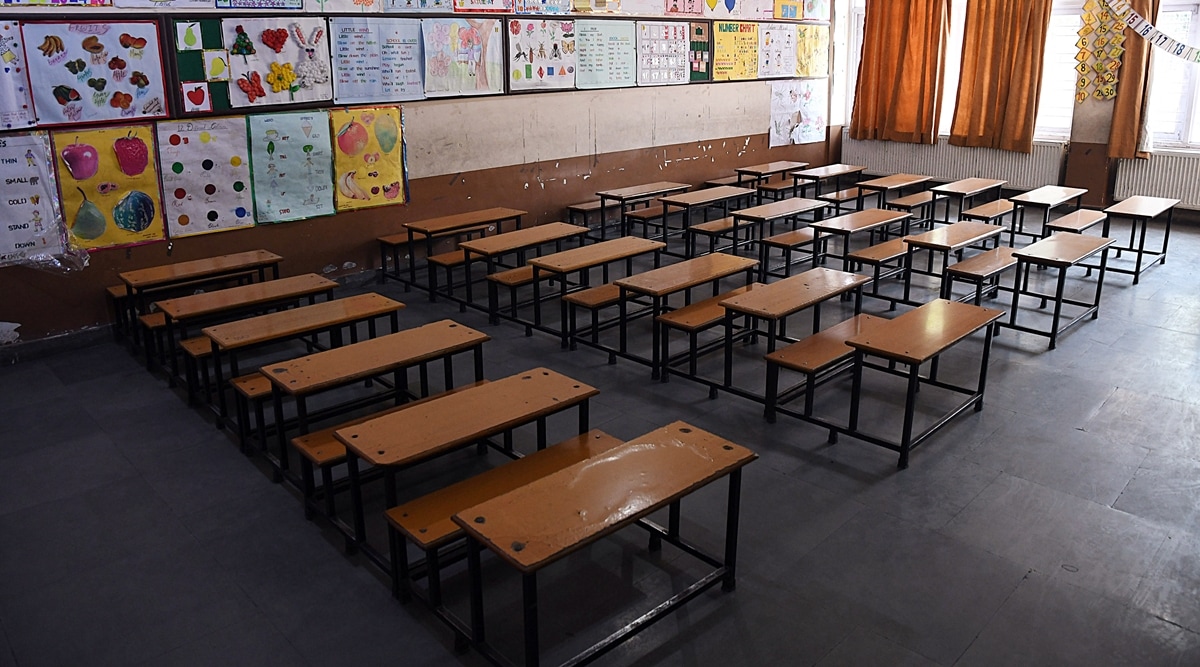
Imagine a Grade 11 physics class. A student has done the hard part. They understand the concept, they know which formula applies, and they can explain, in words, what the answer is supposed to represent. Then the numbers arrive, and the calculation is long, messy, and unforgiving. The student slows down, not because the physics is unclear, but because the arithmetic is about to consume the entire problem. They glance up, almost instinctively, hoping the teacher will allow a calculator. But this is not how it works here. So the learning objective quietly shifts. What should have been a test of understanding becomes a test of endurance: Who can grind through computation without slipping?
This small classroom moment matters because of the larger moment India is in. As the country hosts the AI Summit and speaks confidently about AI in education, digital classrooms, and future-ready learning, an older discomfort still shapes what our students experience every day. While we talk about AI in schools, there is still a simpler question we have not fully made peace with: Why do our mainstream exam cultures remain uncomfortable with the most basic computing tool of all, the calculator?

In most board exam settings, calculators are not permitted, and that rule becomes more than an exam rule. It becomes a classroom reality. Teaching follows assessment, and if a tool cannot be used in the final test, it slowly disappears from daily learning, too. I still remember asking my teacher, years ago, why I could not use a calculator for a long calculation. The answer was familiar: you will not always have a calculator with you. Today, that argument feels even weaker than it did then, not because phones belong in exam halls (they do not), but because the world outside school assumes tool use as normal, and what matters is whether you can think with the tool, not whether you can survive without it. Students do not just miss the device; they miss the skill of using it well.
It is worth acknowledging why this hesitation exists. A nationwide system has to be fair across contexts, including schools with limited resources. There are valid concerns about exam integrity, standardisation, and over-dependence. There is also a genuine belief that without restrictions, students might lose fluency in basic arithmetic.
These concerns are not wrong. The conclusion drawn from them is what needs reflection.
Foundational numeracy matters. Mental maths, estimation, and number sense are non-negotiable. A student should be able to approximate, judge reasonableness, and do basic calculations without outsourcing every step. However, the question is about emphasis, especially as students move into higher grades and into subjects where calculation is a means, not the goal.
Ask students in senior Mathematics, Physics, Chemistry, Economics, or Accounts classes, and many will tell you that a disproportionate amount of their time goes into computation. The effort goes into getting through the arithmetic, not into understanding what the answer means. The exam rewards the ability to grind through steps more than the ability to model, interpret, and reason. Is that the skill we are trying to build for the future?
The world beyond the walls of the school has moved on. In higher studies and most workplaces, calculations are routinely handled by tools, whether that is a basic calculator, a spreadsheet, specialised software, or code. What humans are expected to contribute is different: Framing the problem well, choosing an appropriate method, recognising assumptions, interpreting the output, and sense-checking whether the result is even reasonable. As AI agents begin to take on more of the execution work, this role becomes sharper, not smaller. The value shifts further towards knowing what needs to be done, what matters in the situation, and how to judge the results, rather than spending our limited time and attention on computational heavy lifting.
When we forbid calculators across the board, something subtle happens to both curriculum and assessment. The questions we set start getting dictated by what can be computed comfortably by hand, and in the process, contexts get quietly narrowed. Trigonometry is a good example. We lean heavily on friendly angles and neat values because anything else makes the arithmetic messy, so we keep circling back to 0°, 30°, 60°, and 90°. But the world outside textbooks rarely behaves so politely. Real measurements are awkward, decimals do not land neatly, percentages compound, and small errors accumulate. When our assessments are shaped by the fear of computation, we unintentionally train students to avoid realism.
There is also an equity and access argument that needs to be handled with care. Phones are not the answer, and they should remain out of examination halls for obvious reasons. But calculators are not phones. They are affordable, standardisable, and easier to regulate. If the concern is that not all students can afford them, a system can move towards approved models, centre-provided devices, or phased introduction. The point is that the constraints can be designed around.
What we often miss is that a calculator is not just a device that gives answers faster. It is a tool that demands judgment. Students have to learn how to use it responsibly: how to choose the right inputs, how to round sensibly, and how to read outputs in scientific notation without getting misled. They need the discipline to track units, to estimate before they calculate so they can judge whether an answer is even in the right range, and to spot when a small keying error has produced a wildly wrong result. In other words, calculator use is not a shortcut around thinking. When taught well, it becomes a way of teaching verification, precision, and mathematical common sense.
When we talk about our students being able to use AI well, the core habit is not getting an answer quickly. It is knowing how to question an answer that arrives quickly. It is verification. It is judgement. It is the skill of asking, does this make sense? Learning how to use a calculator well falls right on that path.
This is why the debate should not be framed as calculators versus no calculators, or rigour versus laziness. The better frame is to align what we claim to value with what we choose to assess.
A balanced approach is possible. Keep mental maths and estimation explicitly assessed where they belong, especially in foundational years. Maintain a non-calculator component that tests fluency and number sense. But in higher grades, allow calculators for tasks where the purpose is modelling, interpretation, and application. Let the arithmetic stop stealing oxygen from the thinking. Enable teachers to design questions that reward reasoning, not just manual endurance.
Policy shifts may take time, but schools do not have to wait for a perfect national solution to act. Schools and teachers can begin building calculator literacy as part of learning, even while preparing students for the current exam pattern. Use calculators during exploration and concept building, then gradually remove them when practising fluency. Teach estimation, and make students explain their output, not just write it. Bring in real data tasks where the focus is on interpretation. Create mixed assessments where the point is deciding what matters, not just computing what is given.
We often say we want our students to think, not just perform steps. We say we want answers that carry meaning, not just answers that are correct on paper. In an age where tools and AI can produce outputs instantly, that distinction is no longer philosophical; it is practical.
Richard Feynman said, “I would rather have questions that cannot be answered than answers that cannot be questioned.” If we want that spirit in our classrooms, we have to teach students how to question outputs, verify, estimate, and make sense, not just how to compute. A simple tool like a calculator does not weaken learning when used well. It helps shift the focus back to what matters most.
Sahil is an education consultant specialising in curriculum design, teacher training, and edtech initiatives

