



6 min readFeb 16, 2026 06:02 PM IST
First published on: Feb 16, 2026 at 06:02 PM IST
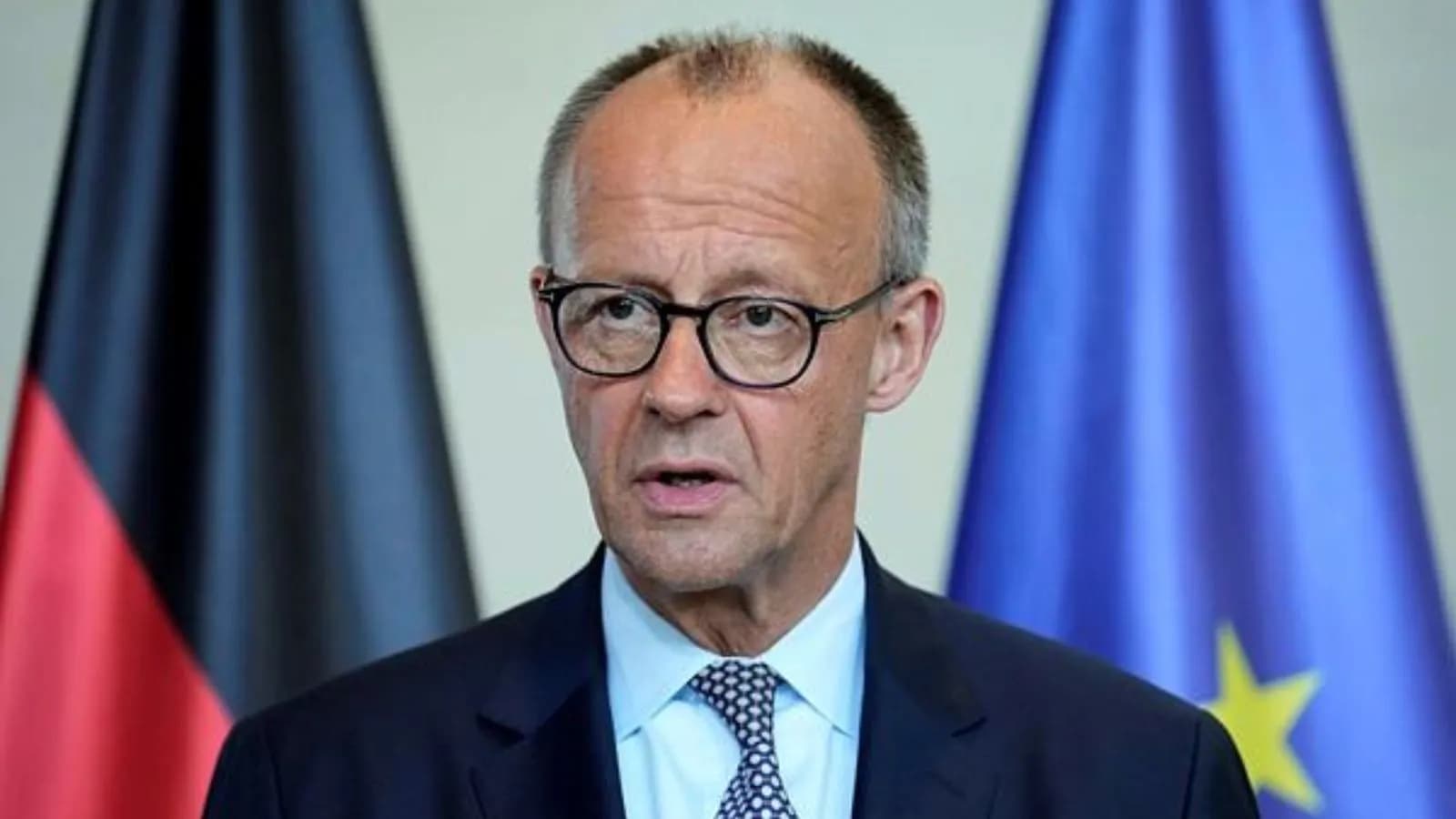
The halls of Munich’s Bayerischer Hof hotel have regularly served as a seismograph that detects the shifting tectonic plates of global geopolitics. At this year’s Munich Security Conference (MSC), the seismograph’s needle not only quivered but also recorded a fundamental realignment. As German Chancellor Friedrich Merz took the stage to deliver his address, there was a lingering shadow of the 2025 MSC, defined by the confrontational posture of the US administration.
America’s response at the MSC suggested that Merz’s message may have resonated in Washington. US Secretary of State Marco Rubio addressed the MSC a day after Merz’s speech and the meeting between the two. His speech, while still firm on national interest, lacked the scorched-earth vitriol of Vance’s 2025 speech. Rubio extended a carrot by tugging at European heartstrings, invoking shared history and a common Western purpose. Yet, the underlying tensions remained: While Rubio spoke of reimagining the alliance, Merz hinted at building its replacement. His disclosure of ongoing discussions with French President Emmanuel Macron about a joint European nuclear deterrence strategy showed that Berlin and, perhaps by extension, Brussels might no longer wait for permission from Washington to think about the unthinkable. This address represented a full-circle moment not only for the transatlantic alliance but also for Merz, whose tenure had begun under a cloud of domestic scepticism but has now found its footing in the cold and hard logic of principled realism.

The crux of Merz’s speech rested on the admission that the post-Cold War order was dead. He declared that “If there was a unipolar moment in history after the fall of the Berlin Wall, then it is long gone.” He stated what many in Brussels were only whispering about the US’s claim to leadership “being challenged (by China), and may already have been squandered.” He also pointed out the “radical conclusions” drawn by the Trump administration in its rivalry with Beijing, conclusions that have accelerated a regression into a zero-sum, dog-eat-dog world.
Merz flagged the banner of “principled realism” and argued that Europe needs to navigate this era by embracing hard power. His repeated advocacy of this concept since his address at the World Economic Forum in Davos earlier this year suggests that values are only as secure as the economic and military power that supports them. Merz no longer seems interested in taking vacations from world history, and, through this philosophy, seeks to bridge the gap between Germany and Europe’s moralising impulses of the past and the brutal requirements of the present. Merz has already moved Berlin in that direction by committing to a staggering defence budget, slated to reach 3.5 per cent of GDP by 2029, to create a self-sustaining, strong pillar within NATO that can function even if Trump’s US continues its inward retreat.
In this speech, Merz attempted his own “Mark Carney moment”, recognising that the value of power must precede the power of values. Just before the MSC, Merz laid out the economic foundation for this strategic autonomy at the informal EU summit at Alden Biesen Castle, where he pushed for a roadmap on European competitiveness. Merz understands that for Europe to defend itself, it needs to compete technologically and industrially, and that was evident in his vocal support for the EU’s FTAs with India and Mercosur, which served as a counterweight to the White House’s wrecking-ball protectionist politics.
Despite Merz’s speech, which issued a fresh warning to the US administration, it did not call for a divorce from Washington. He acknowledged Europe’s dilemma of continued dependency on America’s military might and, in particular, its nuclear umbrella. He based his proposal to “repair and revive transatlantic trust together” on a new kind of equality with Washington. He warned that “in the era of great power rivalry, even the United States will not be powerful enough to go it alone.” Amid the current trend of rising autocracies, Merz reminded the audience and challenged Trump’s unilateral style, adding, “Autocracies may have followers, democracies have partners and allies.”
The most visceral moment of the speech came when Merz decided to address his domestic and foreign policy together by addressing the deep divide in values. He drew a line in the Bavarian sand as he directly rebuked the MAGA influence, stating that “the culture war of the MAGA movement is not ours.” He further defined the limits of freedom of speech when human dignity is attacked and reaffirmed Germany’s commitment to climate agreements and the WHO, thus signalling to his domestic populace that the German identity remained rooted in the Basic Law even as it sought to adopt a muscular posture. Aside from his speech, Merz also sought to reinforce ties with an “Other America” that shared European ideals and priorities by continuing subnational diplomacy through subsequent meetings with figures such as California Governor Gavin Newsom, who is touted as a strong candidate for the Democratic ticket in 2028.
As the MSC concluded, it was clear that Merz strongly attempted to reclaim the platform to present a confident, self-assured German voice, as well as that of a chancellor. He is moving from a candidate defending his country’s borders to a chancellor defining his continent. Thus, the full circle at MSC is complete, with the transatlantic relationship moving from a hesitant Europe to a self-assured one. Merz’s speech will perhaps serve as a benchmark to check whether the stand of principled realism transforms Europe into a power in its own right, which would then also define Merz’s legacy in the long term.
The writer is a Senior Researcher with the Institute of Peace and Conflict Studies (IPCS), New Delhi. He is a former German Chancellor Fellow (2023-24)

