



Backing a Uniform Civil Code (UCC), the Supreme Court said Tuesday that it is the “most effective answer” to usher in equality in inheritance laws, rather than the court striking down allegedly discriminatory personal law provisions and causing ambiguities.
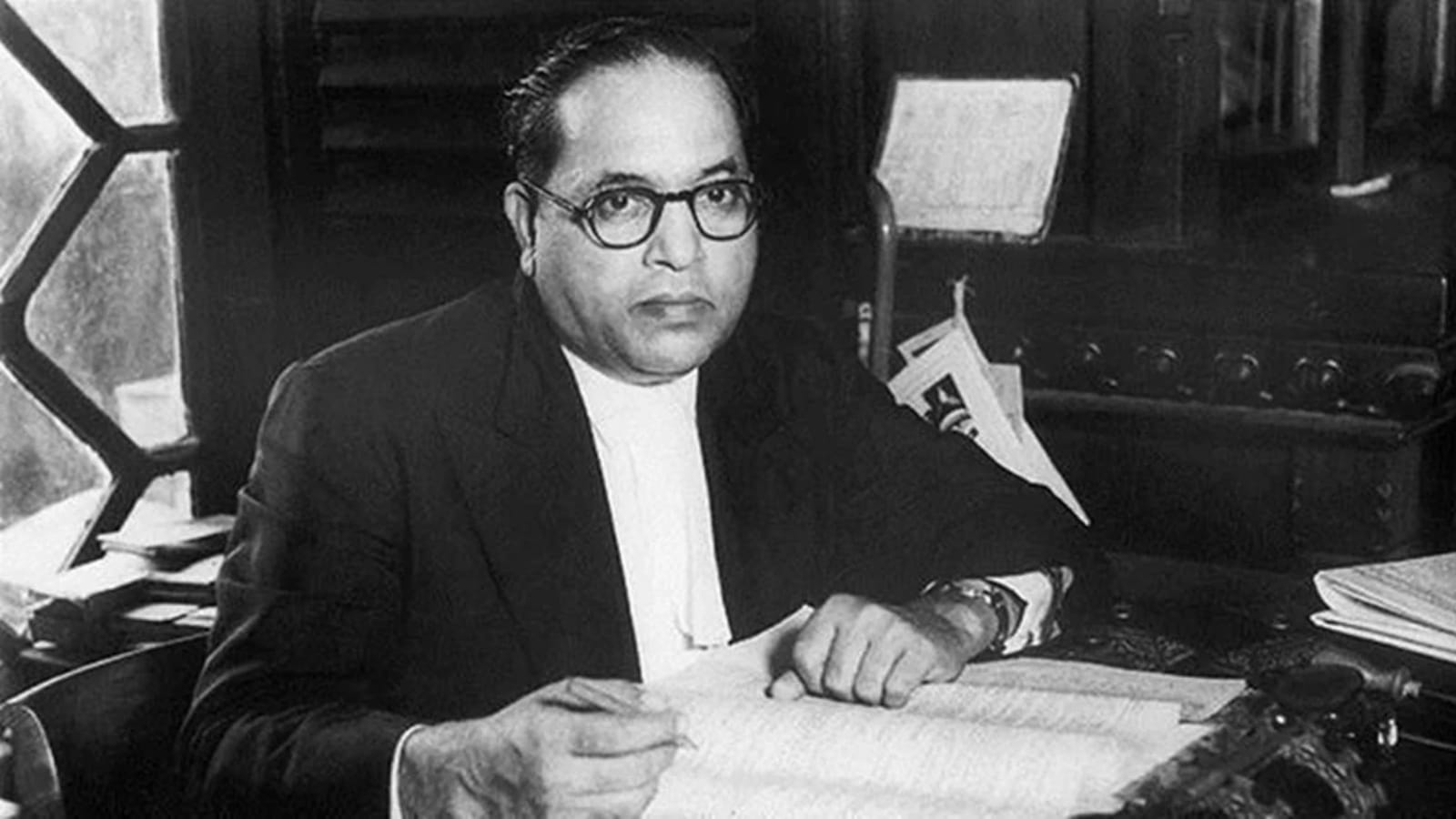
The assertion of the apex court isn’t too different from what B R Ambedkar, Chairman of the Drafting Committee of the Constitution, said when the Constituent Assembly was discussing amendments to Article 35 of the draft Constitution (later Article 44), a Directive Principle of State Policy that said, “The State shall endeavour to secure for citizens a uniform civil code throughout the territory of India.”

On November 23, 1948, Constituent Assembly member Mohammad Ismail Khan, arguing that the right to follow personal law is fundamental to a community, had proposed that a proviso be added to Article 35: “Provided that the personal law of any community which has been guaranteed by the statue shall not be changed except with the previous approval of the community ascertained in such manner as the Union Legislature may determine by law.” Member Mahboob Ali Baig too moved a similar amendment.
Apart from K M Munshi and Alladi Krishnaswami Ayyar, Ambedkar also spoke at length to oppose the amendment.
“…We have in this country a uniform code of laws covering almost every aspect of human relationship. We have a uniform and complete Criminal Code operating throughout the country, which is contained in the Penal Code and the Criminal Procedure Code. We have the Law of Transfer of Property, which deals with property relations and which is operative throughout the country,” Ambedkar said. He added that marriage and succession were “the only province the Civil Law has not been able to invade so far”, and that “it is the intention of those who desire to have Article 35 as part of the Constitution to bring about that change”.
Making a historical and political argument against the claim that the Muslim personal law in India had always been fixed, uniform, and immutable, Ambedkar argued that in several regions — from the North-West Frontier Province to United Provinces, the Central Provinces and Bombay — Muslims sometimes even followed Hindu inheritance systems, until the colonial British government mandated the application of the Shariat law of 1937. In North Malabar, Ambedkar went on to say, the Marumakkathayam Law, a matrilineal law, applied to all — Hindus as well as Muslims.
“It is therefore no use making a categorical statement that the Muslim law has been an immutable law which they have been following from ancient times,” Ambedkar argued.
But unlike other proponents of the UCC, Ambedkar had a more conciliatory approach as he attempted to allay fears that the Code would be immediately imposed on everyone once the Constitution came into force. Pointing out that Article 35 was a Directive Principle and not a law already enforced, he said the Code could be initially applied voluntarily before broadbasing it. “It is perfectly possible that the future parliament may make a provision by way of making a beginning that the Code shall apply only to those who make a declaration that they are prepared to be bound by it, so that in the initial stage the application of the Code may be purely voluntary.”
The amendment was thus rejected by the Constituent Assembly and the UCC became part of the Constitution.
However, the matter was brought up again on December 2, 1948, by Constituent Assembly member Kazi Syed Karimuddin, who argued that if a Code were enacted, it would interfere with the freedom to practise religion. Ambedkar countered the argument with a plea for a clear boundary between religion and civil/social law.
“The religious conceptions in this country are so vast that they cover every aspect of life, from birth to death. There is nothing which is not religion and if personal law is to be saved, I am sure about it that in social matters, we will come to a standstill,” he said. “I personally do not understand why religion should be given this vast, expansive jurisdiction so as to cover the whole of life and to prevent the legislature from encroaching upon that field. After all, what are we having this liberty for?”
He again sought to reassure members from the minority community that recognising the State’s power to enact a uniform civil code did not mean it would be imposed immediately or without regard to social consequences.
“No Government can exercise its power in such a manner as to provoke the Muslim community to rise in rebellion. I think it would be a mad Government if it did so. But that is a matter which relates to the exercise of the power and not to the power itself.”
Vikas Pathak is Deputy Associate Editor, The Indian Express, and writes on national politics

