



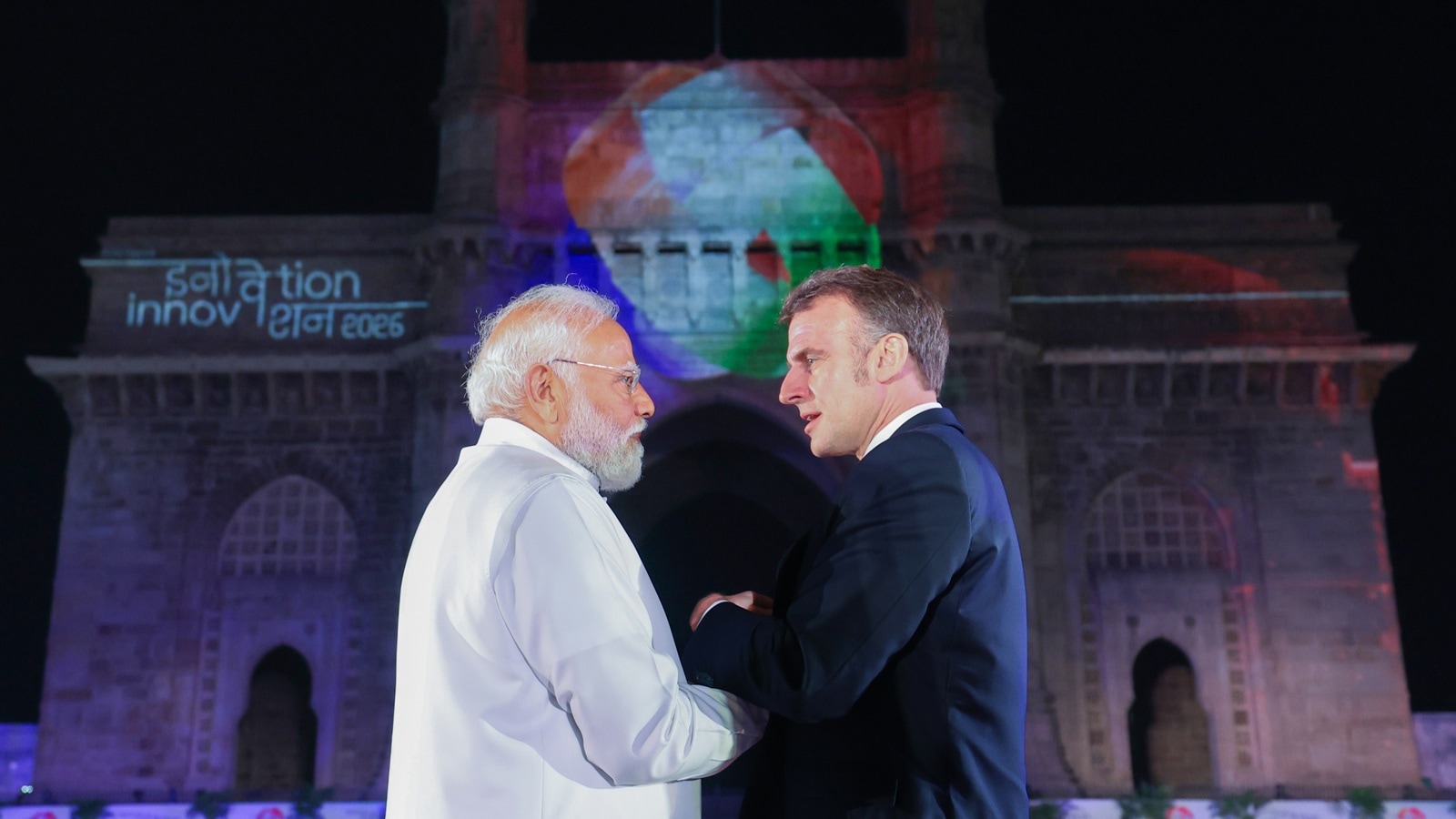
French President Emmanuel Macron’s visit to India has resulted in the two sides elevating the relationship to a Special Global Strategic Partnership. The joint statement issued after talks between President Macron and Prime Minister Narendra Modi covers a broad range of areas, including cooperation in defence, space, critical minerals, advanced materials, technology and innovation, start-ups, cyberspace, the environment and combating terrorism and extremism. The key congruence is that both sides view the relationship as essential to expand each other’s “sovereignty and decision-making autonomy.”
Throughout the 20th century, the two countries maintained close relations, symbolised by the mutual respect between their leaders: Jawaharlal Nehru and Charles de Gaulle; Indira Gandhi — who was fluent in French — and Jacques Chirac; and today Emmanuel Macron and Narendra Modi. This continuity of high-level rapport has reinforced bilateral trust and dialogue, culminating in the signing of a strategic partnership in 1998.

France has since been a consistent supporter of India’s strategic ambitions. Notably, it refrained from condemning India’s 1998 nuclear tests and continues to back India’s aspiration for a permanent seat on the United Nations Security Council.
The foreign policies of both countries have frequently converged, rooted in a shared commitment to strategic autonomy. This approach favours multilateral engagement while deliberately avoiding rigid forms of bloc politics reminiscent of the Cold War. President Macron’s vision of France as a puissance d’équilibre (balancing power) closely aligns with India’s foreign policy concept of multi-alignment, both reflecting a preference for flexible partnerships over exclusive alliances.
This shared conception of international order has enabled France and India to develop a comprehensive defence partnership, grounded in regular joint military exercises and major strategic acquisitions of French equipment by the Indian armed forces. Six Scorpène-class submarines and 36 Rafale fighter jets are already in service, and in 2025, India placed an order for 26 additional Rafale Marine aircraft. Following the widespread deployment of the French fighter aircraft during Operation Sindoor, the Defence Acquisition Council’s recent approval to procure 114 additional Rafale jets stands as a clear testament to India’s confidence in this advanced system.
Macron’s visit saw the two countries announcing that they will constitute a Joint Advanced Technology Development Group to explore opportunities to “co-develop emerging and critical technologies in identified niche areas to retain a competitive military edge, and mitigate supply chain vulnerabilities.” Both leaders also jointly inaugurated the H125 helicopters’ Final Assembly Line.
The two sides also reaffirmed their commitment to a rules-based order in the Indo-Pacific region. While both countries developed Indo-Pacific strategies concurrently in 2018, they were already established regional partners. In the Indian Ocean, the two countries have long collaborated through various forums, including the Indian Ocean Rim Association (IORA), the Indian Ocean Commission (IOC), and the Indian Ocean Naval Symposium (IONS). The French territory of La Réunion is gradually evolving into a strategic platform for Franco-Indian military collaboration in the region. The two countries signed a logistics cooperation agreement in 2018, allowing Indian naval forces to access the Réunion base. Joint patrols involving an Indian P-8I aircraft are regularly conducted.
A Franco-Indian Roadmap for the Indo-Pacific, signed in 2023, outlines 12 pillars of collaboration in the region. A companion document also signed in 2023, entitled Horizon 2047 maps cooperation for the next 25 years, with a particular focus on ecological transition and deepened people-to-people exchanges. Beyond these traditional areas of collaboration, the relationship now extends into emerging technologies, particularly AI.
Both India and France adopt specific foreign policies driven primarily by domestic imperatives, which may at times constrain the prospects for collaboration. This is particularly evident in their relationships with the two major powers, the United States and China. Unlike India, France is not part of the Quad. Paris also maintains a distinctive relationship with China, notably at the UN Security Council. Russia, meanwhile, represents another significant point of divergence. Despite Moscow’s invasion of Ukraine, Russia remains a crucial partner for Delhi, while Franco-Russian relations have reached their lowest point in decades.
Yet these divergences are unlikely to derail the Franco-Indian relationship. Both countries are now committed to long-term strategic engagement that transcends narrow political differences.
Manoj Kewalramani is the Chairperson, Indo-Pacific Studies Programme, Takshashila Institution. Paco Milhiet, PhD, is a visiting fellow at the S Rajaratnam School of International Studies (NTU-Singapore)

