



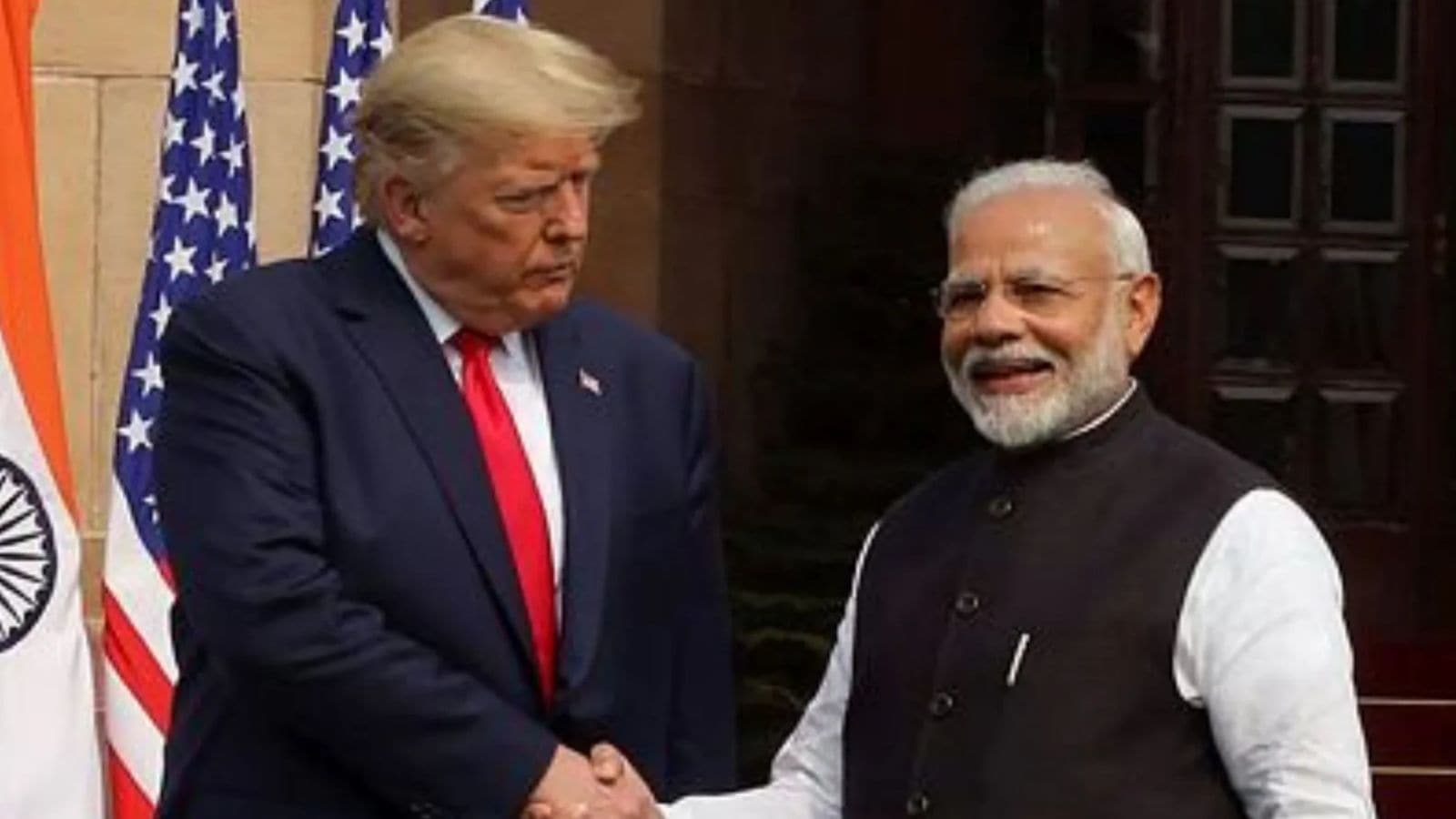
The weaponisation of India’s oil imports by the United States, linking the sourcing of oil to terms for bilateral trade, is a reminder of the constraints imposed by such external dependence on national security and foreign policy.
Independent India began its development process with four critical external dependencies — food, foreign exchange, defence equipment and energy. The foreign exchange crisis of 1957-58 alerted policy makers to the external financial constraint. The war with China in 1962 signalled the shortage of defence equipment. The droughts of 1965-67 drew attention to the critical dependence on food imports. The Gulf War of 1990 contributed to a spike in oil prices that triggered a balance-of-payments crisis.

The governments of the day learnt important economic and foreign policy lessons from each crisis. The shortcomings in defence equipment available during the 1962 war forced Prime Minister Jawaharlal Nehru to reach out to the United States for assistance. The food crisis of the mid-Sixties showed how external dependence in a vital sector like food could also be used to shape foreign-policy choices. President Lyndon Johnson tried to link food aid to a change in India’s stance on the war in Vietnam. Prime Minister Indira Gandhi stood her ground.
The oil crisis of 1990 and the subsequent foreign exchange crisis of 1991 forced India to approach the International Monetary Fund for support. Neither the United States nor other developed economies were willing to help India until the government of Prime Minister Narasimha Rao undertook major changes in both economic and foreign policy. The diplomatic recognition of Israel was one consequence.
More recently, the weaponisation of finance by the Group of Seven (G7) economies, following the Russian invasion of Ukraine, and the weaponisation of energy supplies by US President Donald Trump, draw attention to the constraints being imposed on the pursuit of an independent foreign policy and highlight the strategic importance of greater self-reliance.
Little wonder then that Prime Minister Narendra Modi has rediscovered the relevance of Nehru’s policy of self-reliance, that is atmanirbharta, even as Panditji is slammed day in and day out.
It should be clear to the managers of national security that the US will persist with its present policy of weaponising all forms of trade, especially trade in energy, defence equipment and access to advanced and critical technologies. The optimism generated by last February’s joint statement titled, “US-India COMPACT — Catalysing Opportunities for Military Partnership, Accelerated Commerce & Technology — for the 21st Century”, should now be set aside given the events of the last 12 months.
Prime Minister Modi and President Trump even signed on to another optimistic acronym, TRUST — “US-India Transforming the Relationship Utilising Strategic Technology” — when they agreed that “energy security is fundamental to economic growth, social well-being and technical innovation in both countries”. Trump signed on a statement that promised to “ensure energy affordability, reliability and availability, and stable energy markets.”
By reneging on that promise Trump has undone a quarter-century of trust-building between the US and India. The TRUST statement says both countries are “leading producers and consumers, in driving the global energy landscape”, committing them to an Energy Security Partnership, including in oil, gas, and civil nuclear energy. India can no longer trust Trump’s America on energy security after the events of the last fortnight.
Joining hands with Israel, the US has engulfed all of West Asia in a war that has serious consequences not just for India’s energy security but also the larger economic interests it has invested in the region. Given the geo-economic stake India has acquired in the Gulf, the Israel-US action amounts to a betrayal of trust. The Prime Minister ought to stand up and say as much in Parliament.
Indian national security managers would be well advised not to get locked into any more agreements with the US during the remainder of the Trump administration given the direction of Trump’s economic and geopolitical policies. The Modi government’s policy of “atmanirbharta” requires it to stand up to the challenge of neo-imperialism posed by Trump’s aggressive moves around the world. Self-reliance is earned, not granted.
Even as India continues to manage these longstanding external dependencies in an increasingly uncertain and difficult global economic and geopolitical environment, new vulnerabilities have come to the fore. Over the past decade, elite emigration has emerged as a new source of external vulnerability. For a long time, India has viewed the diaspora’s reach and standing, especially in developed countries and in West Asia, as a symbol of “soft power” and a source of foreign exchange.
Trump’s anti-immigration and America First policies and the war in the Gulf have once again exposed the tenuous foundations of India’s diaspora outreach. Moreover, a globalised Indian power elite is being used, especially by the US and its allies, to influence public opinion and shape policy narratives at home, drawing India into their conflicts.
The last time this kind of external influence-mongering was experienced on such scale was during the Cold War, in the 1960s and 1970s, when a non-aligned India became an important theatre for external actors. Once again, one sees a similar increase in the activities of what are these days fashionably referred to as “influencers”. The difference between the earlier Cold War era and now is the paradox that, on the one hand, India has become more developed and more influential and yet, on the other hand, it appears to have become more vulnerable to external pressure and influence.
While Prime Minister Modi seems to have adopted Indira Gandhi as his role model on a range of policy issues and in his style of prime ministerial governance, he has not yet acquired her sense of personal courage and confidence to stand up to such external bullying. Standing up to Pakistan is okay. But she stood up to the Big Powers.
Managing Big-Power rivalry, which in the contemporary era is a three-way contest between the US, Russia and China, while not allowing any one of them to exploit India’s external strategic dependencies as weapons against India, is what leadership has to be about.
Baru is a writer and former editor, The Financial Express

