



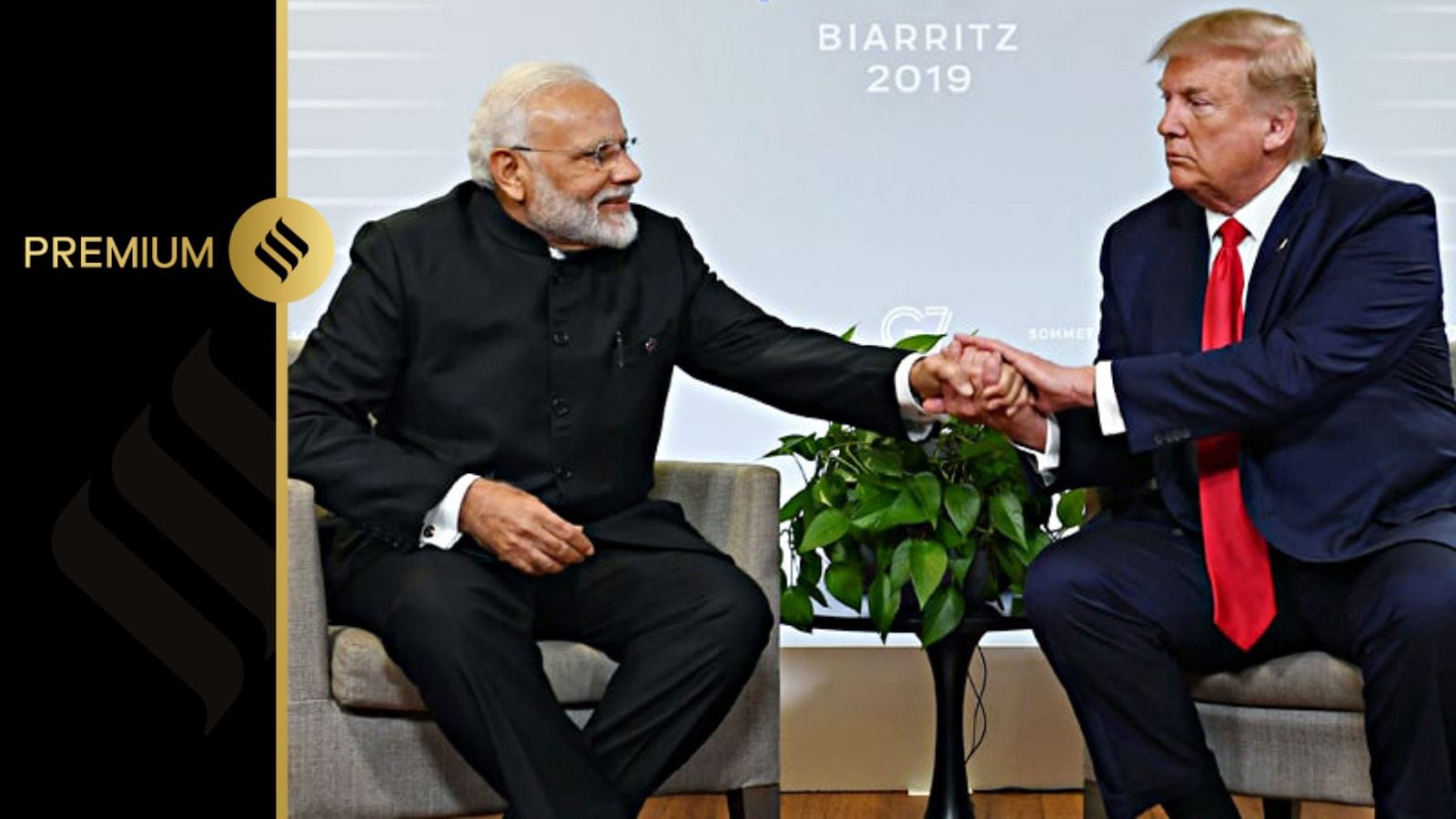
The broad contours of the India-US trade deal have been agreed upon. Never mind that the granular details are sketchy, the announcement itself is noteworthy. With agreements with the US, EU and the UK, India is now more closely integrated with the Western world than ever before. There is, after all, a convergence of economic and strategic interests.

The contentious issue of Russian oil, however, remains. Agreeing to stop or even drastically cut down its crude imports would mean that the government has concluded that the cost-benefit ratio of buying large quantities of Russian crude has now turned adverse. Perhaps the pain of the imposition of the tariffs and the penalty, the dwindling of foreign capital flows and the sharp decline in the rupee was simply too much to bear. There is also the visa issue and the implications of Trump’s policies for services exports and remittances — the two bright spots in the economy — to contend with. Domestic concerns on these issues had been mounting.
The question now is whether the agreement is a wholehearted or hesitant embrace? Have long-held ideological positions been cast aside?
It does appear that both sides are moving ahead with caution. There is a trust deficit. India won’t find it easy to paper over the bitterness of the last several months. It has also underlined its strategic options by affirming strong relations with Russia — whether falling crude imports will affect the relationship with its top defence supplier is unknown — and improving equations with China.
But, therein lies the conundrum. US-China relations lie at the heart of the India-US relationship.
Decades ago, the US facilitated China’s entry to the WTO. American companies shifted their manufacturing to China in search of greater efficiency. They provided the capital and technical assistance, in part, to build up the Chinese economy. While the US benefitted greatly from this, it has turned out to be a strategic mistake. Propped up by enormous subsidies and an undervalued currency, Chinese manufacturing has done immense damage to the economic and social fabric of the US. The China shock has rendered millions unemployed, destroying communities. In recent years, faultlines between the two countries have only deepened. In fact, it would not be an exaggeration to say that the US-China economic clash will be the major global contest over the coming decades.
Against this backdrop, the question is: Will the US government and American firms make the same huge bets on India like they did decades ago with China? And that too without any guarantees that history won’t repeat itself? The strategic choice that is now likely being exercised is almost forced by the US. Moreover, in today’s fractured geopolitical environment, where resilience of supply chains is being prioritised over efficiency, where investment flows are driven by friendshoring, will the transfer of capital and technology from the US to India be at the same level as it was in the case of China? More so when the US is trying to strengthen itself and rebuild its industrial base?
While long-term trends may well point towards greater strategic and economic integration between India and the US, it’s difficult to say how this will play out in the immediate future. But, from an investor’s perspective, what will certainly not help India’s case is issues like the Tiger Global tax ruling, especially when there seems to have been a fundamental reassessment of India’s growth prospects by domestic as well as foreign investors. Lacklustre investments, the outflow of capital, a sluggish stock market and the sharp fall in currency all point towards this. The existing engines of growth have been looking shaky. Just the release of 11 new plugins of an AI model was enough for investors to question the prospects of the Indian IT sector. The strategy of higher public capex and providing incentives via the PLI scheme also seems to have run its course. When sections of India Inc publicly complain about not feeling the 8 per cent growth, the anxiety runs deep.
But, as it happens, the government now has a growth strategy. The building blocks of an export-oriented growth model that has powered the rise of many nations are now in place. China plus one may now be a real possibility. But this requires liberalising on the domestic front as well.
Till next week,
Ishan
Sanjaya Baru, “US deal raises questions. PM must take leaf out of Manmohan Singh book”, February 12
Shailaja Chandra, “Scorecards forget civil service isn’t only for disposing files”, February 12
Vikram Patel, “We need to keep children safe from social media harms”, February 9
Pratap Bhanu Mehta, “Trade framework gives India room to navigate but tilts ground in US favour”, February 10
C Raja Mohan, “In the new world order, economic policy is also foreign policy”, February 11

