



In West Bengal, the ongoing Special Intensive Revision (SIR) of electoral rolls has snowballed into a massive controversy, barely a few months before the Assembly elections, and spiralled into a full-fledged political flashpoint between the ruling Trinamool Congress (TMC) and opposition Bharatiya Janata Party (BJP). Recurrent reports of Booth Level Officers’ (BLO) suicides, teachers protesting alleged coercion, and the Election Commission refuting the allegations, have been running alongside a deep-seated anxiety among ordinary people, many being called for hearings, triggering a fear of sudden deletion, mismatched records and demands for documents.

A jury report on SIR has described it as “hastily and haphazardly conducted”, with the exercise “disproportionately excluding women, Muslims, migrants and tribal communities”.
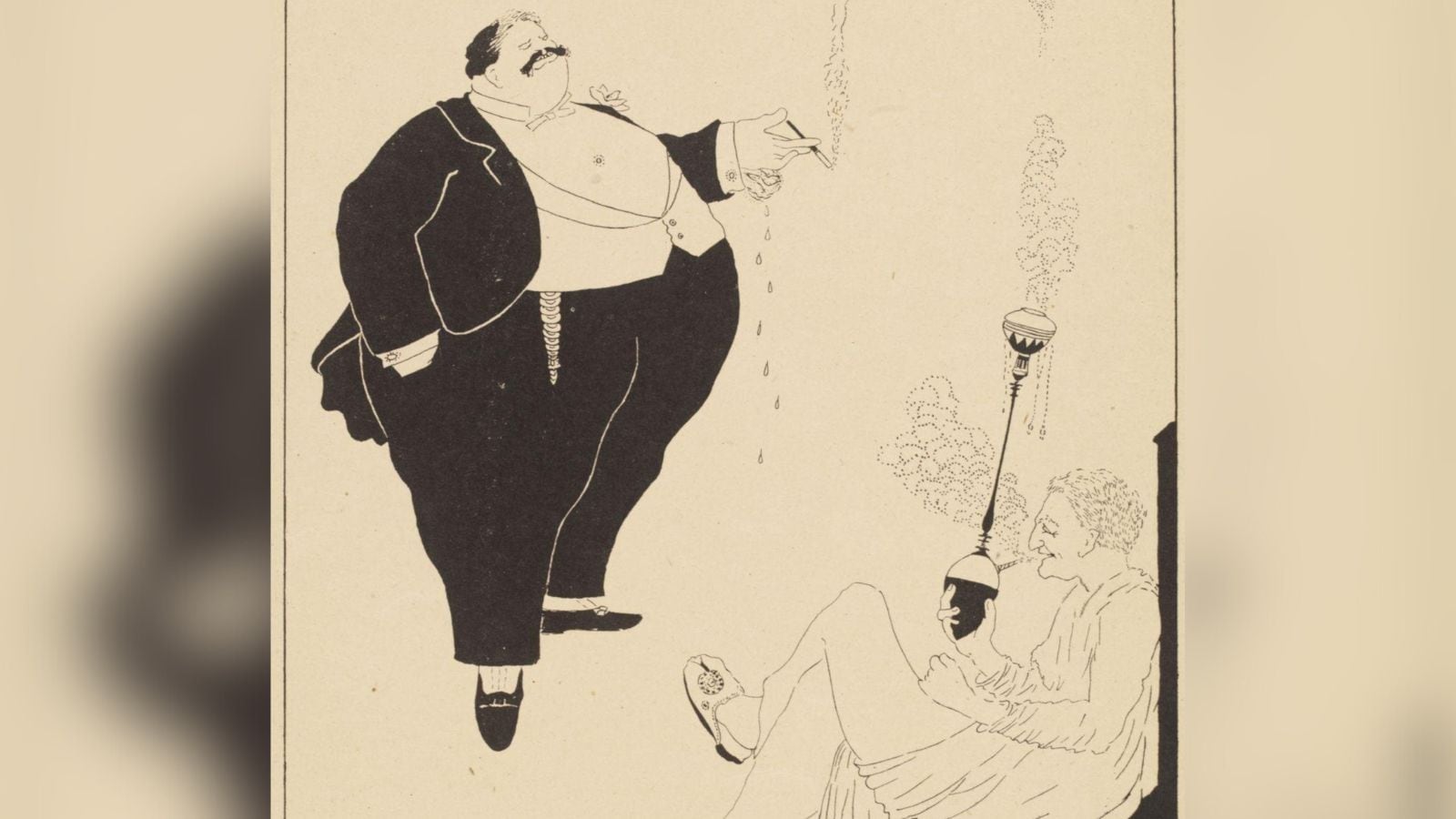
However, the unease surrounding the electoral exercise carries the spectre of something that Bengal knows well and goes far beyond forms and affidavits. Beneath the current political panic lies a premonitory history that has long dominated Bengal’s cultural landscape. While Kalighat’s Babu Bibi paintings mocked the bhadralok’s anxiety and desperate attempts to perform legitimacy under colonial surveillance, Gaganendranath Tagore’s caricatures of bureaucracy showed citizens drowning in paperwork; while scroll paintings and woodcuts archived the lives overlooked in official records, works of Zainul Abedin and Jamini Roy echoed the underlying tension of lives hovering at the edge of official records. This anxiety also permeated literature and theatre with striking clarity, as the cultural narrative repeatedly returned to the same unsettling question of who is seen, who gets left out, and the fragile promise of recognition when the state’s gaze turns arbitrary.
The earliest visual register of Bengal’s anxiety around visibility and disappearance appears in the mid-19th century Kalighat paintings, essentially in the recurring figures of the “babu”. Often read as social caricatures, this fin-de-siecle figure was a visual embodiment of performance under state scrutiny. Emerging at a time when colonial modernity was at its peak, the babu walked the tightrope between aspiration and inadequacy. The carefully curated appearance, the exaggerated Westernised manners, and the obsession with respectability bore a social commentary of a class caught between legitimacy and recognition, and marked one of the earliest cultural prototypes of a citizen whose validity could be granted and revoked by systems of power.
As the 19th century gave way to the 20th century, Bengal’s artistic gaze shifted from performance to the mechanics of power. And Gaganendranath Tagore’s works captured this transition with striking precision. His Adbhut Lok (The Realm of the Absurd), a landmark portfolio of lithographic caricatures, transgressed beyond social satire into a mockery of colonial bureaucracy. In his depictions of clerks, magistrates and babus, the individuals are already bogged down by files, authority tends to be procedural, and existence is reduced to documents. His figures inhabit an uncertainty amid administrative opaqueness, where the fear of disenfranchisement is not what alarms them, but being trapped in a system that insists on neutrality but offers little clarity on thresholds.
However, Tagore’s caricatures, though trapped under bureaucracy, leave out a larger section that fails to make it to the institutional frame. For a significant chunk of Bengal’s population, mostly women, migrants and rural communities, the anxiety was not borne out of excessive scrutiny, but administrative absence. These weren’t lives stalled under bureaucracy. They simply remained unrecorded. And it was this space that other cultural forms, like Patachitra tradition, sought to fill.
Patachitra scroll painting, traditionally practised by community artists (patuas) in Midnapore, Birbhum, and Murshidabad districts, functioned as a living archive of the lives off the record. While historically, the scrolls focused on mythological tales, by the 19th and 20th centuries, the medium expanded to contemporary topics. The power of these scrolls was in their focus on the marginalised, and women, migrants, and tribals, ignored by enumerators, often took the centre stage of these narratives. These paintings, existing through memory and repetition, foregrounded an entire population rendered invisible in the ledger.
While the scroll paintings archived the lives left out of official attention, the scale of catastrophe, including war, famine, Partition, and mass displacement during the mid-20th century, shifted the artistic gaze from narration to exposure.
Working in the backdrop of the famine and socio-political upheaval in the 1940s, Bengal artists responded to the shared crisis of visibility and disappearance in markedly different ways. While Zainul Abedin and Jamini Roy grappled with how the suffering should be acknowledged, Chittaprosad Bhattacharya and Somnath Hore confronted the disturbing question of what happens when lives remain unseen.
Abedin’s famine sketches, in rapid ink and brush strokes, pushed into public view those that survived perennial systemic neglect, while Roy, in contrast, sought to dismantle the very hierarchy that made belonging conditional. The former’s depiction of collapsing figures, emaciated bodies and displaced families confronted the viewer with the consequence of a bureaucratic indifference, while the latter’s flattened figures and frontal gazes of subjects from the marginalised communities denied the viewer the comfort of distance, showing their existence was irrespective of institutional validation.
Chittaprosad, on the other hand, responded to the crises not by seeking recognition in institutional art but by actively bypassing it. As famine tore through rural Bengal, he produced his body of work that rejected polish or allegory. His work, later compiled as Hungry Bengal, treated art as documentation rather than representation, offering an unflinching account of a populace abandoned by the administration. Medium formed the core of his resistance. Working extensively with woodcuts, Chittaprosad’s art became a democratic form of testimony that resisted erasure. His latter work post Independence continued to question the aftermath of a political transition. In Angels Without Fairy Tales, a harrowing series of linocut prints, his artistic gaze shifted to children, where the figures bore an unsettling imprint of a systemic failure, situating Chittaprosad as a key figure in Bengal’s visual history of exclusion.
As the political operations became more procedural, some artists responded by shunning depiction itself. Shaped by his experience of famine, Partition, and later the Naxalite movement, Somnath Hore’s Wounds series marked a shift in how visibility was registered in Bengal art. A radical departure from Indian modern art, his deliberate use of white-on-white, an unusual colour palette, on handmade paper pulp, with indentations, scars and tears, recorded damage in a non-descriptive way, foregrounding how presence can persist when identity is withheld.
Read against the backdrop of Bengal’s cultural memory, the unease over the electoral exercise carries a familiar anxiety, and what returns is not just a controversy, but a deep-seated fear of procedural disenfranchisement.
Roy is an Assistant Editor at The Indian Express. namrata.roy@expressindia.com

