



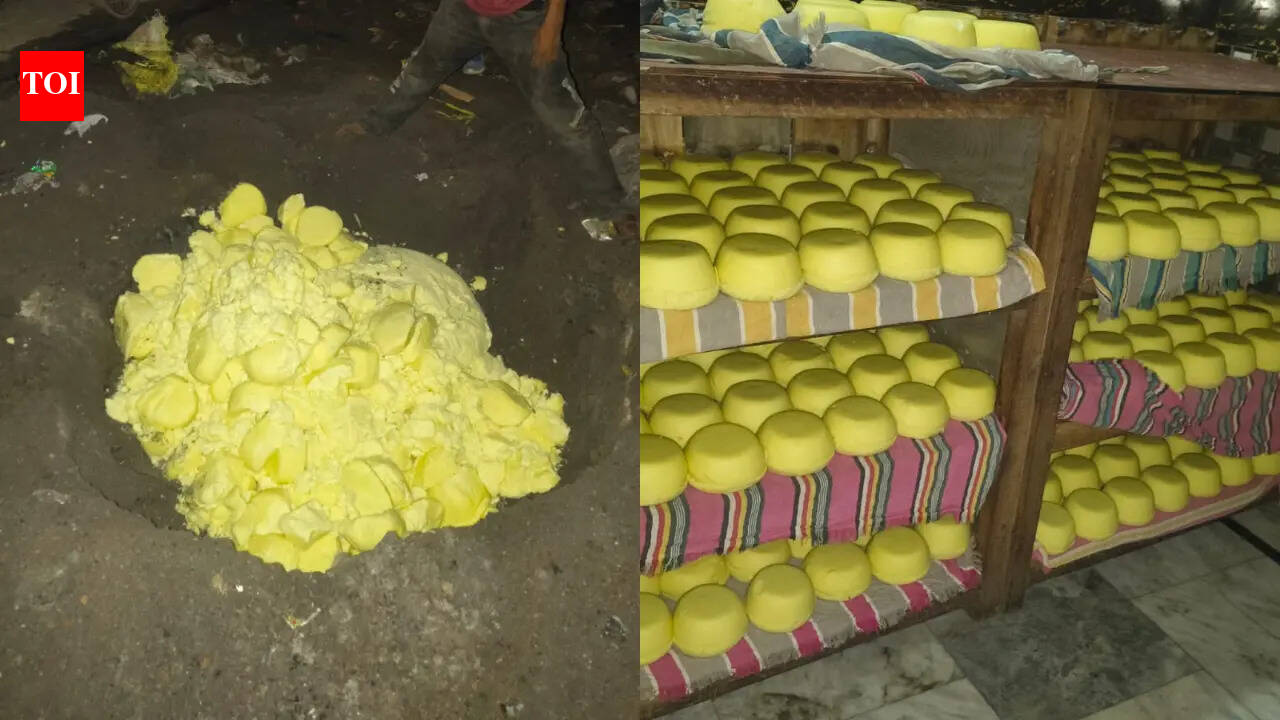
Khoya or mawa is an integral part of the sweets and desserts market in India. From festival times to daily celebrations, khoya is used mostly in Indian sweets, so its demand in the market is always high. Traditionally, made with full-fat milk it is a by-product rich in nutrients. However, the ever-growing demand for mawa has often led to news of adulteration and selling of fake mawa in the market. In a major crackdown, the Uttar Pradesh Food Safety Department raided an illegal khoya manufacturing unit in Sardhana, Meerut, and seized over 800 kg of adulterated mawa.According to information shared by the Food Safety and Standards Authority of India (FSSAI), officials confiscated nearly 70 tins of refined oil and eight sacks of skimmed milk powder during the operation. The team collected nine samples from the spot for further laboratory analysis. In a X post, FSSAI mentioned that the team of officials seized around 800 kilograms of substandard and adulterated khoya, which was destroyed on-site to prevent it from entering the market.In a similar incident, the Food Safety and Drug Administration (FSDA) seized 1,270 kg of adulterated khoya in Agra. The consignment was reportedly brought from Dholpur in Rajasthan.
Most common mawa adulterants
As per experts, the most common adulterants used in making fake mawa are starch, vegetable fats, blotting paper, and chalk powder. Starch is said to increase bulk, while chalk powder imitates the appearance and vegetable fats alter the texture. So, if you are also planning to buy mawa from the market, practice these 5 methods to test its purity at home.
Method 1
As per the Food Standards and Safety Authority (FSSAI), for this test, take a teaspoon of khoya from the packet and add it to a cup of hot water. Next, add a little bit of iodine to the cup. If the khoya turns blue after dropping iodine in it, then it has been adulterated with starch. If not, it is pure and fit for human consumption.
Method 2
Another method you can use at home involves a sample of sulphuric acid, which helps test for chemicals like formalin. Take a small khoya sample in a beaker and add some concentrated sulphuric acid to it. If there is a violet-coloured formation in the sample, then it might be adulterated.
Method 3
This test can be done right at the time of buying mawa. As per FSSAI, fresh mawa has an oily and grainy texture. It tastes slightly sweet and leaves a trail of grease, when rubbed on your palm. Take some mawa before purchasing it and rub it on your palm. If it has the above characteristics, it is pure. You can also taste a bit to check for natural sweetness.
Method 4
To test for vanaspati in the sample, just add it to a container and then mix 2 tbsp hydrochloric acid and 1 tbsp sugar to it. If the mixture turns red, the sample is impure and unfit for human consumption.
Method 5
Heat some mawa in a pan and add 1 tbsp sugar to it. If the sugar melts and if it starts leaving water on the sides of the pan, it is surely adulterated and is unfit for human consumption.
How to make khoya at home
Ingredients: 1 liter full-fat milkMethod: Start by pouring the full-fat milk into a heavy-bottomed pan. Heat and bring it to a boil, stirring continuously to prevent the milk from sticking to the bottom. As the milk thickens, keep scraping the sides of the pan and mix it with milk. Keep cooking the milk until most of the moisture evaporates and the milk becomes thick and grainy. As it thickens, keep stirring to get a soft dough-like consistency. Once done, switch off the flame and allow the khoya to cool completely. Your homemade preservative-free Khoya is now ready to use. Store in an airtight jar in fridge. It can last for 15-20 days.

