



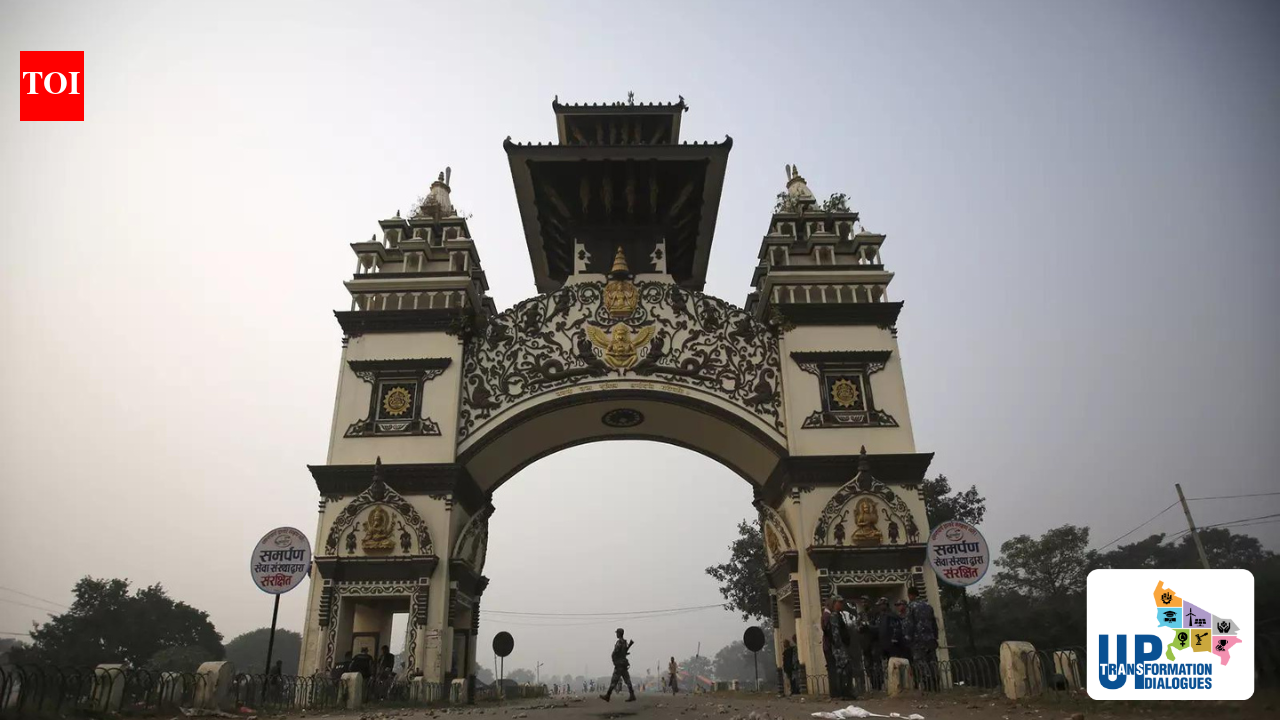
Uttar Pradesh shares borders with one international neighbour—Nepal—and eight Indian states, making 34 districts strategically important.For decades, the border districts of Uttar Pradesh occupied a paradoxical position within the state’s developmental landscape. These regions, serving as gateways to neighbouring states and to Nepal, should have been natural corridors of trade, cultural exchange and strategic connectivity. Instead, many of them remained economically peripheral, marked by inadequate infrastructure, poor road and rail linkages, limited industrial investment and weaker social indicators than the state’s more urbanised centres. Whether along the Indo-Nepal frontier in the north or along the boundaries shared with Uttarakhand, Haryana, Delhi, Rajasthan, Madhya Pradesh, Chhattisgarh, Jharkhand and Bihar, these districts confronted the twin burdens of geographical remoteness and prolonged developmental neglect. Settlements scattered across difficult terrain often lacked reliable roads, consistent electricity, safe drinking water and accessible public services, leaving residents at a disadvantage compared with those living closer to major cities.Since 2017, the Uttar Pradesh government under chief minister Yogi Adityanath has sought to rewrite this long-standing narrative. Recognising that border districts are not merely geographical endpoints but strategic gateways for trade, tourism, security and cultural interaction, the administration has pursued an integrated development model. This approach combines infrastructure creation, social welfare delivery, economic empowerment, religious tourism promotion and strategic connectivity into a coherent framework. The government’s vision has been to transform these border districts from peripheral zones into engines of economic growth and living ambassadors of the state’s broader developmental ambitions.The underlying premise of this new approach is straightforward yet profound: balanced regional development is indispensable if Uttar Pradesh is to realise its aspiration of becoming a trillion-dollar economy. Rather than concentrating public investment solely around a handful of major urban centres, the state has increasingly directed resources towards improving the quality of life in remote and frontier districts.The border villages that once struggled with seasonal isolation, erratic power supply and limited access to healthcare or education have gradually been drawn into the mainstream development agenda. The strategy rests on five mutually reinforcing pillars—comprehensive village development, modern transport connectivity, tourism and cultural infrastructure, economic empowerment through local industries, and strategic infrastructure that supports national security. Together, these pillars aim to narrow regional disparities while unlocking the latent economic potential of the state’s frontier regions.One of the most significant instruments of this transformation has been the Mukhyamantri Samagra Vikas Yojana, a programme designed specifically to accelerate development in border districts and villages. Historically, many settlements located along state and international borders suffered from basic civic deficits because of difficult terrain, dispersed populations and chronic underinvestment.The scheme addresses these gaps through focused infrastructure interventions. Priority has been given to the construction of all-weather roads, universal electrification, safe drinking water supply, rural sanitation systems, improved healthcare facilities, upgraded educational institutions, community infrastructure and enhanced livelihood opportunities. Importantly, the programme does not treat border villages as isolated outliers; instead, it integrates them into broader district development plans so that residents gain access to the same standards of public service available elsewhere in the state.The scheme also works in tandem with national flagship programmes such as the Jal Jeevan Mission, Pradhan Mantri Awas Yojana, Swachh Bharat Mission and Saubhagya, allowing multiple layers of intervention to converge in the same locations and produce cumulative impact.Perhaps the most visible change has occurred in the domain of transport connectivity. Recognising that physical linkages determine investment flows, market access and employment opportunities, the state government has invested heavily in roads that connect border districts with major economic centres.Among the most ambitious of these projects is the proposed North-South Corridor, a network of six high-speed roads designed to link Uttar Pradesh’s Nepal border with the Madhya Pradesh boundary. Stretching approximately 2,340 kilometres across twenty districts, the corridor is intended to transform vertical connectivity within the state. In the 2026 state budget, an initial allocation of four hundred crore rupees was provided to begin implementation. Once completed, the corridor is expected to reduce travel times substantially, improve the movement of freight, strengthen agricultural supply chains, support industrial logistics, encourage tourism, enhance emergency response capabilities and reinforce strategic mobility. By offering an alternative to congested urban routes, the project will enable faster and more efficient north-south movement across Uttar Pradesh.Parallel to this major corridor, attention has also been focused on the nearly six-hundred-kilometre Indo-Nepal border, which presents distinctive administrative and security challenges. In coordination with the central government, Uttar Pradesh has accelerated the construction and strengthening of strategic roads running parallel to the international frontier. These roads serve multiple purposes simultaneously. They improve access to villages that were previously difficult to reach, strengthen connectivity between security force outposts, facilitate quicker emergency response during floods or other disasters, and support the smoother transportation of agricultural produce. For local residents, the new roads shorten travel times to markets, schools and hospitals while encouraging commercial activity.From a national security perspective, better border infrastructure enhances surveillance and mobility for agencies operating along the open Indo-Nepal frontier, demonstrating how developmental and strategic objectives can reinforce each other.The Yogi Adityanath government has further introduced a distinctive conceptual innovation by treating border districts as the state’s “brand ambassadors.” For millions of travellers entering Uttar Pradesh from neighbouring states or from Nepal, these districts form the first impression of the state. Consequently, deliberate efforts have been made to improve their visual appeal, public infrastructure and visitor facilities. Initiatives have included the construction of modern entry plazas, tourist information centres, beautification projects, upgraded bus terminals, better urban roads, public conveniences, landscaping, lighting and hospitality infrastructure. The objective extends beyond aesthetics; it seeks to stimulate local economies through increased tourism and commercial activity, turning first impressions into lasting economic opportunities.Religious tourism has emerged as another powerful economic driver in several border districts that possess rich cultural and spiritual heritage long left underdeveloped. Chitrakoot, located on the Uttar Pradesh–Madhya Pradesh border and steeped in significance from the Ramayana, has received substantial investment in pilgrim amenities, road connectivity, riverfront development, temple area improvements, lighting, accommodation and tourist services.These interventions have strengthened Chitrakoot’s standing as one of India’s major spiritual tourism destinations. Similarly, Chandauli, which borders Bihar, has witnessed targeted improvements in access to religious sites and tourism infrastructure. Better roads, public amenities and visitor facilities are expected to increase tourist inflows and generate employment in hospitality, transport and local enterprises.Some of Uttar Pradesh’s border districts were earlier identified among India’s Aspirational Districts because of comparatively lower performance in health, education, nutrition and income indicators. The government’s response has been to combine targeted welfare delivery with sustained infrastructure development. Shravasti provides one of the clearest illustrations of this transformation. Situated along the Nepal border and internationally recognised as a principal site associated with the life of Lord Buddha, the district long lacked modern infrastructure despite its global religious importance.Today, major initiatives include the expansion of Shravasti Airport at an estimated cost of around three hundred and fifty crore rupees, improved road connectivity with Nepal, four-lane highways, enhanced tourism infrastructure, hotels, visitor amenities and upgraded civic facilities. The airport is expected to facilitate international Buddhist tourism by providing easier access for pilgrims from Southeast Asia and other Buddhist-majority countries. Concurrently, the district has recorded substantial gains in electrification, drinking water access and rural infrastructure, demonstrating how religious heritage and modern development can be mutually reinforcing.Reliable electricity has constituted another foundational pillar of border development. Over the past nine years, villages in frontier districts have benefited from expanded rural electrification and strengthened distribution networks. Greater access to electricity has produced cascading benefits: better educational outcomes through lighting and digital tools, improved healthcare services, expansion of small enterprises, mechanisation of agriculture, increased irrigation via subsidised tube-well connections and overall enhancement of household quality of life. Electrification has also enabled digital governance, online education and banking services to reach communities that were previously underserved, thereby integrating them more fully into the state’s administrative and economic mainstream.Infrastructure alone, however, cannot guarantee sustainable development without corresponding opportunities for local employment. Recognising this reality, the government has integrated border districts into the One District One Product initiative. Each district is encouraged to build upon its traditional strengths by promoting specialised products through skill development, design support, credit facilitation, marketing assistance, export promotion, digital platforms and common facility centres.In Shravasti, traditional tribal crafts have received institutional support that has enabled artisans, particularly women, to improve incomes through organised production and better market access. Across other border districts, the programme has similarly encouraged value addition in handicrafts, agriculture and small-scale manufacturing, creating livelihood pathways rooted in local resources and skills.Healthcare and education, long areas of relative deficit in many border districts, have also received focused attention. Over the past nine years the state has expanded primary health centres, community health centres, medical equipment, ambulance services, school infrastructure, digital classrooms, smart education initiatives and teacher recruitment. Special emphasis has been placed on maternal and child healthcare, immunisation and nutrition programmes. Educational infrastructure has improved through classroom construction, school renovations, distribution of learning materials and digital monitoring systems, helping to narrow the gap between frontier regions and more developed parts of the state.Technology-enabled governance in Uttar Pradesh has further extended the reach of welfare schemes into remote border villages. Residents have benefited from free foodgrain distribution, housing assistance, LPG connections, pension schemes, scholarships, health insurance and direct benefit transfers. Digitisation has reduced leakages and improved transparency, ensuring that entitlements reach intended beneficiaries with greater reliability. In predominantly agrarian border districts, agricultural development has formed a major component of the overall strategy. Interventions have included expansion of irrigation, rural roads linking farms to markets, cold-chain development, crop diversification, farmer training, mechanisation support, horticulture promotion and livestock development. Improved connectivity enables farmers to transport produce more quickly, reducing post-harvest losses and increasing profitability.The development of border districts also carries clear strategic significance. Better roads, communication systems and public infrastructure facilitate faster deployment of security forces whenever required. Modern infrastructure supports surveillance, disaster response and law enforcement while simultaneously improving civilian mobility. Thus investments in border infrastructure contribute simultaneously to economic growth and national security.An important outcome of these cumulative efforts has been stronger integration between border districts and major economic centres within Uttar Pradesh. Improved transport corridors have expanded opportunities for trade, tourism, manufacturing, warehousing, agro-processing, logistics, education and healthcare access. Rather than remaining isolated frontier regions, these districts are increasingly becoming active participants in the state’s growth story.While considerable progress has been achieved, the government continues to pursue further investments in transport, tourism, industrial infrastructure and social development across the border districts. Upcoming projects, including high-speed road corridors, tourism circuits, airport expansion, logistics infrastructure and rural development programmes, are expected to enhance the competitiveness of these regions still further. As Uttar Pradesh advances towards its long-term economic aspirations, balanced regional development will remain critical. Border districts are no longer viewed simply as the state’s geographical edges but as strategic growth centres that connect Uttar Pradesh with neighbouring states, international markets and major tourism circuits.The transformation of Uttar Pradesh’s thirty-four border districts over the last nine years reflects a fundamental shift in governance philosophy—from treating frontier regions as peripheral areas requiring only basic administration to recognising them as strategic assets capable of driving economic growth, tourism, trade and national security.Through initiatives such as the Mukhyamantri Samagra Vikas Yojana, strategic road projects, the proposed North-South Corridor, tourism infrastructure, airport development, electrification, welfare delivery and the One District One Product programme, the Yogi Adityanath government has sought to reduce regional disparities and bring meaningful development to the state’s frontiers.Although challenges remain and the long-term impact of many projects will depend on timely completion and sustained implementation, the policy direction has been clear: to integrate these districts more closely with Uttar Pradesh’s broader developmental trajectory. By strengthening connectivity, improving public services and promoting local economic opportunities, the state’s border regions are increasingly being positioned not as its margins, but as gateways to future growth and prosperity.
