



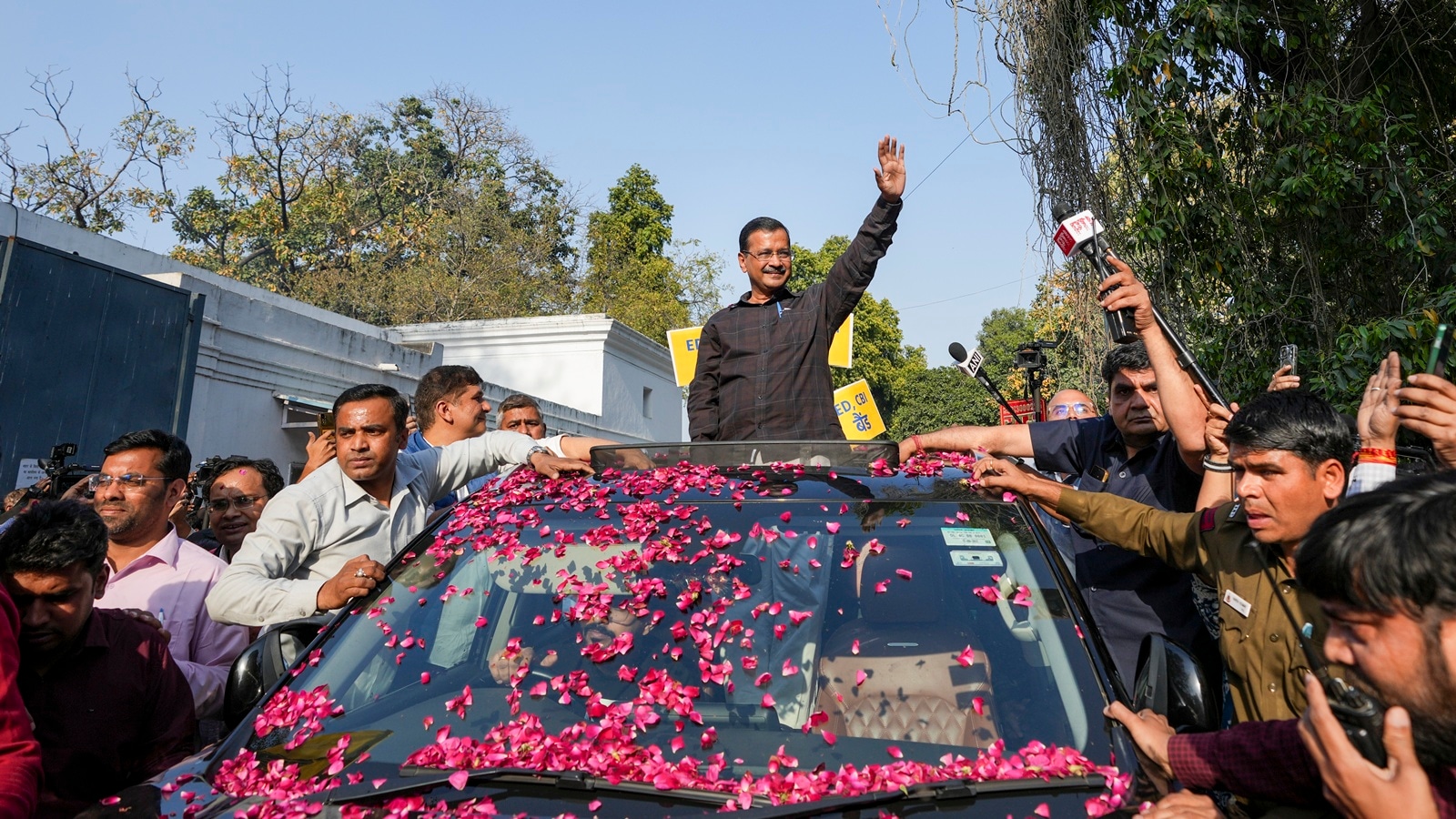
Across the world, countries that throw their political opponents in jail for long periods without trial, often by running sham investigations designed only for theatrical purposes, are called authoritarian regimes. Last week’s 600-page verdict by the CBI trial court in the Delhi excise policy case laid bare a truth that is widely known by India’s opposition parties — under Prime Minister Modi, India has joined this ignominious club.
No doubt, many politicians have been charged with corruption in independent India, many jailed and later freed after court orders. But the Delhi excise policy case stands a league apart for multiple reasons.

This is the first time a sitting Chief Minister and the leader of a national opposition party was put in jail for as long as seven months without trial on allegations of corruption, that too right before the 2024 general elections. The sheer brazenness of this act becomes clear from the fact that Arvind Kejriwal was jailed not because of any money trail or hard evidence implicating him but purely on the basis of statements of two “approvers” — co-accused who spent long periods in jail themselves, gave a clean chit to Kejriwal in multiple statements, but who allegedly changed their versions after being promised bail and an end to their physical and mental suffering.
The absurdity doesn’t end here. These two individuals were no ordinary approvers. One of them turned out to be a BJP donor who gave Rs 60 crore through electoral bonds, and the other was given an NDA ticket to fight the 2024 Lok Sabha elections from Andhra Pradesh.
That this case was driven solely by personal political vendetta was further made clear when Kejriwal was denied life-saving medicines while incarcerated, to be allowed later only after Supreme Court’s intervention. Together with Manish Sisodia, who was incarcerated for 17 months, the top AAP leaders spent a total of 82 months in jail. All through this, many AAP leaders and their families were subjected to untold harassment from investigative agencies and a damning media trial. The message was subtle but clear: if they can do this to one of the tallest opposition leaders, what chance do others who cross the government have?
The Delhi excise policy case also stands apart for the fact that, unlike any other case of alleged corruption, this case occupied space in the national prime time for thousands of hours over nearly three years. Every leak from the investigative agencies was treated as gospel truth and was run as “breaking news” without any kind of verification, and for the sole purpose of damaging the image of a national opposition party and its tallest leader. This, to a large extent, influenced the outcome of the 2025 Delhi assembly elections.
And finally, this case stands apart for the fact that after studying evidence from over 500 raids and five chargesheets running into 40,000 pages, the trial court, in an extraordinarily well-argued judgment, came to the conclusion that the case doesn’t meet even the bare minimum threshold of evidence to merit carrying out a trial. The court held that the CBI had carried out a “pre-meditated and choreographed exercise” where roles were retrospectively assigned to fit a preconceived narrative. The court went to the extent of ordering departmental proceedings against the CBI officer leading the investigation. To put things in perspective, this is one of the starkest condemnation by any court in India’s history of the complete politicisation of CBI and ED to serve the goals of their political masters.
How did we get to this point in Indian politics? India’s slide under PM Modi has been gradual but definite. Laws have been amended, cases have been open and shut (often timed with elections or someone joining or leaving BJP) for the sole purpose of accruing electoral benefits to the BJP. The worst of this excess has been directed at leading opposition faces such as Kejriwal, who is battling not one but over 50 civil and criminal cases by all of the Centre’s agencies put together.
The political calculation behind this indiscreet abuse of power is simple yet chilling. In the best-case scenario, you get permanently rid of your political opponents. In the worst case, as the Delhi excise case shows, your political opponents will still suffer long periods in jail, lose substantial political capital and a few elections, even if the case falls through later at the trial stage. In such cases, there is absolutely no downside for the Central government or its investigating officers for prolonged incarceration and reputational loss of opposition leaders, apart from substantial legal costs.
The investigation into Delhi’s excise policy and the recent verdict are already a watershed moment for Indian democracy. It doesn’t need to stop here. The case provides the perfect opportunity to stop this wholesale politicisation of India’s central investigative agencies. In March 2025, US courts awarded $120 million (over Rs 1000 crore) as compensation to two private individuals (Fulton and Mitchell) for their wrongful incarceration by the City of Chicago.
It’s time that all opposition parties, the media, the civil society and the judiciary in India come together to demand a similar price for blatant acts of abuse of power by the Modi government against voices opposing it, which has, in effect, imposed an undeclared emergency and is hollowing out the very core of Indian democracy.
The writer is a senior AAP leader and author of The Delhi Model

