



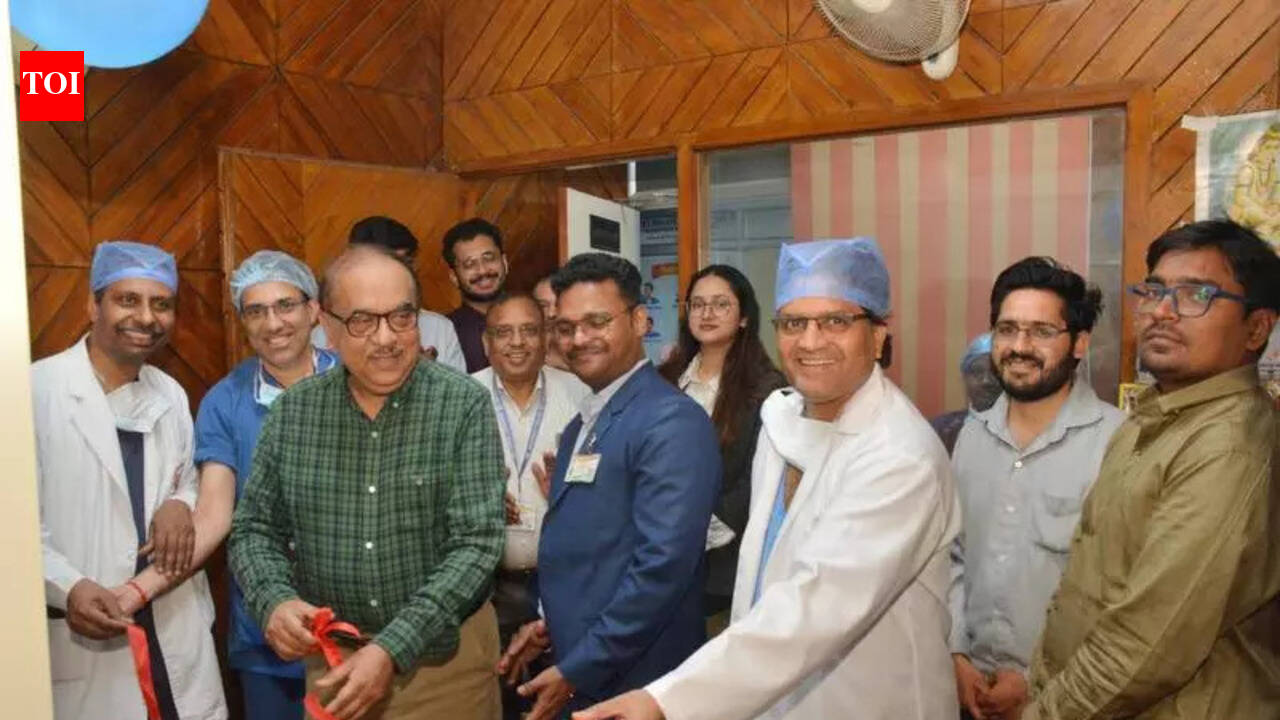
Lucknow: Children and elders in need of complex cochlear implant surgeries will not have to travel to AIIMS, Delhi, or SGPGI in Chandigarh, as the Sanjay Gandhi Postgraduate Institute of Medical Sciences (SGPGIMS), Lucknow, has upgraded its neuro-otology unit.“We have equipped the lab with advanced hearing assessment tools, which has made us a one-stop centre for planning and management of routine and complex cochlear implant cases,” said the unit head Dr Ravi Sankar.
“About 30% of the cases fall in ‘complex’ category wherein nerves involved in hearing process may be damaged. Keeping in mind the risks of surgery and the cost of procedure, quality testing facilities are crucial to decision-making. We are happy to extend the facilities to people,” Dr Sankar said.“We included Electrically Evoked ABR (eABR) in our lab. It helps confirm proper implant function and supports programming and follow-up care,” he said.He said that the addition facilities like P300 (Cortical Auditory Evoked Potential) and VEMP (vestibular evoked myogenic potential) helped in early detection of hearing loss in newborns, accurate diagnosis, better selection of treatment for various disorders, better monitoring during surgery, and effective monitoring of treatment outcomes (benefiting newborns, children, and adults with hearing difficulties).SGPGI director Prof RK Dhiman said, “Hearing loss is a silent disability that thrives on delay but responds well to early action. Availability of state-of-the-art services in the institute will give people of Lucknow and adjoining districts better facilities.” ‘4-6 children out of 1,000 have congenital deafness’ According to WHO estimates, 95.1 million children and adolescents (5-19 years) live with hearing loss worldwide. Upon including adults, this number swells to 1.5 billion, which is about 20% of the global population. In India, 4-6 children out of 1,000 live births are born with congenital deafness. The number ranges between 1-6 children per 1,000 live births in UP.
