



5 min readMar 13, 2026 06:26 AM IST
First published on: Mar 13, 2026 at 06:26 AM IST
Also by Siddharth Deb
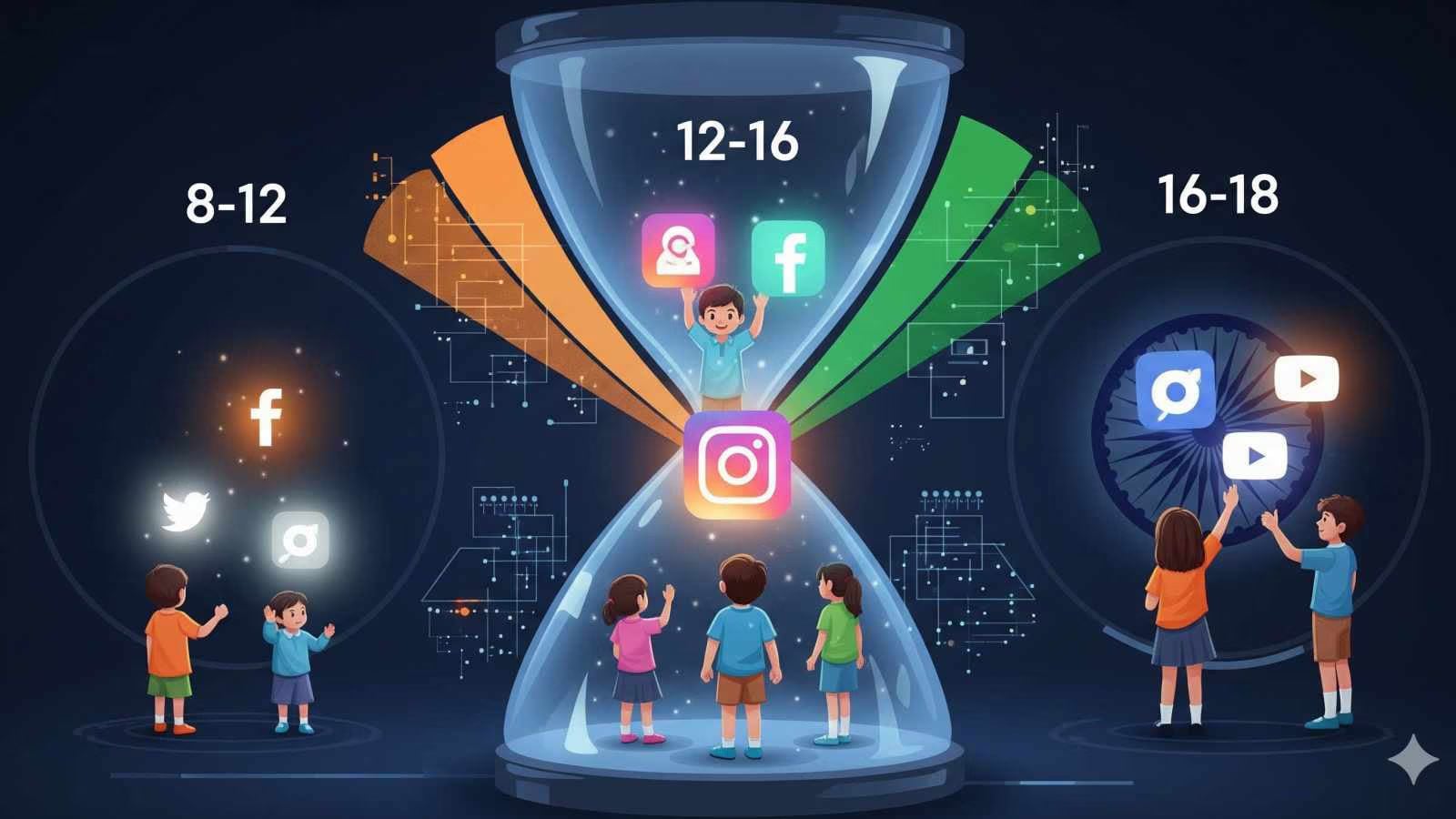
It is rare for policy discussions to resonate in every home as much as the potential ban on social media for those under 16. Regulating screen time is one of the most stressful features of modern parenting, and these proposals seem to be resonating with exhausted parents worldwide. India until recently appeared on a different path. However, something shifted in the last two months. The Andhra Pradesh government, otherwise known to be one of the most tech-forward state governments, was the first to announce that it was exploring such a move. Other states — Karnataka, Maharashtra, Goa, Bihar, and Kerala — rushed to announce exploratory discussions in this regard. This year’s Economic Survey framed social media addiction as a “public health issue” but shied away from a policy prescription. Reports suggest that the Centre has also started looking at age-related restrictions.

However, what seems “popular” is not often the best policy solution. First, a social media ban for under-16s can create a false sense of security among policymakers and caregivers. Risk permeates across the internet. The nature of those risks differs from platform to platform. Young people encounter varying risks on gaming platforms, AI chatbots and VoIP (voice over internet protocol) services. Banning one kind of platform will only result in young people migrating to other online spaces that adults (and regulators) are less familiar with. Thus, the limits of ban-first approaches cannot be ignored.
Second, a significant number of young people access the internet in single-device households. In shared-device settings, family structures organically regulate screen time. Regulations around young people’s access to digital services must be attuned to the reality that kids often bypass these restrictions by simply using their parents’ accounts and are generally adept at bypassing access-control restrictions.
Third, unlike the Global North, access to digital platforms in India helps bridge existing socio-economic inequities to a larger extent. The 2024 ASER survey cited by the Economic Survey also observes that over half of young people in rural areas use smartphones for education. It also observed that nearly 80 per cent of mothers were only schooled till Class X, with over 40 per cent having only completed Class V. This points to the inverse dependence of mothers (often primary caregivers) on their children for digital guidance. Therefore, policymakers should weigh the wider ramifications of cutting kids’ access to online spaces.
Given this context, India should explore frameworks that align with social realities while addressing parents’ legitimate concerns. First, interventions should build on recent legislative reforms like India’s forthcoming DPDP Act, which holds critical implications for young people’s digital safety. Set for rollout in May 2027, the DPDP Act limits personalisation and bans targeted advertising for under-18s. Additionally, its verifiable parental consent requirement for children is India’s first brush with age verification. Its implementation will provide evidence about India’s ability to successfully deploy population-scale age-verification methods. For context, countries like Australia are struggling with domestic rollouts. Even limited bans like the “Cinderella law” in South Korea, which prohibited children from using gaming platforms late at night, failed as young people circumvented age-verification systems easily.
In parallel, India can introduce a framework built on well-being-by-design principles. These can apply universally to all digital services with specific guardrails around addiction, stranger contact and other harmful behaviours. The principles should be augmented by transparency norms and penalties in case of violations. Platforms can be nudged to increase the uptake of parental controls and user awareness about their reporting and safety features.
Lastly, we need to increase investments in digital safety education for children and parents. We have a generation of parents that have had social media since they were teens and are no less prone to harmful online behaviours. While some school boards have adopted digital safety curricula, they are not implemented uniformly as this is often seen as a “supplementary” activity. Such curricula should also be dynamically updated to keep pace with rapid technological change.
Indian policymakers have taken a pragmatic approach to digital regulation so far, one that balances safety with socio-economic upliftment. We hope that when it comes to digital access for teenagers, we adopt a similar approach and find a middle path that achieves our goals.
Bharti is co-founder of Young Leaders for Active Citizenship (YLAC) and The Quantum Hub (TQH). Deb is associate director, TQH
