



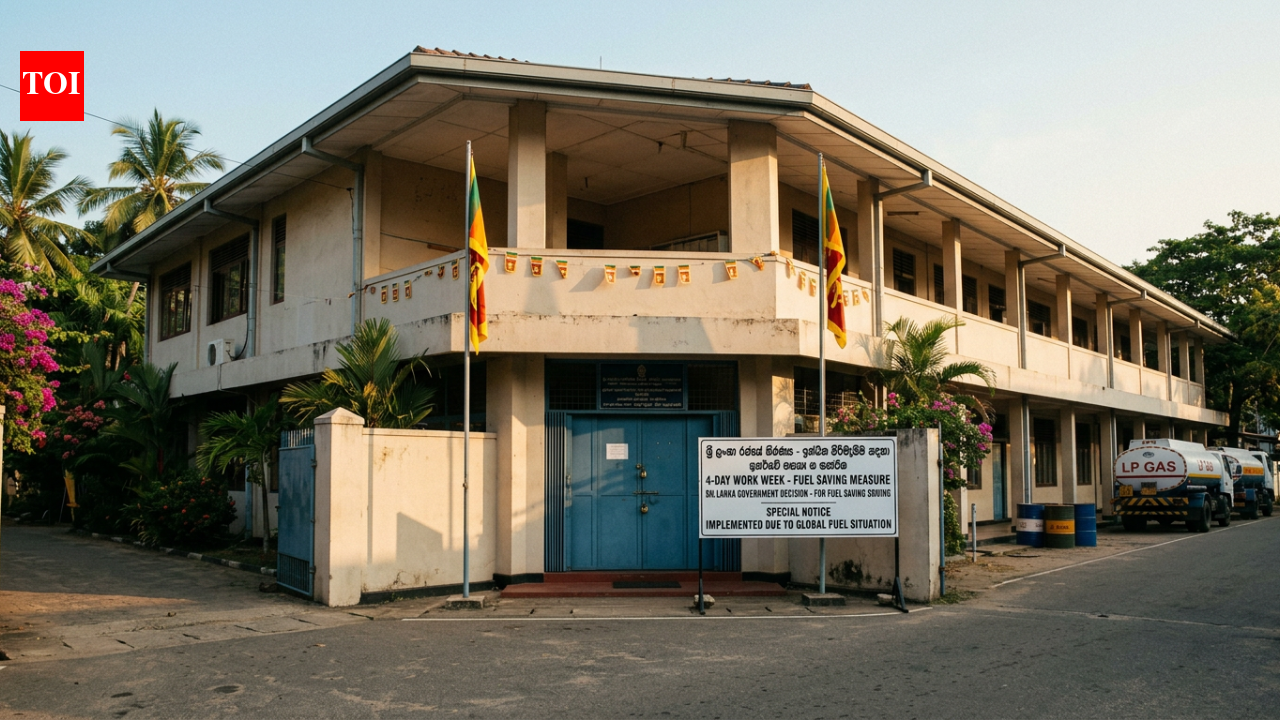
Amid the ongoing Middle East crisis, Sri Lanka has declared every Wednesday a public holiday to conserve fuel as the island nation grapples with possible shortages following the US and Israel’s war with Iran.President Anura Kumara Dissanayake speaking at an emergency meeting with senior officials on Monday, said, “We must prepare for the worst, but hope for the best.” The announcement comes as part of a series of precautionary measures implemented by several Asian countries since the outbreak of the conflict.The war has disrupted oil flows through the Strait of Hormuz, a critical passage that carries millions of barrels of oil from the Gulf into global markets. Nearly 90% of that oil and gas was bound for Asia, the world’s largest oil-importing region.Other Asian nations have also introduced reciprocal measures to cope with the escalating energy crisis. In Thailand, authorities are urging citizens to swap formal suits for short-sleeved shirts to reduce reliance on air conditioning. Myanmar has limited private vehicle use to alternate days based on license plate numbers, BBC reported. Bangladesh has declared university holidays during Ramadan and implemented planned blackouts to conserve electricity. In the Philippines, some government offices require staff to work from home at least one day a week and President Ferdinand Marcos Jr has banned non-essential public sector travel. Vietnam is encouraging citizens to stay home, use bicycles, carpool or rely on public transport, while restricting unnecessary vehicle use.In Sri Lanka, the new public holiday affects not only government offices but also schools and universities. Essential services, including health and immigration authorities will continue operating. Officials chose Wednesday as the day off to prevent three-day closures for government offices in a row.Additionally, motorists are now required to register for a National Fuel Pass, which rations fuel purchases. The quota allows 15 litres for private cars and five litres for motorcycles. The rationing system was first introduced in 2022, during Sri Lanka’s worst economic crisis, when the country ran out of foreign reserves and struggled to import essentials, including fuel.Since the US and Israel launched strikes on Iran late last month, global oil prices have surged, hovering around $100 per barrel. The war has heightened fears of regional supply disruptions, prompting countries across Asia to implement different measures to deal with the crisis.
