



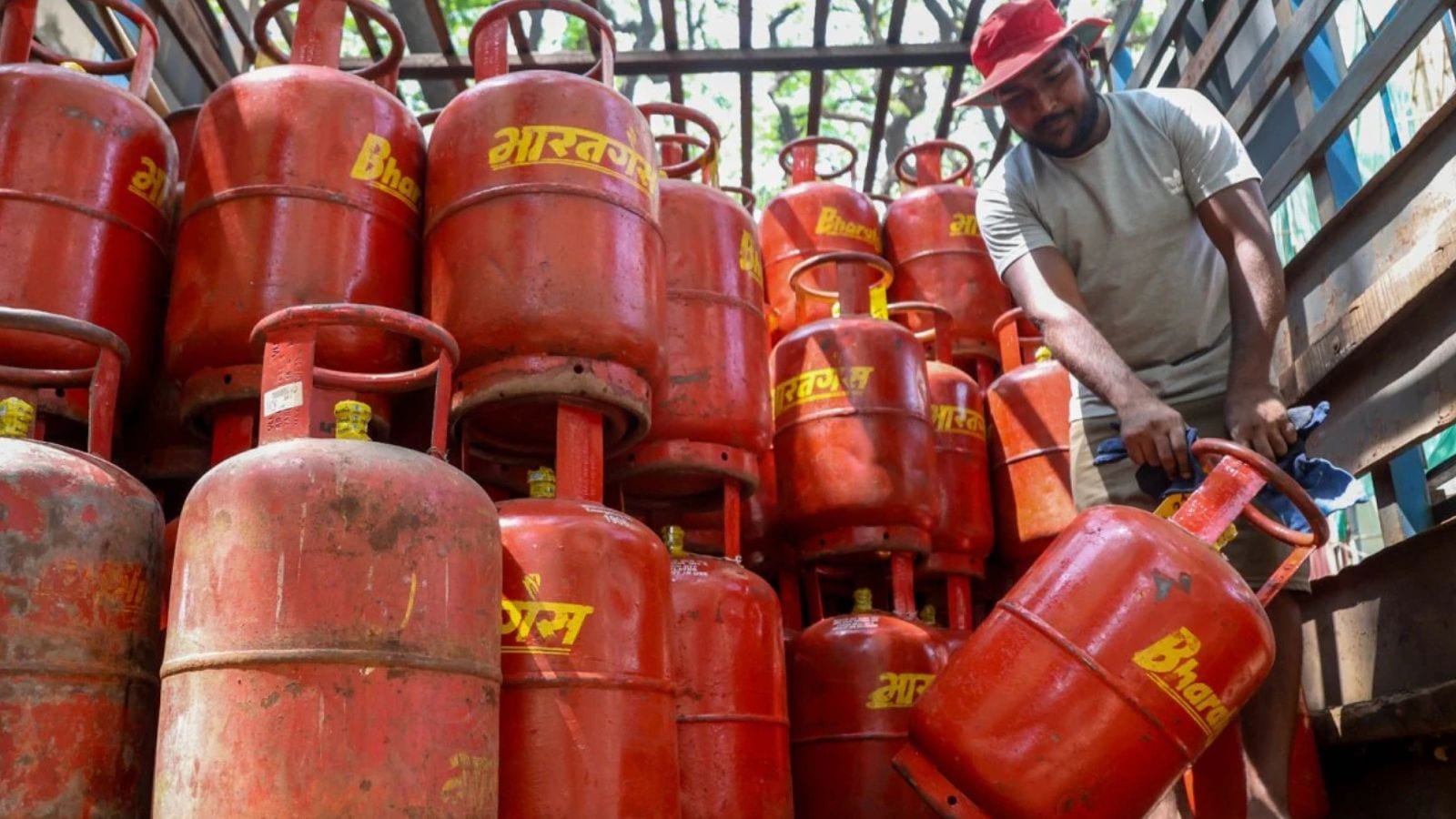
The war in West Asia has expanded beyond military targets to include oil and gas infrastructure, with attacks on South Pars, the world’s largest gas field, and Qatar’s Ras Laffan, a significant gas export facility. The growing frequency of these attacks is heightening energy market instability, and any prospects of securing gas supplies from the region remain bleak.

Over 90 per cent of India’s LPG imports are sourced from West Asian suppliers and routed through the Strait of Hormuz. While India’s efforts to source from alternative suppliers and increase domestic production are underway, demand remains unmet and requires prompt management. India’s reliance on imports for LPG has led to supply shortages for consumers, with households accounting for over 80 per cent of consumption. In response to the situation, the Union has directed oil marketing companies to prioritise household LPG consumption over commercial use. However, the deprioritisation of commercial use has increased informal market activity, further complicating the ongoing issue.
India’s LPG policy over the past decade has been driven by the objective of ensuring access to clean cooking fuel through subsidy programmes such as the Pradhan Mantri Ujjwala Yojana (PMUY). Today, India has around 33 crore LPG connections, with over 10 crore households covered under the PMUY scheme. The average annual consumption among beneficiary households has risen steadily, with India delivering over 55 lakh cylinders daily across consumer categories. However, the structural challenge posed by this increased demand is that India depends on imports for 60 per cent of its LPG consumption. In 2024 alone, India imported roughly 20.5 million metric tonnes of LPG.
In light of the conflict in West Asia, the Union has issued directives to refineries to maximise LPG availability under the Essential Commodities Act by channelling key hydrocarbon streams towards LPG production for domestic cooking gas, and regulating the sale of commercial LPG to prevent hoarding or diversion. Unlike domestic LPG, commercial cylinders are typically sold in a deregulated market without subsidy or booking restrictions. However, the challenge with this deprioritisation of the commercial sector is that, in a supply-constrained environment, it creates a noticeable shortage in the usage of LPG in places such as restaurants, small eateries, hotels, and paying guest accommodations.
The unintended consequences extend beyond businesses themselves. In India’s large urban centres, millions of migrant workers, students, and young professionals depend on affordable restaurants and mess services for daily meals. In Bengaluru alone, around 25 eateries have shut down, and Mumbai has seen 20 per cent of its hotels affected. When LPG shortages disrupt restaurant operations, the effects are felt by the populations that rely heavily on low-cost food options. In that sense, the supply prioritisation that protects households can simultaneously lead to inequitable distribution. Not to mention, this mal-regulation could lead to black markets and resale at inflated prices, the very problem the policy tried to solve.
This structure of prioritising household consumption also limits the role of price signals in balancing demand when supply becomes scarce. Because household LPG prices are supported by subsidies, consumers have little incentive to reduce their usage or switch to alternative cooking options during periods of acute shortage. Demand, therefore, remains relatively stable even when supplies tighten, while the commercial sector continues to be impacted.
As an immediate solution, India is exploring ways to diversify LPG supply, securing cargoes from countries such as the United States, Norway, Canada, Algeria, and Russia. In late 2025, Indian oil marketing companies had also signed agreements with US suppliers to import around 2.2 million metric tonnes of LPG for one year.
However, the scale of this diversification is also constrained by certain factors. While shipments from West Asia reach Indian ports within a week, those from the United States can take up to 45 days, resulting in higher freight costs. Secondly, India has been mostly reliant on West Asian suppliers due to its specific blend requirements for LPG. India imports preblended LPG to meet the country’s butane-heavy requirements, which is largely produced in West Asia. The gas produced in the US is propane-heavy and requires additional infrastructure at either the exporting or importing terminals to alter the blend per requirements. Currently, this infrastructure is not widely available on both sides, which limits the ability of alternative sources to replace the current suppliers on a larger scale.
A near-term solution is to ramp up the construction of blending infrastructure at Indian ports. The infrastructure will allow India to source larger quantities from diverse suppliers, thereby reducing dependence on a volatile region. However, it can take a few years to build out the infrastructure and connect it with the distribution network.
In the long term, perhaps the only viable option is to increase the use of alternative cooking fuels such as electric cooking, Piped Natural Gas (PNG), and Biogas. The alternatives can be adopted based on the varied needs of rural, semi-urban, and urban areas. Rural areas, currently highly dependent on LPG deliveries, can switch to a mix of community biogas and LPG.
PNG supply, on the other hand, can be increasingly directed towards growing semi-urban areas. Currently, India has around 1.36 crore PNG connections compared with over 33 crore LPG connections. Electric cooking technologies such as induction stoves are also increasingly available, but lack widespread consumer adoption. Other options, including decentralised and centralised biogas systems, require infrastructure investment and stable feedstock supply chains. Such alternatives require long-term policy planning and implementation, but are crucial for a diversified energy mix that is resilient to external supply shocks.
Sevkani and Suresh are research analysts at the Takshashila Institution, an independent think tank and school of public policy. Views are personal
