



6 min readMay 10, 2026 05:49 PM IST
First published on: May 10, 2026 at 05:49 PM IST
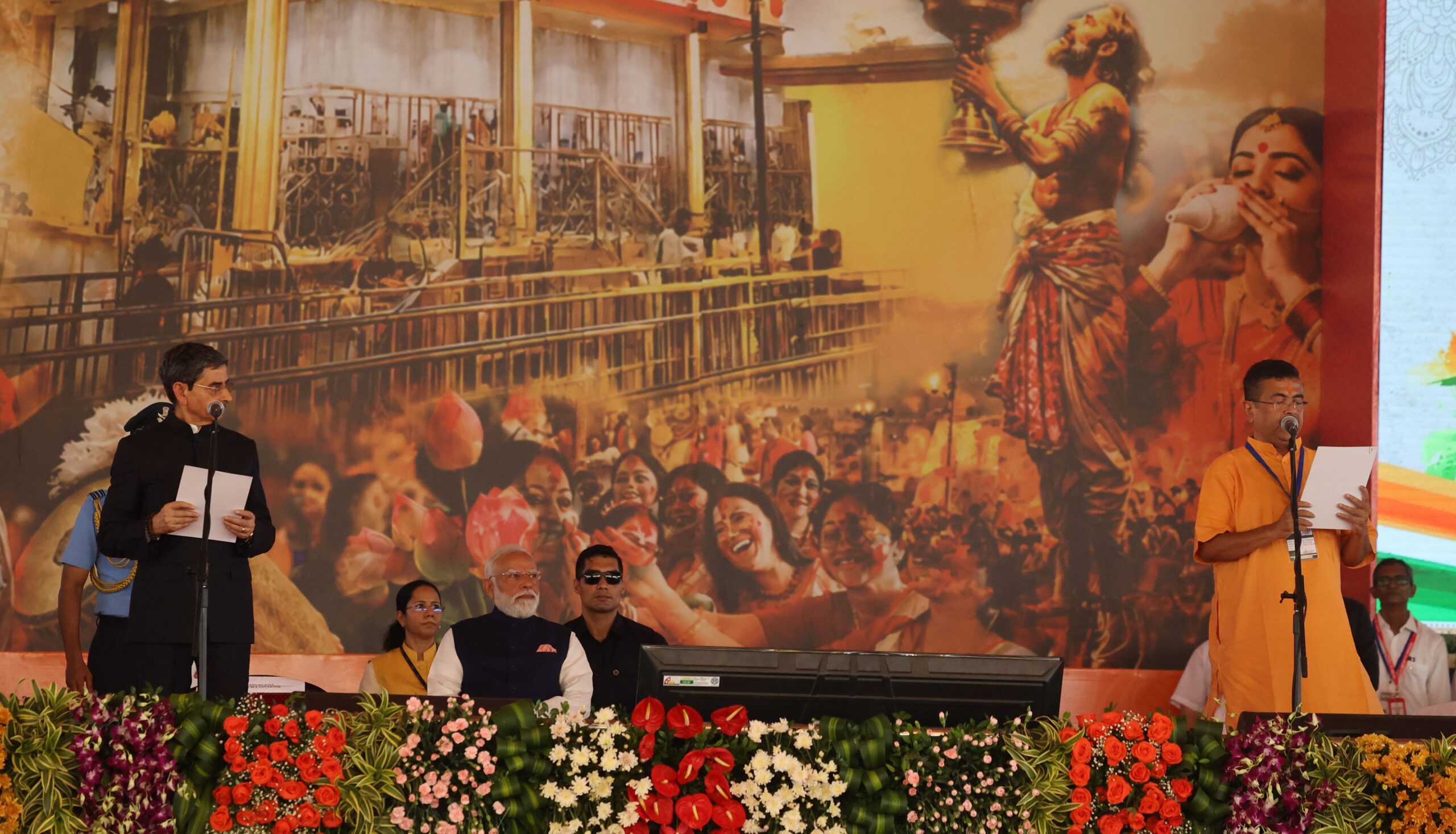
With the swearing-in of the BJP government on May 9, the politics of West Bengal enters a new phase after an unprecedented election. The 2026 state assembly election was unique in many ways. First, the polls were conducted based on an incomplete voter list since the purification of the electoral rolls through a special intensive revision remained unfinished, leaving behind the applications of 2.7 million people, including polling officers, under adjudication before tribunals.
Second, the extraordinary deployment of security forces ensured a largely peaceful election in a state known for political violence. The voter turnout was the highest ever. Third, the election campaign and, subsequently, the results show extreme communal polarisation of voting behaviour. The civil-society protests after the rape of a doctor and the teachers’ agitations apart, there was no movement or state-wide symptoms of anti-incumbency. The public anger against the TMC remained subliminal during the polls. This is uncharacteristic of Bengal politics. And finally, the election led to formation of the first-ever BJP government, marking a shift in the state’s hitherto exceptional post-Independence political history.

The new phase in Bengal politics is likely to be guided by three major factors: Revival of the party-society model, neo-liberalisation of economy, and saffronisation of political culture.
The BJP is expected to revive the party society model, perfected during the longstanding Left Front rule, where the institution of the political party was the sole fulcrum of power and the chief mediator in the everyday lives of the people. The party society encountered a crisis with the decline of the Left, and the TMC could not reproduce a similar structure in its time. This crisis of party society led to the ascendance of many community organisations in the political realm which represented community-specific interests and demands, negotiated with all the political parties, and became local centers of power. For instance, in the last two decades, the Matua Mahasangha emerged as the go-to local institution for the Matuas to get a proof of citizenship, to apply for a citizenship certificate under the CAA 2019 or to seek assistance in case of police or administrative harassment. In turn, political parties tried to positively respond to these demands in exchange for electoral support. While in opposition, the BJP, too, followed this post-party society model of symbiotic politics of the TMC era. However, now that the BJP is in power, it is likely to try to expand its organisational footprint by replicating the beehive-like party network of the erstwhile CPI(M). While the political idiom of the Left was class, the language of the new party society under the BJP will be religion. Unlike the TMC, it is easier for the BJP to absorb most of these community organisations under the Hindutva ideology and curtail their functional autonomy. The revival of the party-society model will not only make the BJP organisationally entrenched in Bengal politics across class-caste divides, but it will also help contain the possibility of effective opposition at the grassroots. Such a move will also enable the BJP to capture and control public institutions at all levels.
On the economic front, one can, at least in the initial years, expect continuation of new welfarism like cash transfers to targeted population groups (such as women and unemployed youth) as promised in its manifesto. Given that the BJP has been quite critical of the new welfarism model, describing such benefits as a culture of revdi and bhata, it won’t be surprising if these schemes eventually get stalled. For now, it is also crucial for the BJP to implement its promise of the Seventh Pay Commission scale for government employees. However, the BJP’s economic vision is private capital-led development and nonlinearisation of the economy. It has promised to attract private investments in infrastructure development, blue economy, minerals and mining, tea industry and tourism, and thereby address the pressing issue of unemployment. Such a vision will surely be a shock to the present political economy of Bengal as it would require large-scale acquisition of land, environmental damage and privatisation of the commons. When the Left Front government attempted to bring in big private investments in its last term, the state witnessed a movement against the neoliberal development model. It was followed by an ebb in private investments. How the BJP’s economic vision unfolds in a state once well-versed in a language of class politics needs to be seen.
Finally, the coming of BJP to power marks the formal beginning of the saffronisation of Bengal’s political culture. For instance, it has never happened that the incumbent government in the state does not have a single Muslim MLA. It’s a clear sign of denial of representation to the minorities in the coming years. If one reads the BJP manifesto, the first promise is to “crackdown on infiltration to ensure national security.” It is not unknown how the BJP, since the 1990s, has repeatedly crafted a communal binary – refugee versus infiltrator – around the figure of the migrant in the border state of West Bengal. This communal campaign has paid off, created social antagonisms and garnered increasing support in favour of the BJP in the last two elections. One could witness the same in the campaign of the new chief minister, Suvendu Adhikari, who unabashedly attacked the minorities, and accused Mamata Banerjee and her party for minority appeasement. The post-poll celebrations of the BJP, through acts like desecrating a public park named after Siraj-ud-Daulah and renaming it Sivaji Park by a mob, hint at the growing saffronisation of the state’s political culture. In the coming years, one can also expect this process to take place in school and university curricula, regional iconography, and public culture in general. The saffronisation of public culture is likely to strengthen BJP’s larger social vision, and more importantly, electorally benefit the party in further consolidating the Hindu votes, particularly in the run up to the 2029 Lok Sabha elections.
The writer is assistant professor, Jindal Global Law School, O P Jindal Global University
