



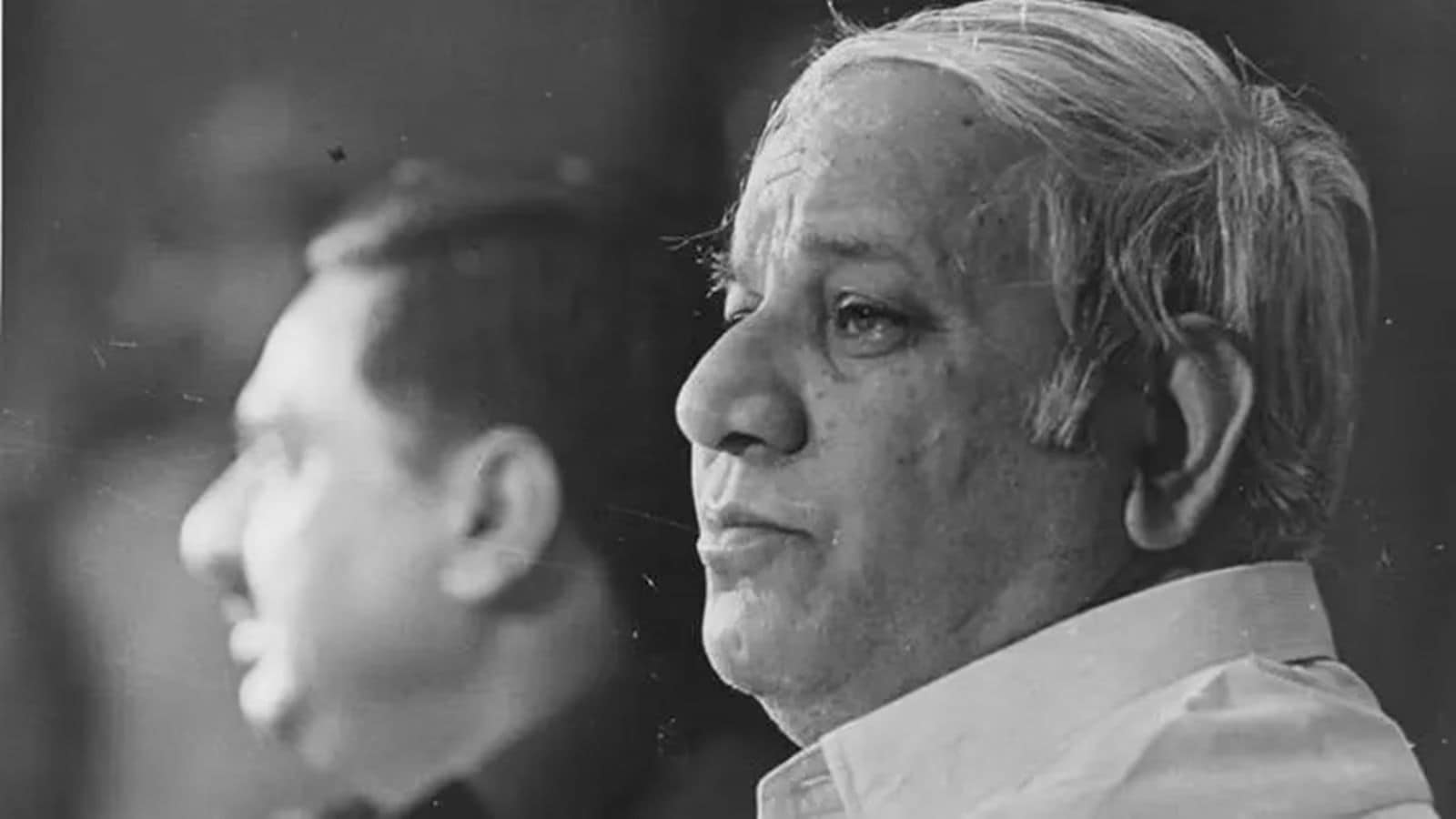
As Uttar Pradesh moves closer to another decisive election in 2027, an unusual political contest has begun: The contest over who can legitimately claim the legacy of Kanshi Ram. The immediate context is politically telling. On March 15, on Kanshi Ram’s birth anniversary, commemorative events across Uttar Pradesh moved well beyond ritual remembrance and quickly acquired the character of active political signalling. What might once have remained confined to party homage became a site of open ideological competition.

Rahul Gandhi, speaking in Lucknow during Kanshi Ram’s birth anniversary, openly admitted that the historical failures of the Indian National Congress had created the political space in which Kanshi Ram emerged, and added that had Congress acted differently, Kanshi Ram might well have risen within its own fold. Almost simultaneously, Congress leader Rajendra Pal Gautam argued that the Bahujan Samaj Party no longer represents Kanshi Ram’s original social mission and that Congress is now attempting to occupy that ideological ground.
This exchange triggered an immediate response from Mayawati, who accused Congress and other opposition parties of opportunistically invoking Kanshi Ram only because Dalit votes in Uttar Pradesh have become fluid ahead of elections. Similarly, the Samajwadi Party marked Kanshi Ram’s anniversary on a larger scale under its PDA formulation — Pichhda, Dalit, Alpsankhyak (PDA) — signalling that Kanshi Ram’s symbolic and political capital has now become central to multiple competing electoral narratives.
That every major political formation now seeks association with Kanshi Ram tells us something more significant than routine symbolic politics. It tells us that the democratic questions he posed remain unresolved. His continuing relevance does not arise only from the institutional memory of the BSP or from his role in reorganising caste politics in North India. It arises because he produced a political language through which democracy itself was reinterpreted from historically subordinated social locations.
Kanshi Ram is usually described as an organiser, strategist, and founder of a party that transformed electoral competition in North India. Yet that description remains incomplete. It explains his institutional success but not the conceptual force of his politics.
His central political intervention lay in identifying a contradiction that formal democratic theory often ignores: Universal suffrage does not automatically produce equal power. This contradiction was compressed in one of his most enduring formulations — Vote hamara, raj tumhara. The slogan was not merely agitational rhetoric. It was a diagnosis of representative democracy in a socially hierarchical society.
The democratic promise of one person, one vote had formally arrived, but the social distribution of governing authority remained unequal. Kanshi Ram understood that constitutional inclusion did not dissolve historical domination. He therefore shifted political attention from participation alone to power itself.
This is why reducing him to electoral arithmetic misses his deeper contribution. He did not simply mobilise voters; he compelled democracy to confront the social conditions under which voting operates.
The contemporary tendency to interpret Bahujan merely as a coalition of Scheduled Castes, Scheduled Tribes, Other Backward Classes and minorities weakens the originality of Kanshi Ram’s political language. For him, Bahujan was not simply a demographic addition. It was a democratic act of naming. It identified those who were numerically many but politically fragmented.
The ethical genealogy of the term reaches back to Buddhist thought — bahujan hitaya, bahujan sukhaya — but Kanshi Ram gave it modern political meaning by attaching it to historically excluded social groups. In doing so, he transformed the majority from an abstract electoral number into a claim rooted in social inequality.
This altered the grammar of democratic politics. Liberal democratic thought generally begins with formally equal citizens. Kanshi Ram began with unequal collectivities and asked why formal citizenship had not translated into substantive rule. That question remains politically alive because caste continues to mediate access to institutions, representation, and authority.
The current competition over Kanshi Ram’s memory is occurring at a moment when the BSP’s organisational hold over Dalit politics appears less secure than before. The party drew a blank in the 2024 parliamentary election, and its shrinking institutional presence has encouraged rivals to seek direct entry into the social terrain once identified almost exclusively with BSP politics.
Congress sees an opening because its broader social justice narrative now seeks renewed engagement with Dalits, backward classes, and minorities under Rahul Gandhi’s leadership. The Samajwadi Party seeks to deepen its PDA framework by directly entering the Bahujan symbolic territory. The Bharatiya Janata Party, meanwhile, continues its strategy of symbolic outreach to non-dominant caste groups while retaining a wider majoritarian frame. Yet invocation does not necessarily mean inheritance.
Kanshi Ram’s politics, however, demanded organised access to state institutions, bureaucratic influence, and political self-definition independent of elite mediation. That demand remains far more difficult than commemorative tribute.
The contemporary paradox is that Bahujan communities remain electorally decisive while Bahujan political consciousness remains unstable. Fragmentation has increased. Sub-caste assertions have intensified. Recognition often arrives in symbolic form while structural redistribution remains limited. Political alliances form rapidly but do not always produce durable ideological coherence.
Kanshi Ram anticipated precisely this danger. His politics repeatedly warned that numerical strength without collective political imagination leaves subordinated groups permanently available for incorporation into larger political projects designed elsewhere.
This is why his famous metaphor of the “vertically held pen” remains conceptually powerful even today: A society organised vertically through graded hierarchy cannot become democratic merely through electoral participation; it must be reoriented horizontally. That horizontalisation remains incomplete.
The writer is a visiting faculty at the National Law School of India University, Bengaluru
