



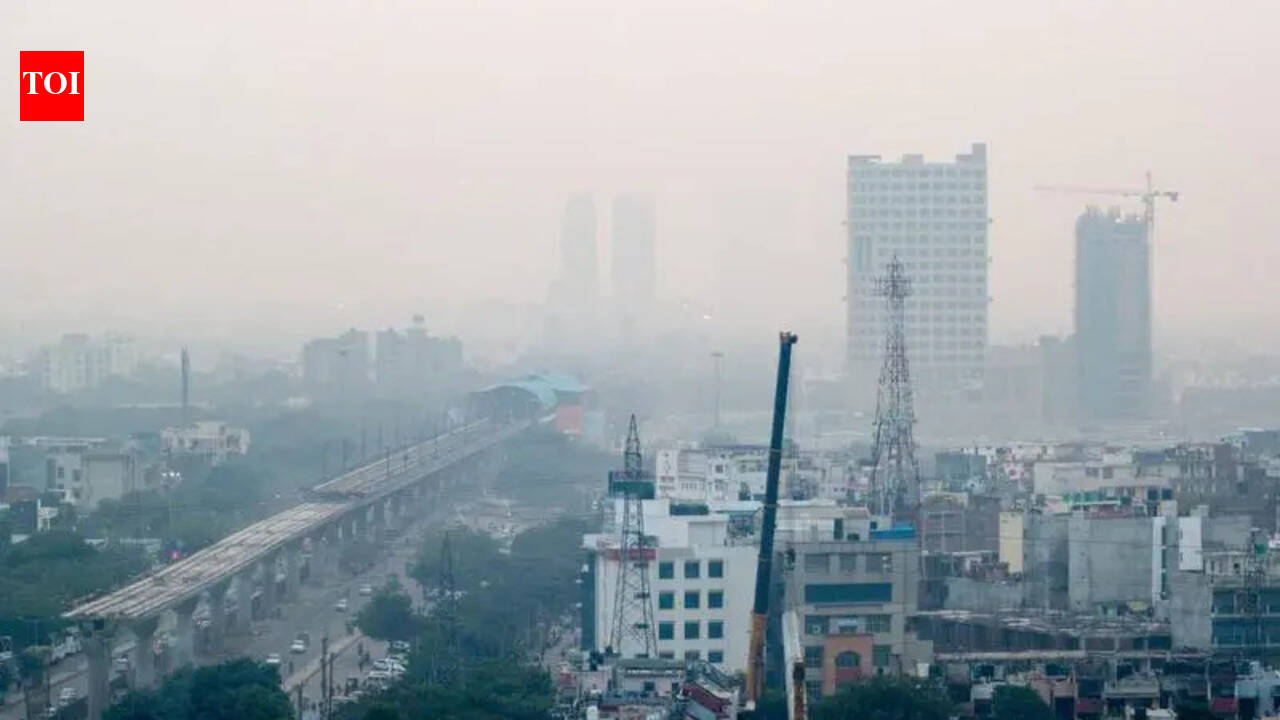
Bengaluru’s pollution isn’t dramatic; it’s daily: no smog alerts, no panic buying of masks — just traffic, dust and air that feels normal. The city does not shut down schools for smog, nor does it disappear under a grey blanket each winter. If you ask experts at ‘Air Quality Sector’ of Bengaluru-based research think tank CSTEP to explain this in numbers, they would say for the period between 2019 and 2024, Bengaluru’s annual average PM2.5 levels (particulate matter in the air with a diameter of 2.5 or less) have largely remained in the range of 30-35 μg/m³ (micrograms per cubic metre). In simple terms, it would mean Bengaluru’s air has a ‘moderate but constant’ level of fine pollution throughout the year. The WHO’s air quality guidelines recommend that the annual average concentration of PM2.5 should not exceed 5 µg/m³.What does it mean?While the PM2.5 concentrations have decreased in some cities, such as Chennai, Hyderabad and Kolkata, its exposure remains high across cities, exceeding the annual limit of 40 μg/m3 for PM2.5, set by the National Ambient Air Quality Standards (NAAQS) for India. Seasonal patterns offer some relief, but only temporarily. In Bengaluru, the seasonal mean PM2.5 concentration is highest during winter (Dec–Feb) where it averages at 43 μg/m3, exceeding the limits set by NAAQS. It is lowest during monsoon (June–Sept), at 19.8 μg/m3. Particulate matter with diameter of 2.5 or less penetrates deep into the body, damages lungs and the cardiovascular system, and raises risks of major chronic diseases, making it a critical public health concern.“Except for Chennai, which has slightly lower PM2.5 concentrations than Bengaluru, the other metros exhibit relatively higher concentrations than Bengaluru,” says Prakash Doraiswamy, sector head, air quality, at Center for Study of Science, Technology & Policy (CSTEP). Preliminary analysis for 2025 has shown unusually lower concentrations compared to previous years. “Analysis is under way to determine the reasons,” he adds.When measured against global health benchmarks, the gap widens sharply. The World Health Organization’s guideline for annual PM2.5 exposure is 5 µg/m³, a level that none of India’s major cities currently meet. “Bengaluru, like other metros, exceeds the WHO guideline several times over,” notes Nirav Lekinwala, a senior associate at CSTEP, describing the guideline as a long-term public health goal rather than a standard Indian cities are close to achieving. “Bengaluru’s relatively benign reputation is also shaped by how pollution is officially measured. Using data from the Central Pollution Control Board’s continuous monitoring stations, experts point out that Bengaluru crossed the Indian daily PM2.5 standard of 60 µg/m³ on roughly 27% of days in recent years,” he adds. WHO recommends that daily (24-hour) PM2.5 shouldn’t exceed approximately 15 µg/m³. “Comparisons with WHO daily limits are difficult, because India’s AQI framework is based on national standards,” he explains, adding that by WHO measures, exceedances are common across the country.Understanding the sourceWhen it comes to what actually dirties Bengaluru’s air, transport dominates. The most recent source-apportionment study shows that vehicles contribute about 40% of PM2.5 concentrations in the city, says Doraiswamy. Resuspended road dust and windblown soil together account for roughly 25%, reflecting the impact of traffic movement on poorly maintained roads. Secondary particles — sulphates and nitrates formed in the atmosphere from precursor gases — contribute another 16%, pointing to emissions from coal-based sources beyond city limits.Other contributors are smaller but still present. “Wood burning contributes around 4% of PM2.5,” says Nirav. Construction activity, often blamed by residents, appears to play a limited role in fine particulates. “Construction contributes less than 1% of PM2.5 concentrations, though it accounts for around 6% of PM10,” he noted, emphasising that these figures are based on pollution measured at monitoring locations after pollutants have mixed in the atmosphere.Emission-based estimates (focusing on the sources of pollutants rather than their concentration in the atmosphere) tell a similar story. Transport remains the largest source of PM2.5 emissions, followed by diesel generator sets and waste burning. Construction activity contributes an estimated 3% of PM2.5 emissions and about 11% of PM10 emissions, based on 2019 data, excluding large infrastructure projects such as metro construction.When the data walks into the clinicDr Ravindra Mehta, founder of Vaayu Chest and Sleep Speciality Clinic in Bengaluru and an innovator in interventional pulmonology, raises concerns over the accuracy of the city’s air-quality measurements, calling it a “fallacy” to assume that Bengaluru’s air is acceptable. “While Bengaluru benefits from moving air, which prevents conditions from becoming as severe as Delhi’s, the AQI has been steadily increasing over the last two years due to a significant rise in traffic intensity. This upward trend, or ‘uptick’, in pollution is worrying and should trigger immediate action from all sections of society — civil society, politicians, planners and policymakers — instead of waiting for a catastrophe,” he warns.Dr Mehta says he has observed clear patterns in respiratory illnesses in the city over the years. “Respiratory illnesses are much more common now. India already carries the unfortunate tag of being the asthma capital of the world. Asthma affects around 5–10% of the general population, and severe asthma accounts for around 10% of that. We are seeing much more allergy, asthma, lung function issues and related conditions.““This season in particular — with a combination of weather changes, increasing traffic, pollution, and high levels of travel and social mixing — our numbers have been the highest seen in years. What has also changed is that people don’t recognise symptoms early, they postpone treatment, cough for longer durations, and require more investigations and more treatment than earlier,” he explains. Data collected through screening programmes conducted by the Vaayu Chest and Sleep Speciality Clinic among traffic police, bus workers and construction workers reflects this trend. “We now have data from around 9,000 to 10,000 individuals, and nearly 29% of them show lung capacity issues. All of this reflects a progressive increase in pollution in the city,” he says.On the main sources of pollution, Dr Mehta says the problem lies in a mix of factors, with traffic playing a central role. “From a medical point of view, it’s a mix — all the problems lie in that mix. It starts with traffic, and there are multiple issues there. It’s not just the volume of traffic, but slow-moving traffic. When vehicles are idling or barely moving, pollutants concentrate in the air because engines continue to emit, leading to greater exposure and impact.“When pollution becomes routineThe Garden City doesn’t wake up to smog alerts or gas masks. Its air problem is quieter — steady, familiar, and easy to ignore. Its pollution story may lack the visual drama of northern Indian cities, but experts warn against equating visibility with risk. The damage here is cumulative, shaped by everyday exposure and gradual health impacts — the kind that rarely make headlines, but linger long after the traffic clears.
