



6 min readApr 14, 2026 03:48 PM IST
First published on: Apr 14, 2026 at 03:48 PM IST
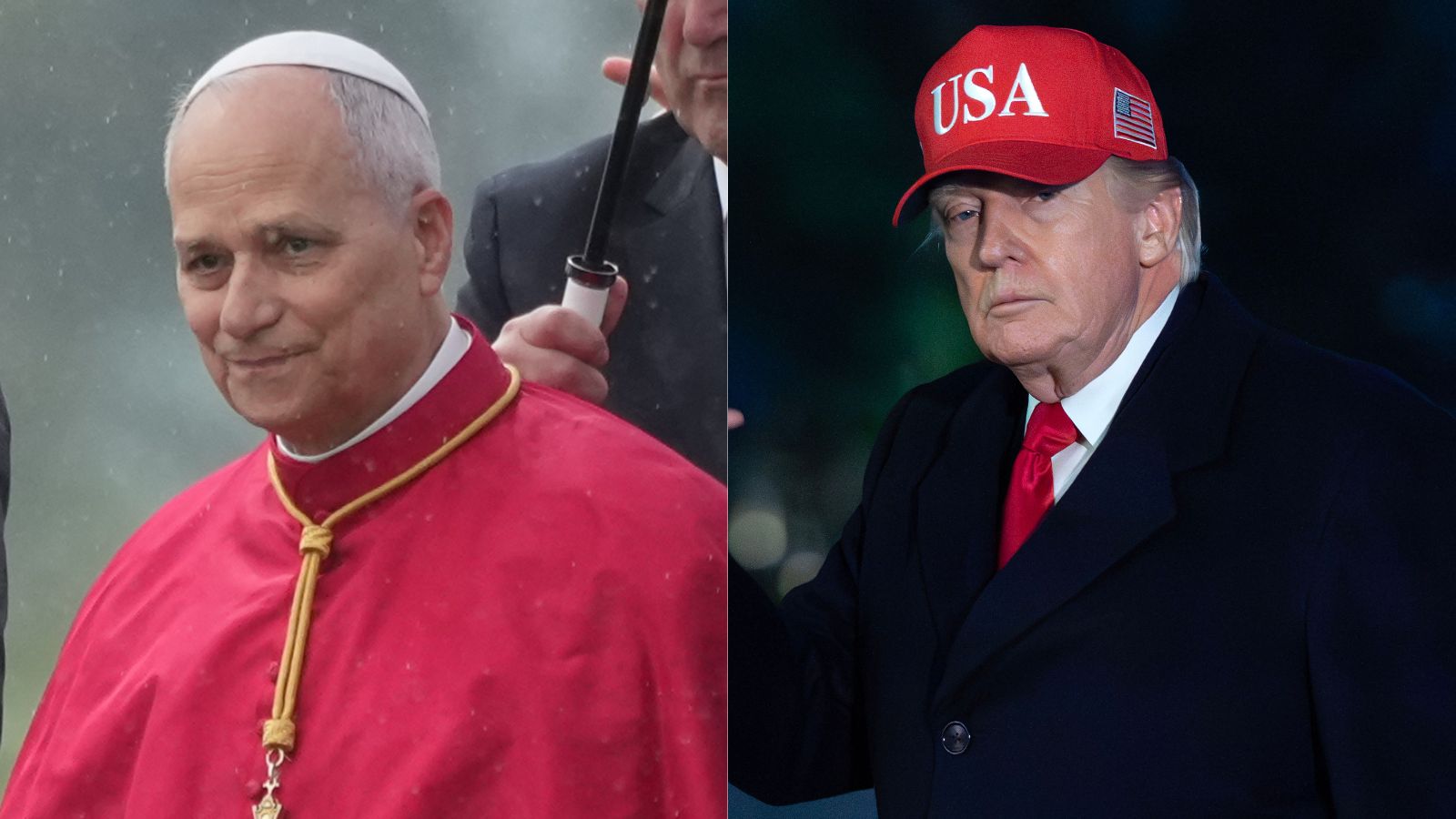
Donald Trump’s latest clash with Pope Leo is not merely an argument with the Vatican. It is a revealing struggle over whether religion will remain a moral restraint on power, or be turned into a language of vanity, menace and self-consecration.
There are moments in public life when the most troubling thing is not simply what a leader says, but the moral universe in which he seems to believe he speaks. Donald Trump’s recent attack on Pope Leo belongs to that category. After the Pope criticised Trump’s rhetoric over Iran, Trump lashed out, calling Leo “WEAK on Crime, and terrible for Foreign Policy”, saying “Leo should get his act together as Pope”, and later adding that he was “not a big fan” of him. This was not a serious argument about statecraft. It was the familiar fury of political power when confronted by an authority it cannot command.

The immediate trigger was Trump’s appalling language on Iran. In one of the most chilling statements of his presidency, he declared: “A whole civilisation will die tonight, never to be brought back again.” Pope Leo’s response was brief, direct and morally exact: “This is truly unacceptable.” The clarity mattered. Leo was not merely objecting to an intemperate phrase. He was objecting to the casualness with which an elected leader could speak of the destruction of an entire civilisation as though it were a legitimate instrument of pressure.
Yet the deeper issue lies beyond Trump’s threat itself. It lies in the growing temptation, within sections of the Trump camp, to speak as though American power and divine approval naturally belong together. Asked whether God supported the US position, Trump replied: “I do, because God is good.” Reuters also reported that Defence Secretary Pete Hegseth used overtly scriptural language around the conflict, invoking a theology of “overwhelming violence” and enemies who “deserve no mercy.” This is not ordinary patriotic bombast. It is the dangerous suggestion that military force is somehow wrapped in providence. Once that suggestion takes hold, restraint starts to look like weakness, and dissent starts to resemble impiety.
Pope Leo has answered that drift with unusual courage. He has condemned the “madness of war”, warned against a “delusion of omnipotence”, and said that even “the holy Name of God, the God of life, is being dragged into discourses of death”. He also said, after Trump’s personal attack, that he was not afraid and would continue to speak out against war because too many innocent people were being killed. In an age when many institutions soften their language before strongmen, this matters. Leo has refused both panic and flattery. He has insisted that faith must remain a witness against bloodlust, not a decorative blessing upon it.
Trump then made matters worse by posting an AI-generated image of himself in a Jesus-like form, a piece of digital self-glorification so tasteless that criticism came even from parts of his own broader support base, including religious conservatives; the image was later deleted. The episode might have been laughable had it not pointed to something more troubling: The increasingly theatrical urge to merge political ego with sacred symbolism. It is one thing for leaders to invoke God. It is quite another for them to flirt with imagery that places themselves inside the aura of the divine.
Popes are not foreign policy strategists, and presidents are not theologians. States do, at times, have to use force. Democracies cannot be run on piety alone. But none of that absolves leaders from the duty of moral proportion. Nor does it permit them to imply that their violence is righteous simply because they deem it so. That is precisely where Leo’s intervention becomes significant. He is not claiming technical expertise over battle plans. He is reminding the world of something older and more fundamental: That there are moral limits which no state, however powerful, may arrogantly erase.
The wider public mood appears, on balance, closer to Leo than to Trump. Reuters reported strong backing for the Pope in Italy, including criticism of Trump’s remarks from Prime Minister Giorgia Meloni, who called them “unacceptable”. Reuters also reported a Reuters/Ipsos poll showing that 60 per cent of Americans opposed the war with Iran. Public opinion is not itself a moral compass, but it is telling that Trump’s language of civilisational annihilation and self-righteous certainty has not commanded broad assent, while Leo’s language of restraint, legality and human concern has travelled farther.
There is a lesson here larger than one quarrel between Rome and Washington. Every democracy is vulnerable to leaders who mistake volume for strength and self-belief for virtue. The decay begins when power stops accepting moral limits, and becomes worse when religion is recruited to bless that arrogance. Then compassion is derided as softness, caution as betrayal, and the lives of distant others as expendable. Long before cruelty is normalised in action, it is normalised in language.
That is why Pope Leo matters in this moment. He has done what religious authority is at its best supposed to do: Not echo the state, not tremble before it, but remind it that power is not innocence and might is not morality. Trump offered the world a familiar spectacle — strength posing as righteousness. Leo offered something rarer and harder: The insistence that no nation owns God, no leader can bully conscience into silence, and no cry of “civilisation” can excuse the threat of its destruction. In the end, the real issue is not whether the Pope offended a president. It is whether truth still dares to tell power that it is not divine.
John is a retired British psychiatrist and author
