



4 min readApr 21, 2026 03:59 PM IST
First published on: Apr 21, 2026 at 03:59 PM IST
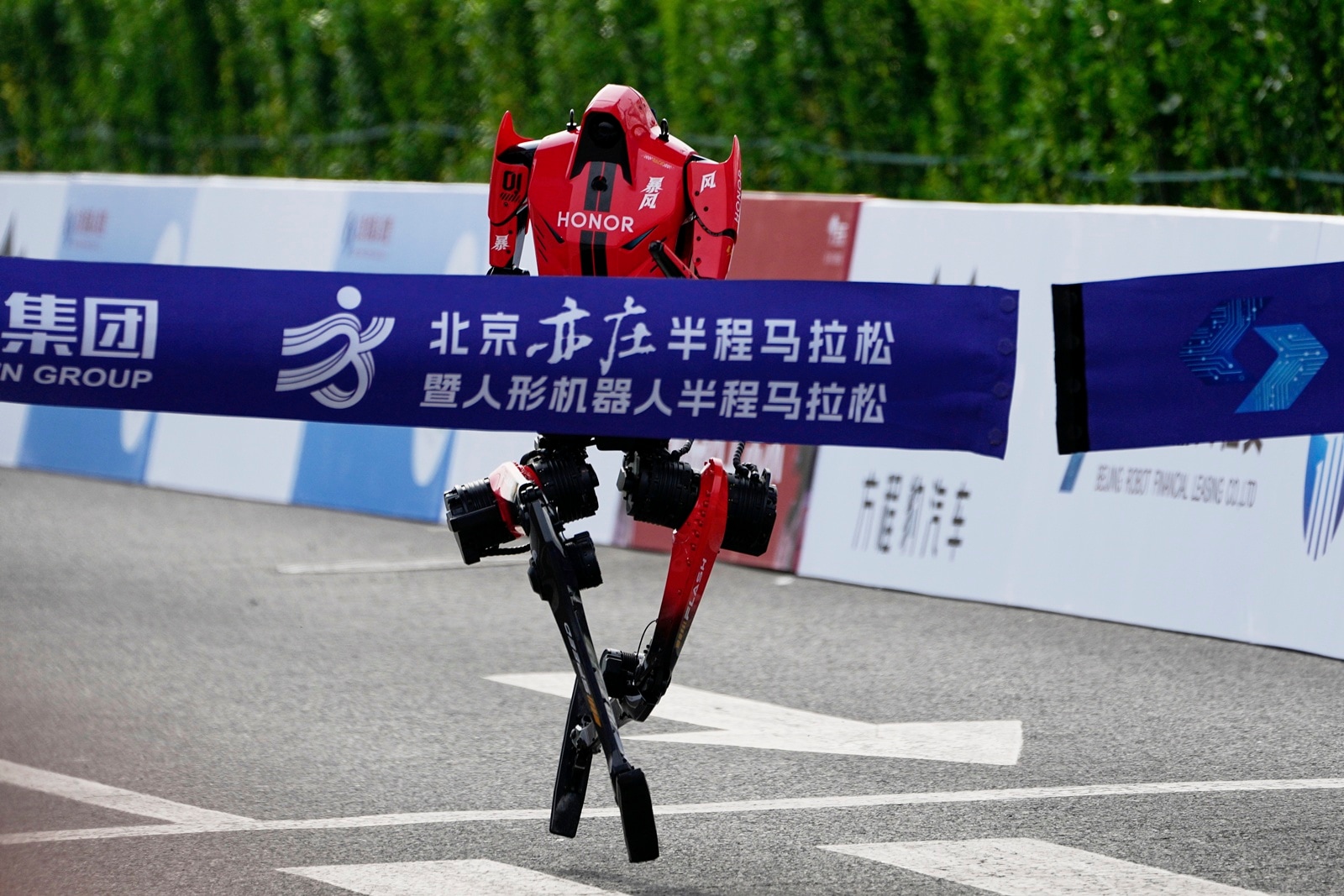
The breaking of the world record for a half-marathon by a humanoid robot last week in China has been called a milestone in the development of these automatons. Humanoid robots, that is, robots which have an anthropomorphic design, have been around for several decades now. The enormous progress made in the development of sensors and actuators (devices that convert electrical signals into motion), as well as software, has translated into them being able to mimic human movements to a large extent.
Automatons are, of course, not new; from ancient Greece to the Abbasid court to China, people have been devising clever contraptions that could seemingly perform various actions without any human intervention. They were almost always mechanical devices with some hidden mechanism. They were, of course, viewed more as amusing curiosities than something useful. It is only recently that they have found applications in various fields.

The most widespread use of these is in areas where repetitive tasks can be performed by programmable machines. The machines can be totally autonomous (operating without any level of human intervention) or semi-autonomous (where humans exercise some degree of control). These robots do not possess human characteristics but instead are essentially a CPU that can control the movement of “arms” and “legs”. Thus, there are fully robotic manufacturing assembly lines where machines assemble automobiles or electronic devices, or e-commerce warehouses where they move cartons around. They are also immensely useful in operations in dangerous surroundings, like cleaning up a nuclear reactor accident or a chemical spill. Their use in the exploration of inaccessible areas (think of the Martian rover) is also undeniable.
Robotic surgery is becoming more and more common, though expectedly under human supervision. Humanoid robots are also increasingly being used in the service industry. For instance, in societies with an ageing population, nursing care can be “outsourced” to them. Research in humanoid robotic locomotion has resulted in the development of better prosthetics. In recent years, we have also seen the development of these autonomous machines for use in warfare.
The rapid pace of the development of Artificial Intelligence (AI) recently, and the goal of Artificial General Intelligence (AGI), is significant for robotics. Chatbots incorporating AI might seem clever, but their use with humanoid robots can be potentially perilous. Imagine a humanoid robot acting on the instructions of an AI model, which, as we know, can hallucinate. The consequences can be disastrous. The rogue computer HAL in Kubrick’s 2001: A Space Odyssey will seem benign by comparison.
Ever since the coining of the word in the 1920s by the Czech author Karel Čapek, robots conjure up images of machines that will work hard and perform tasks that are a source of drudgery for humans. The development of labour-saving technology has been seen as heralding a society where work becomes optional. After all, as a bearded prophet wrote more than a century ago, the development of technology and productive forces under capitalism will allow a person to “… hunt in the morning, fish in the afternoon…”. The idea was that technological advancement would raise productivity to such an extent that there would be more time for leisure. After all, a robot doesn’t need to take a toilet break. This utopian vision is, of course, of little comfort to the food delivery person or the contract labour in Noida who, despite working for 12 hours, can barely make ends meet. One can argue that in the long run, the productivity growth will lead to enough economic growth for everyone to benefit. The logic of “a rising tide lifting all boats”. But then, as another famous political economist quipped, “in the long run, we are all dead”.
The writer is a professor of Physics and Astrophysics, University of Delhi
