



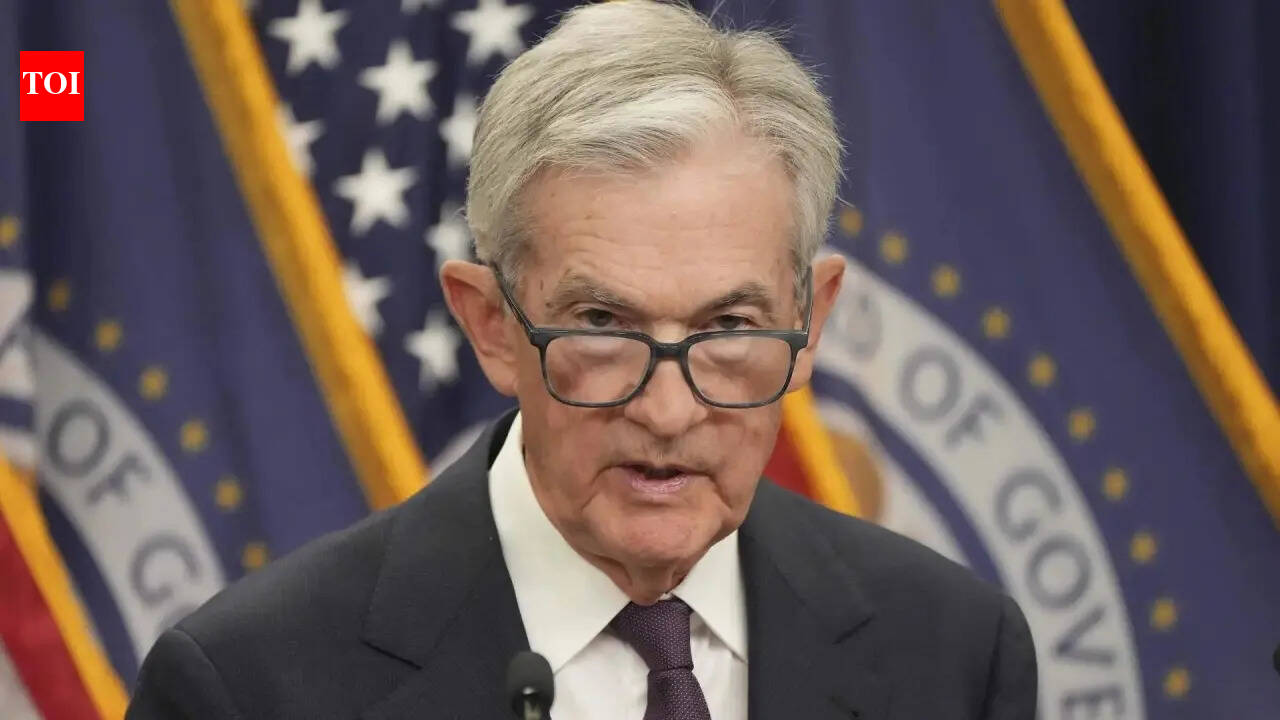
US Fed Federal Open Market Committee (FOMC) meet: Jerome Powell-led US Federal Reserve on Wednesday kept the interest rates unchanged in the 3.5-3.75% range citing upside risks to inflation in view of the rising global energy prices.“Developments in the Middle East are contributing to a high level of uncertainty about the economic outlook. The Committee is attentive to the risks to both sides of its dual mandate. In support of its goals, the Committee decided to maintain the target range for the federal funds rate at 3‑1/2 to 3‑3/4 percent,” the FOMC statement read.“Developments in the Middle East are contributing to a high level of uncertainty about the economic outlook. The Committee is attentive to the risks to both sides of its dual mandate,” US Fed said.“Recent indicators suggest that economic activity has been expanding at a solid pace. Job gains have remained low, on average, and the unemployment rate has been little changed in recent months. Inflation is elevated, in part reflecting the recent increase in global energy prices,” it added.The decision was not unanimous, with four of the 12 voting members dissenting. Among them, Stephen Miran argued in favour of a quarter-percentage-point reduction in interest rates.Three other policymakers – Beth Hammack, Neel Kashkari and Lorie Logan – supported keeping rates unchanged. However, they did not agree with the accompanying policy statement, particularly its indication that the central bank may be leaning toward future rate cuts.This marks the highest number of dissenting votes seen at a Federal Reserve meeting since 1992, according to an AFP report.Powell’s term as Fed chair is set to conclude on May 15. However, his separate appointment as a member of the Federal Reserve Board of Governors runs through January 2028.Rising oil prices, fuelled by the US-Iran war, have added a new layer of complexity to the Fed’s policy outlook. Ahead of the two-day meeting, officials signalled growing concern that higher energy costs may not remain a temporary shock and could instead feed into broader inflation. If that happens, interest rates may need to stay elevated for longer than previously anticipated—or, in a more extreme scenario, move even higher.Global crude prices have climbed back above $110 a barrel, up sharply from around $70 before the US-Israeli military action against Iran began on February 28. The prolonged closure of the Strait of Hormuz and stalled diplomatic efforts have further tightened supply concerns. Meanwhile, the Fed’s preferred inflation gauge remains roughly one percentage point above its 2% target, and fresh data due later this week is expected to show additional upward pressure.Financial markets currently see little likelihood of a rate cut before the middle of next year. That reflects scepticism over whether incoming Fed chief Kevin Warsh will be able to persuade fellow policymakers that stronger US productivity can help ease inflation and justify a more accommodative policy stance.Kevin Warsh is expected to be confirmed by the Senate in time to take over before the Fed’s June 16–17 meeting, according to a Reuters report. On Wednesday, the Senate Banking Committee voted along party lines to recommend Warsh’s confirmation to the full Senate.
