



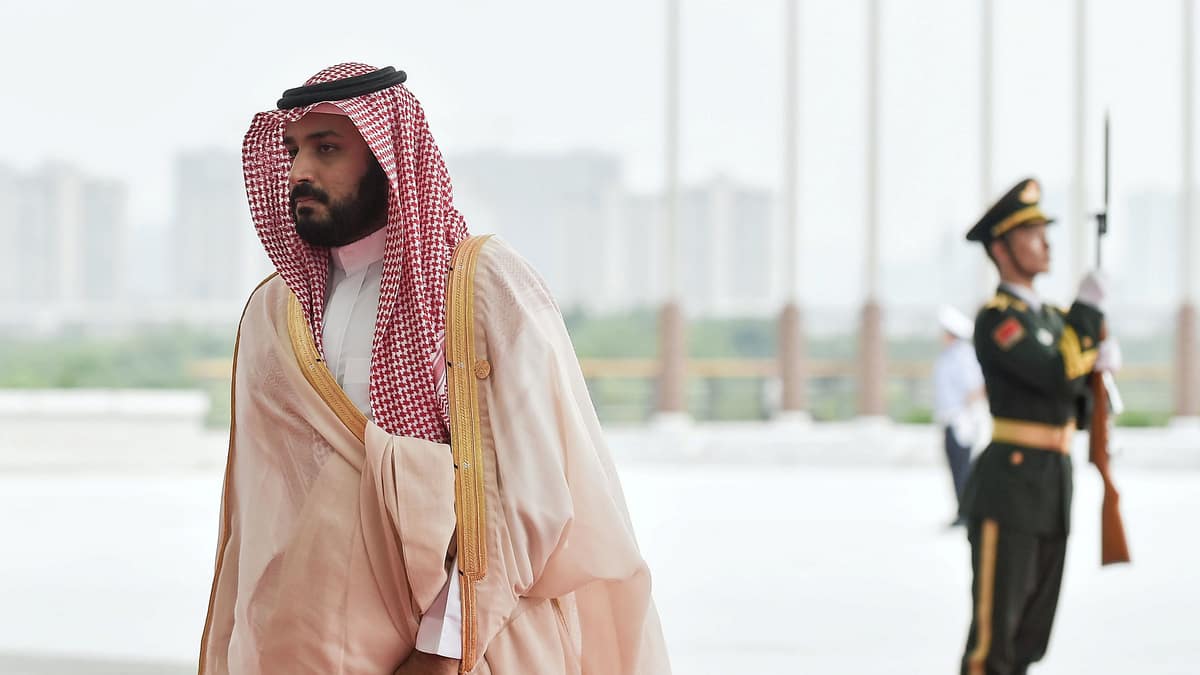
Mohammed Bin Salman might keep the illusion of participation open—all the better to play into the wishful thinking of the West that does not want to acknowledge the loss of Saudi Arabia—but India should be under no illusion
When Prime Minister Narendra Modi announced the India-Middle East Economic Corridor (IMEC) at the September 2023 G20 Summit in New Delhi, there was broad excitement for the new scheme’s potential. India is the world’s most populous state and fourth-largest economy and will likely overtake Germany to move up a notch before the end of the decade. The corridor would bypass Pakistan and facilitate Indian trade to Europe. It would also reduce vulnerability to the Houthis and dependence on the Bab el-Mandeb.
Saudi Crown Prince Mohammad Bin Salman, who acts as Saudi Arabia’s de facto leader due to the king’s advanced dementia, was enthusiastic. “The project will cut the [transfer] time of goods from India to Europe by three to six days,” Bin Salman told Fox News. “It will cut time, save money, and is more safe and more efficient. So, why not?” Saudi Arabia stood to benefit, as the IMEC would transit the Kingdom as goods shipped between the United Arab Emirates and Jordan on their way to Haifa.
The October 7, 2023, Hamas attack on Israel and the subsequent war in Gaza upended IMEC implementation. While many in the West view Houthi attacks through the tribal group’s declared explanation that it acts in solidarity with the Palestinians, the truth is more complicated. Iran’s Islamic Revolutionary Guard Corps, the Houthi’s chief patron, encouraged Houthi attacks not only to harass Israel but also to prevent IMEC. The Revolutionary Guards are not just a military force; they are an economic conglomerate that controls much of the logistics inside Iran. If IMEC became the standard trade route, not only Iran but also the Islamic Revolutionary Guard Corps itself stood to lose. If the Bab el-Mandab remained too risky or expensive to transit, Iran hoped to profit as an alternative transit route.
While the Houthis still attack shipping selectively—allowing Russian and Chinese ships to pass while targeting Indian and European cargo—IMEC provided an alternative.
Now, however, Bin Salman’s pivot away from the West and into the Qatar-Turkey-Pakistan “Axis of Ikhwan”, [Muslim] brothers, now obstructs IMEC in a way every bit as serious. If India once embraced IMEC to bypass Pakistan, Israel and the US supported the scheme to isolate Iran, and Europe quietly sought to reduce dependence on Turkey, then Saudi Arabia’s geopolitical shift toward Pakistan and Turkey could be a deathblow.
Saudi Arabia’s defence pact with Pakistan makes no sense if, simultaneously, Riyadh seeks to isolate Islamabad economically. Likewise, as Bin Salman faces the collision of his development ambitions with his poor management, he becomes more dependent upon Qatar to provide him with a fiscal lifeline and bail him out of his predicament. Qatar’s price will be an end to a scheme which bolsters rival the United Arab Emirates and undermines Muslim Brotherhood ally Turkey.
Mohammad Bin Salman might keep the illusion of participation open—all the better to play into the wishful thinking of the West that does not want to acknowledge the loss of Saudi Arabia—but India should be under no illusion.
Today, Saudi Arabia is more the obstacle to IMEC than the Houthis. To pretend otherwise, or to believe that Mohammad Bin Salman is more an ally than adversary to India, is foolish.
(Michael Rubin is director of policy analysis at the Middle East Forum and a senior fellow at the American Enterprise Institute. Views expressed are personal and solely those of the author. They do not necessarily reflect Firstpost’s views.)
End of Article
