



It all started with an invitation to a “Casino Royale” party for a friend’s wedding anniversary in March. “Dress like a Bond Girl,” her text urged, and I took it at face value. I had a suitable long blue dress, and so I asked my hairdresser to style my straight dark hair into a French knot to comply with the theme.

When she was done, I gaped in the mirror, because I saw myself in a whole new light. Of course, I was the only one who followed the theme, but I felt an almost intoxicating sense of poise, and not embarrassment, as I received many compliments.
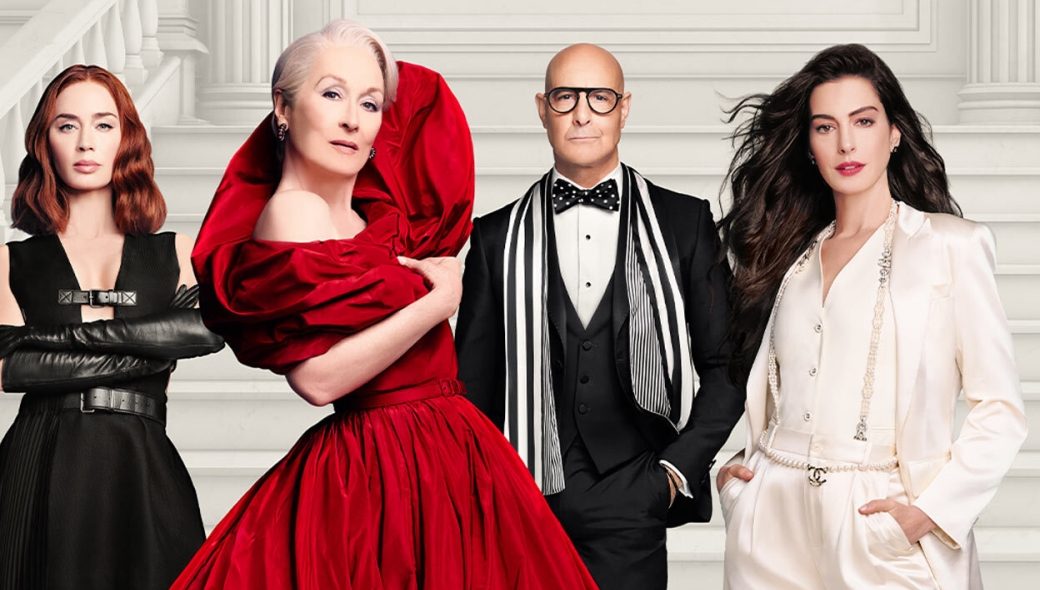
And so began this 50-year-old’s fashion renaissance. I had always thought of myself as too serious-minded to take fashion seriously. Not quite Anne Hathaway with her “lumpy blue sweater” in The Devil Wears Prada, but definitely not close to cutting-edge fashion either. My clothes were generally pretty, vibrant – and safe — a way to draw attention to my words and ideas, and not my appearance.
But a confluence of factors made me reconsider my sartorial choices. My family gave me generous gifts for my 50th birthday, which I decided to invest in jewellery for the first time in my adult life. A bestie insisted on gifting me a basic collection of makeup. I looked at my handbag collection and realised it was quite dire. And most importantly, like Anne Hathaway, I discovered a professional team to help me overcome my innate fashion handicaps: A talented personal shopper who introduced me to a cohort of designers in Mumbai, and a low-key makeup artiste, in addition to my creative hairdresser, who was tired of blow-drying my hair with the same curls for the last five years. They gave me courage – and the permission – to expand my style identity.
In the last couple of months, I’ve worn a pale peach “power” cape pantsuit with a styled hair updo for a family member’s 70th birthday, and an off-shoulder fitted top that felt unusually sexy for a night out with the girls. Both shifted my notions of midlife femininity. At 50, what I had once dismissed is becoming an unexpectedly rich site for experimentation and joy.
Once I started paying more attention to my own fashion sense, I also began noticing what other people were wearing. And I observed what we know intuitively: That we are fundamentally tribal. Each tribe has its own uniform, its own codes which signal belonging. A group of wealthy south Mumbai women celebrating a milestone birthday wore similar sculpted silhouettes. A gathering of climate change makers had women in long cotton dresses and handloom saris. There was little room for deviation.
As a writer from a business family, I have the opportunity to move between different rooms – business, literary, creative, philanthropic, and the social sector. Earlier, I navigated these rooms unconsciously, seeking to blend in. But now, I’m more willing to experiment. For example, straight hair is a “uniform” that cuts across cross-sections of urban women. At a large sangeet, I ventured in with a beach-wave ponytail, only to realise that everyone else had straight blow-dried hair of varying length, except for a tall Russian lady with a top knot. It felt strange, but not enough to deter me.
This renaissance is not just individuality for the sake of it. It is a form of reclaiming the sense of being alive in my body after many years of motherhood and trying to build a career. Most importantly, the joy of a midlife fashion renaissance is that the gaze turns more inwards. This is about accepting my midlife body, a struggle in the past for someone with a plus-size, perimenopausal figure such as mine. Recently, I was agonised when I saw photos of my flabby arms in one of my new dresses, but I’ve learnt to accept all of me. Choosing to be more visible at this unexpected stage in life, at times when my body feels so flawed, is empowering, even if sometimes challenging.
Fashion is not just for the red carpet, or for the young and the restless, I’ve discovered. What I once dismissed as frivolous has turned out to be another way of inhabiting myself — imperfectly, experimentally, but more fully than before.
Piramal Raje is a writer and public speaker
