



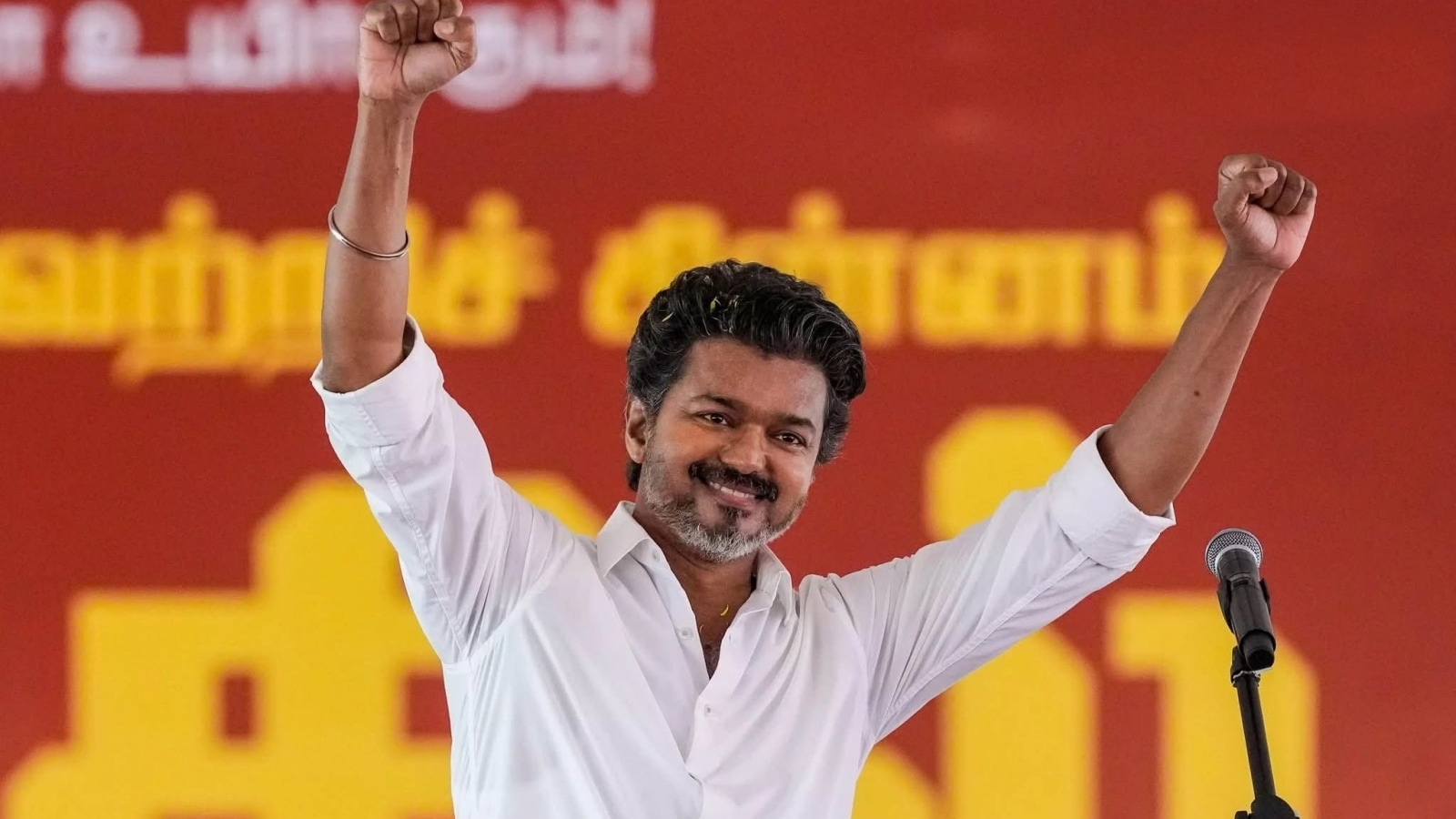
The victory of the Tamilaga Vettri Kazhagam (TVK) under the leadership of Joseph Vijay in the Tamil Nadu Assembly elections has, for the first time since the DMK’s rise to power in 1967 and the launch of the AIADMK in 1977, broken the duopoly of Dravidian parties. It also appears to have upended the electoral arithmetic, moving beyond tactical alliances, money, and caste. In that sense, the verdict is a break from the past.
It also signals a deep anti-incumbency sentiment against the DMK-led government. The scale of the upset is reminiscent of the historic 1967 election, when K Kamaraj — once hailed by Periyar as a “trueborn Tamilian” — was defeated by a relatively unknown student leader in Virudhunagar. TVK may not have a long history of grassroots mobilisation that characterised the DMK’s rise, and M K Stalin’s defeat is no less significant than that of Kamaraj.

The DMK’s achievements did not resonate with the people. The party often highlighted Tamil Nadu’s relative success compared to BJP-ruled states, but did not do enough to address pressing concerns such as job creation, wage stagnation, and governance deficits. If the 2021 Assembly election was a referendum on the Dravidian model of growth and development, the 2026 election became a referendum on the Dravidian model of governance itself. Disillusionment with the DMK stemmed not only from inadequate employment opportunities and job quality but also from what many perceived as an alienating style of governance, particularly among the youth.
Historically, the DMK rose by mobilising ordinary people. In the 1960s, amid allegations of vote-buying by the Congress, C N Annadurai famously urged voters to accept whatever was offered but vote for the DMK. Something similar seems to have happened in this election. TVK won without the display of money power and caste arithmetic.
Vijay’s rise is often compared to that of M G Ramachandran (MGR). This comparison has its limits. MGR’s stardom in politics and cinema was organic, as he was associated with the Dravidian movement. That gave his leadership a strong ideological foundation.
Vijay’s political journey, by contrast, appears recent and largely rhetorical. His appeal seems to derive less from a coherent ideological framework and more from the dissatisfaction of a younger electorate frustrated by unfulfilled promises.
Vijay’s politics still operate within the broad contours of Dravidian sensibilities — Tamil identity, secularism, state autonomy, and social justice. He talks of drawing inspiration from Kamaraj, Periyar, Ambedkar, and Anjalai Ammaiyar. However, unlike the DMK, which built a sustained political movement over nearly two decades before coming to power, TVK lacks a comparable foundation. In that sense, it is wrong to think of the TVK as an ideological alternative to the Dravidian parties. The verdict still calls for serious introspection. It appears the DMK has used ideological tropes at the expense of propriety and probity in political life.
Tamil Nadu has been a destination for private domestic and foreign investment. Irrespective of its political regime, its industrial policy has been consistent since the 1990s. However, the conversion of proposals into actual investment depends on implementation. The conversion rate has been weak in the last five years compared to the previous five years.
The employment elasticity of the recent investments is lower than that of those that came earlier. Tamil Nadu’s recent achievement of double-digit (11.2 per cent) economic growth was celebrated by the state government. However, this growth is not like that of the past and was especially not inclusive for those engaged in MSMEs and agriculture. The earlier phase of industrialisation was more closely linked to small-scale industries, generating broader employment opportunities.
In contrast, new investments have created fewer jobs. The shift is reflected in labour market trends. Contract-based employment, which once accounted for around 10 per cent of formal jobs, has risen to approximately 25 per cent, approaching levels seen in states like Gujarat.
The DMK’s emphasis on national politics, secularism and federalism might be important in themselves, but they are irrelevant when they do not resonate with people’s lives. The party’s narratives and carefully curated (some say controlled) rhetoric didn’t resonate with the people, especially the youth, Dalits and women.
The verdict should not be seen as a rejection of the DMK’s social schemes or the Dravidian model of growth and development. Vijay is yet to articulate a new vision for the economy. The mandate for him reflects dissatisfaction with the way the DMK exercised power.
By focusing heavily on intellectual and ideological narratives, it appears to have neglected the everyday concerns of people. The party seems to have fallen into the trap of intellectualism. In some cases, supporters of the ruling party dismissed Vijay’s voters as “ignorant,” further deepening the disconnect and alienating younger voters. The party also seemed to have ignored the anxieties of Dalit communities, who have been victims of violence of late.
Every achievement or success contains the seeds of its destruction. The Dravidian model is no exception. While it has achieved notable success, it must be sensitive to the concerns of those who have been excluded from its benefits. State autonomy, secularism and Tamil identity are important ideals. But they must be grounded in the lived experiences of people and their basic needs.
The writer is associate professor, Madras Institute of Development Studies
