



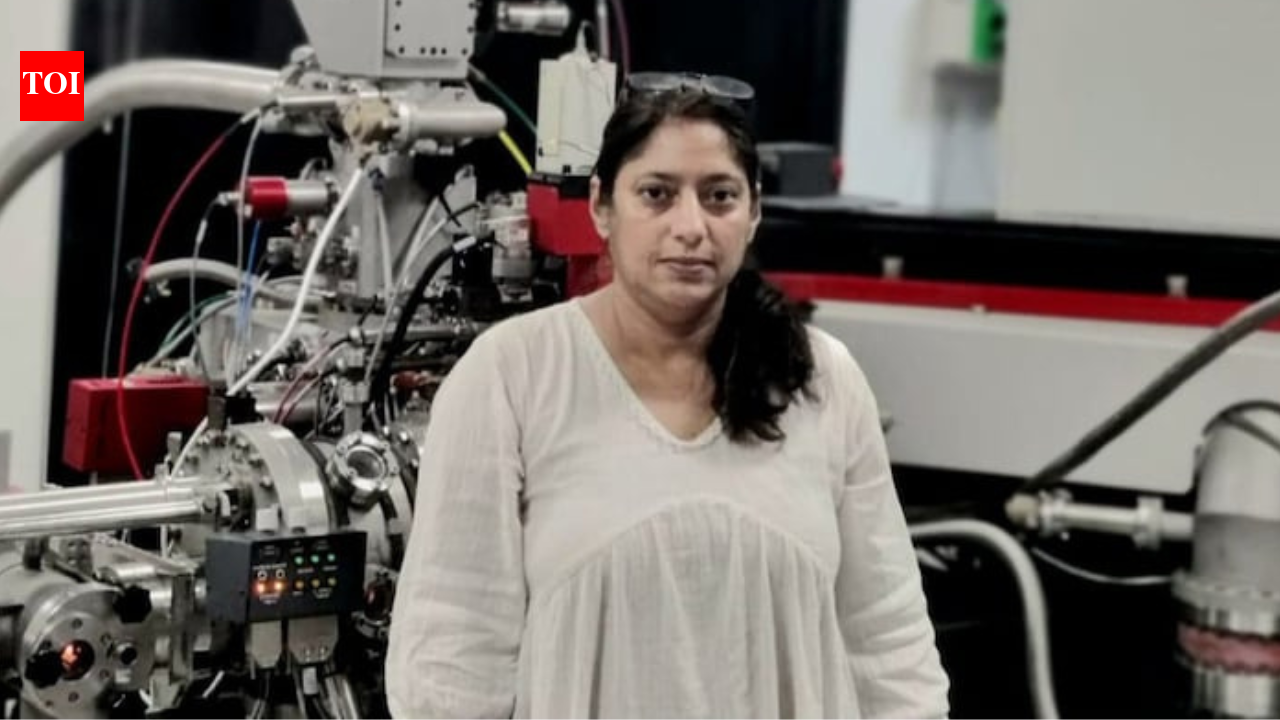
Kuljeet Kaur Marhas has made history by becoming the first Indian woman elected Fellow of The Meteoritical Society, one of the world’s most prestigious honours in planetary science and meteoritics. Announced as part of the society’s 2026 Fellows class, the recognition places Marhas among a select group of scientists acknowledged for advancing the understanding of meteorites, planetary materials, and the origins of the Solar System. Based at the Physical Research Laboratory in Ahmedabad, she has spent decades analysing ancient extraterrestrial material using advanced isotopic techniques to uncover how planets, asteroids, and the Solar System evolved more than 4.5 billion years ago.Founded in 1933, The Meteoritical Society is one of the world’s leading organisations dedicated to meteoritics, cosmochemistry, and planetary science. Election as a Fellow is reserved for researchers who have made internationally recognised contributions to the field.Marhas is the first Indian woman to receive the honour and only the third Indian scientist elected Fellow in the society’s history, following Devendra Lal and JN Goswami. The recognition is especially notable because meteoritics and cosmochemistry remain highly specialised disciplines dominated by institutions in the US, Europe, and Japan.
Kuljeet Kaur Marhas’ planetary research decoding the Solar System’s origins
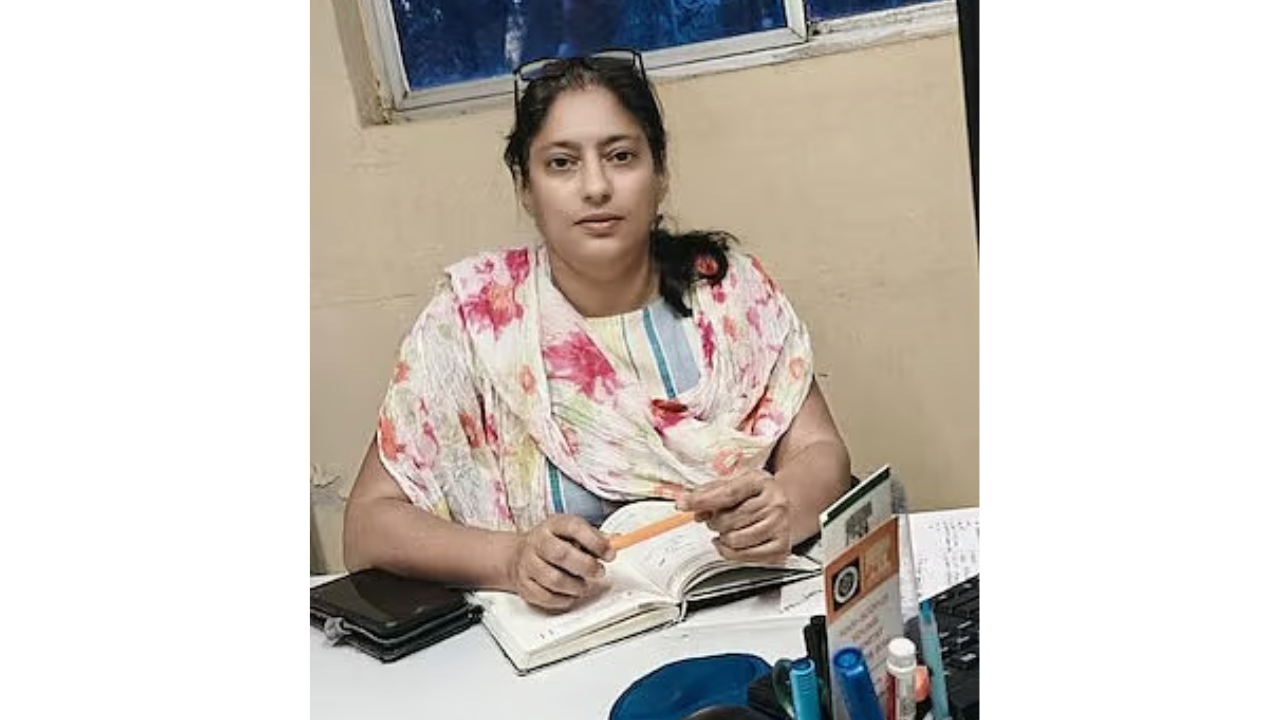
Marhas is a professor in the Planetary Science Division at Physical Research Laboratory (PRL), one of India’s leading centres for planetary science and astrophysics, closely associated with the Indian Space Research Organisation (ISRO).Her research focuses on primitive extraterrestrial material preserved inside meteorites, pre-solar grains, chondrules, and Calcium-Aluminium-rich inclusions. These materials are considered among the oldest surviving remnants of the early Solar System and provide crucial clues about planetary formation and early cosmic processes.Marhas specialises in cosmochemistry, which studies the chemical and isotopic composition of matter in space. Her work examines short-lived radionuclides, stable isotopes, and primitive meteorites to understand how the Solar System formed and evolved.Scientists use isotopes as cosmic fingerprints because tiny differences in atomic composition can reveal when planetary material formed, how ancient stellar explosions influenced Solar System evolution, and how matter from dying stars became incorporated into planets. Through isotopic analysis, Marhas has helped reconstruct events that occurred during the earliest stages of Solar System history.
Research on pre-solar grains
One of her major research areas involves pre-solar grains, microscopic mineral particles that formed before the Sun existed. These grains originated inside ancient stars and supernova explosions before eventually becoming trapped inside meteorites.Because they predate the Solar System itself, they provide rare physical evidence from an era before the Sun and planets formed. By studying isotopic signatures preserved within them, Marhas has helped scientists identify their stellar origins and better understand how elements were created inside stars.
Pioneering work with NanoSIMS
Marhas is internationally recognised for her expertise in advanced isotopic analysis tools such as Secondary Ion Mass Spectrometry (SIMS) and NanoSIMS. These instruments allow scientists to analyse microscopic grains with extraordinary precision.After returning to India following research work abroad, she helped establish one of the country’s most advanced NanoSIMS facilities at PRL. Using the technology, she studies isotopic variations in extraterrestrial material to investigate early Solar System chemistry, ancient stellar activity, and the formation timelines of planetary bodies.
Understanding extinct radionuclides
A major part of Marhas’s work involves short-lived radionuclides, radioactive isotopes that existed during the early Solar System but have since decayed away. Although the isotopes themselves no longer survive, they leave detectable isotopic traces behind.These signatures help scientists estimate the timing of major Solar System events and understand energetic processes around the young Sun. One of Marhas’s notable studies investigated evidence for the extinct radionuclide Beryllium-7 in a meteorite inclusion, suggesting intense irradiation activity during the earliest phases of Solar System formation.
Connections to major space missions
Marhas has also worked on extraterrestrial samples linked to major international sample-return missions, including Stardust, Hayabusa, and the Apollo program.These missions returned material from comets, asteroids, and the Moon, allowing scientists to conduct highly detailed laboratory analysis impossible through spacecraft instruments alone.
International recognition and leadership
Beyond her laboratory work, Marhas has held several important international scientific roles. According to her PRL profile, she has served as a council member of The Meteoritical Society, participated in NASA review panels, contributed to scientific advisory committees, and worked on editorial boards for planetary science publications.She is also a Fellow of American Geophysical Union and recipient of the Devendra Lal Memorial Medal for her contributions to planetary science and cosmochemistry.Reacting to the recognition, Marhas said the achievement reflected the strong research environment at PRL and the growing potential of planetary science in India. She added that research on extraterrestrial material offers insights into the Solar System’s past and future planetary exploration.Marhas’s recognition arrives as India deepens its ambitions in lunar and deep-space exploration, underscoring the growing value of homegrown expertise in cosmochemistry and extraterrestrial sample analysis. It also reflects the rising stature of Indian laboratories in a highly specialised field long shaped by institutions in the West, where such knowledge will be central to the country’s next generation of planetary missions.
