



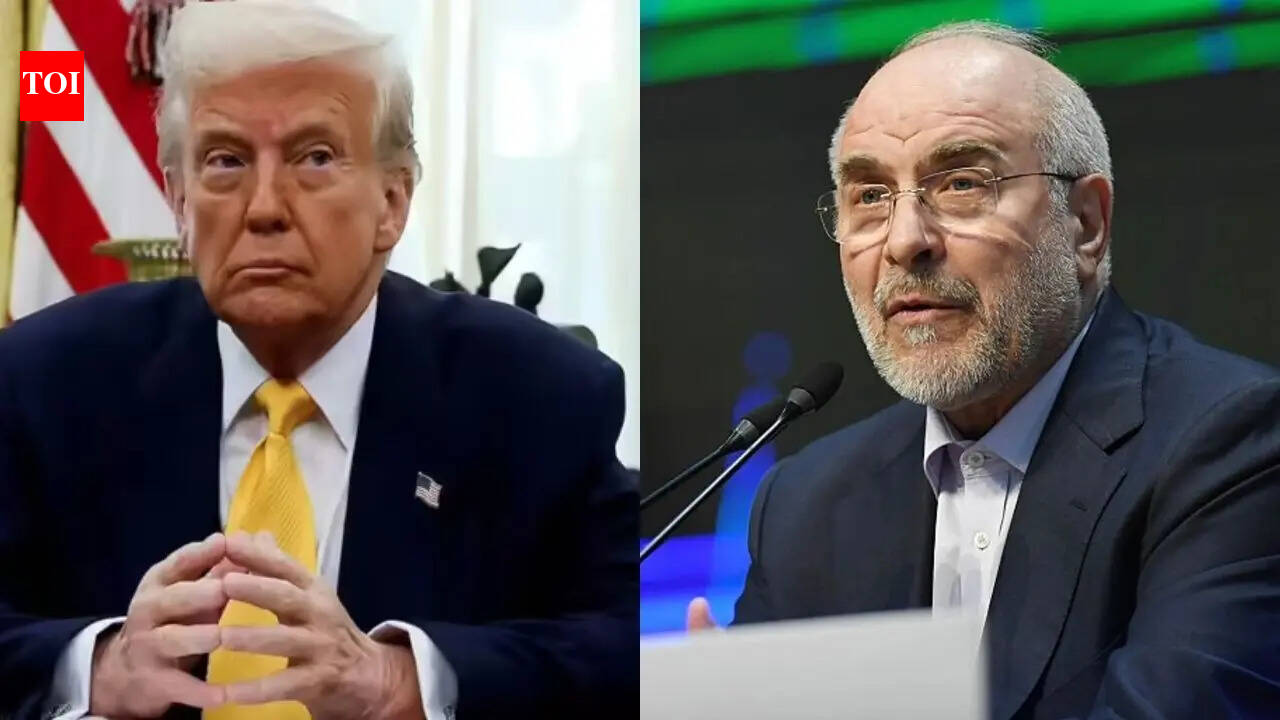
Iran warned on Monday that its armed forces were prepared to “teach a lesson” to any aggressor after US President Donald Trump rejected Tehran’s latest counterproposal aimed at preserving the fragile Middle East ceasefire.The sharp exchange further raised tensions in the region and rattled global energy markets already strained by disruptions in the Strait of Hormuz, one of the world’s most critical oil shipping routes.Trump, speaking to reporters in Washington, said the ceasefire was on “massive life support” after dismissing Iran’s response to a US-backed proposal as “TOTALLY UNACCEPTABLE”.“The ceasefire is on massive life support, where the doctor walks in and says, ‘Sir, your loved one has approximately a one percent chance of living,’” Trump said.Responding to Trump’s remarks, Iranian Parliament Speaker Mohammad Bagher Ghalibaf said Tehran was fully prepared for any confrontation.“Our armed forces are ready to respond and to teach a lesson for any aggression,” Ghalibaf wrote on X. “A bad strategy and bad decisions always lead to bad results — the world already understands this.”Iran’s foreign ministry said Tehran’s proposal demanded an end to the US naval blockade on Iranian ports and a halt to military operations “across the region”, including Israeli strikes targeting Hezbollah in Lebanon. The ministry also called for the release of Iranian assets frozen abroad for years under sanctions.“We did not demand any concessions. The only thing we demanded was Iran’s legitimate rights,” foreign ministry spokesman Esmaeil Baqaei said.The standoff intensified concerns over the future of the Strait of Hormuz, where Iran has tightened restrictions on maritime traffic and introduced toll mechanisms for passing vessels. US officials have repeatedly warned that allowing Tehran to control the strategic waterway would be “unacceptable”.The crisis has also fuelled fears of a wider humanitarian and economic fallout. Saudi Aramco CEO Amin Nasser said the current disruption represented “the largest” energy supply shock the world had ever experienced.Meanwhile, the United Nations warned that prolonged disruptions could trigger severe food shortages globally due to reduced fertiliser exports from Gulf ports. UNOPS executive director Jorge Moreira da Silva said the world had only weeks left to avoid a “massive humanitarian crisis”.“We may witness a crisis that will force 45 million more people into hunger and starvation,” he said.The conflict has also revived concerns over Iran’s nuclear programme. The US and Israel have long accused Tehran of pursuing nuclear weapons, an allegation Iran denies. Israeli Prime Minister Benjamin Netanyahu has maintained that military operations would continue until Iran’s nuclear facilities were destroyed.
