



5 min readMay 15, 2026 04:19 PM IST
First published on: May 15, 2026 at 04:19 PM IST
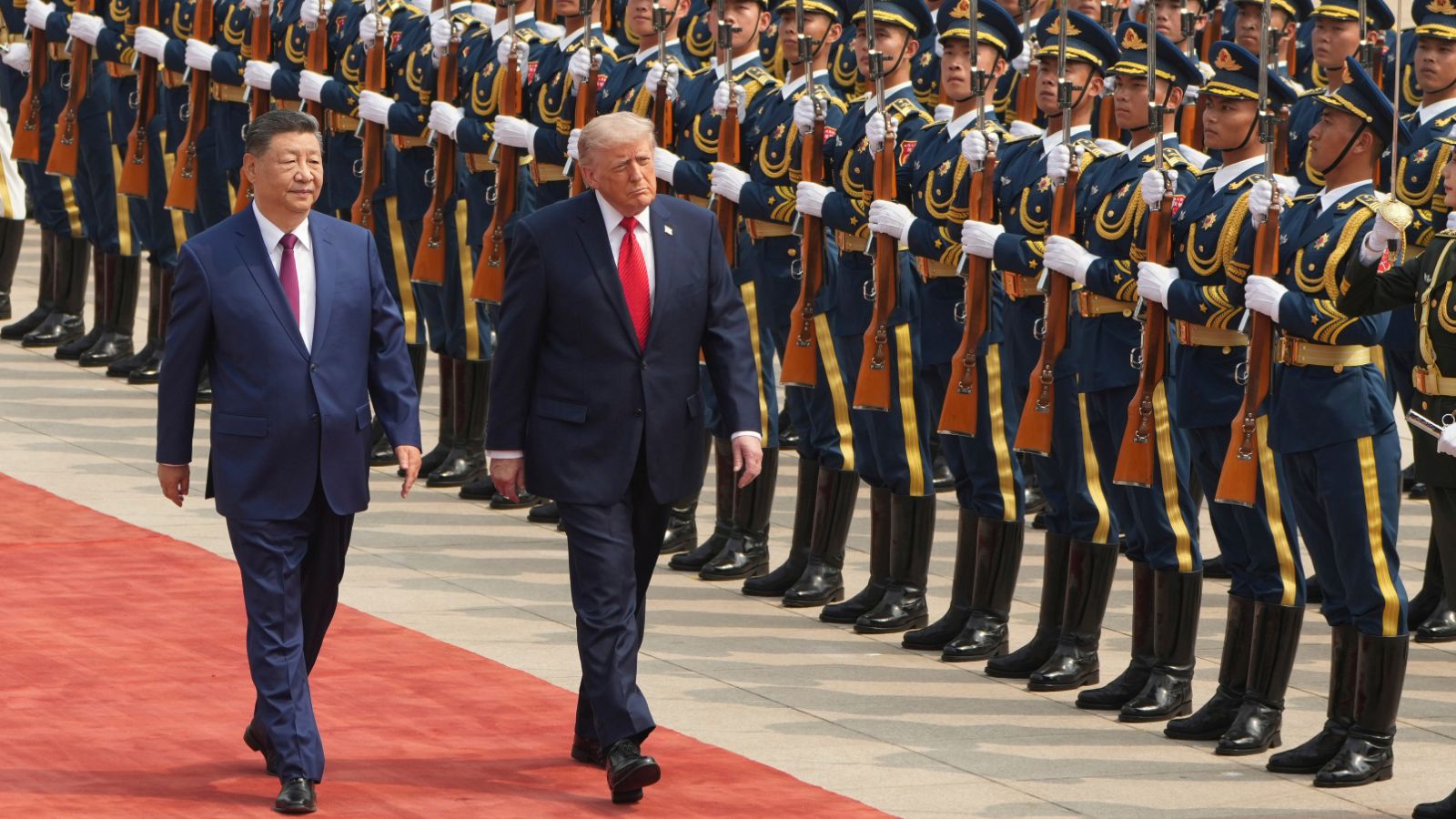
The hype surrounding US President Donald Trump’s visit to Beijing and the broad outcomes indicate that the politics of big power hyphenation is back.
After the collapse of the communist regime in the Soviet Union in 1991, some strategic thinkers in the US dreamt of single-power dominance. Francis Fukuyama, the Stanford political scientist, called it the “end of history” and predicted that the American way of liberal democracy would be the only way forward for the world. His own guru, Samuel Huntington, a renowned Harvard professor, challenged the thesis through his famous book The Clash of Civilisations two years later in 1993, in which he predicted a civilisational conflict involving various regions that would challenge the US supremacy. Huntington was not far off the mark. Soon, the US ran into trouble with Islamic terrorists, culminating in the World Trade Centre attack in New York in 2001.

The early 21st century also saw several middle powers and some minilateral groupings emerging as important players in the world. The phrase “multipolarity” came into vogue, indicating that the world was no longer “unipolar” and under US hegemony. Many believed that a multipolar set up, where regionalism and localism play a dominant role, will be a good model for international governance. Sceptics and American apologists, who saw any talk of multipolarity as a rejection of America’s superpower status, dismissed the idea. They argued that no other country can match America’s economic, technological and military power and hence, the talk of multiple poles was a fantasy. Not necessarily. Several instances in the last two decades, including the latest war in Iran, have proved that power asymmetry doesn’t always mean the powerful will be successful. The last two decades saw many middle powers — nations like India, Russia, Brazil, Turkey, France and South Africa or plurilateral groupings like the ASEAN, EU, Quad and BRICS — rising as prominent players in global politics.
That scenario seems to be changing now, with two reigning superpowers — the US and China — wanting to take matters into their own hands. During the 1990s and early 2000s, Presidents Bill Clinton and George Bush believed in co-opting China in the hope that its economic rise would make it more liberal, democratic and responsible. In the last 15 years, though, there seems to be a realisation in the US that China is becoming powerful enough to soon challenge its dominance. During the Obama presidency, this realisation led to a new foreign policy initiative called the “pivot to Asia”. The unstated aim of the policy was to contain the growing influence of China. In 2010, the Quadrilateral Security Review of the Pentagon, for the first time, while welcoming “a strong, prosperous, and successful China that plays a greater global role”, also fretted about Beijing’s defence spending and governance processes, noting that they raised “a number of legitimate questions regarding its long-term intentions”.
American apprehensions about the China challenge grew in the following years.
The rise of Xi Jinping as president in 2013 confirmed that China has ambitions of global supremacy and domination. Under Xi’s leadership, China demonstrated impressive progress in many areas including deep-tech, defence and space. Xi consistently insisted that China has arrived, and the US and China together should ensure the security and prosperity of the world and humanity. At the Busan meeting in South Korea last October, on the sidelines of the APEC summit, Xi told Trump that “China and the US can jointly shoulder our responsibility as major countries and work together to accomplish more great and concrete things for the good of our two countries and the whole world”. A year earlier, in March 2024, during a meeting with US business leaders in Beijing, Xi observed that the two countries finding the right way to get along is important for the well-being of the two peoples and the future of humanity.
These days, Xi uses the metaphor of a “giant ship” to describe US-China relations. He used the metaphor several times, including at Busan and in his telephonic conversations with Trump. What the metaphor essentially says is that the world is turbulent waters, and the US-China relationship should steer the turbulence diligently. On his part, Trump has, on more than one occasion, invoked the metaphor of G2 to describe the US-China relationship. “The G2 will be convening shortly”, he declared on social media a day before his meeting with Xi at Busan.
Both the US and China seem to be losing interest in sharing platforms with other powers in plurilaterals. If the US is showing disinterest in Quad and NATO, China too doesn’t seem too enthusiastic about forums like BRICS and G20, especially when it comes to the leadership of countries like India.
All this takes us to two pertinent questions: Is multipolarity dead? Are we heading back to a new bipolar world order?
The writer president, Indian foundation, is with the BJP
