



The proposal to build an international transhipment port, an airport, and a 160-square-kilometre township on Great Nicobar — promising to remake the island as India’s “Singapore or Hong Kong”— has the makings of an ecological disaster. Marketed as a deep-draft port positioned to outpace regional competitors, the Rs 72,000-crore project is fraught with logistical, safety, and economic contradictions.

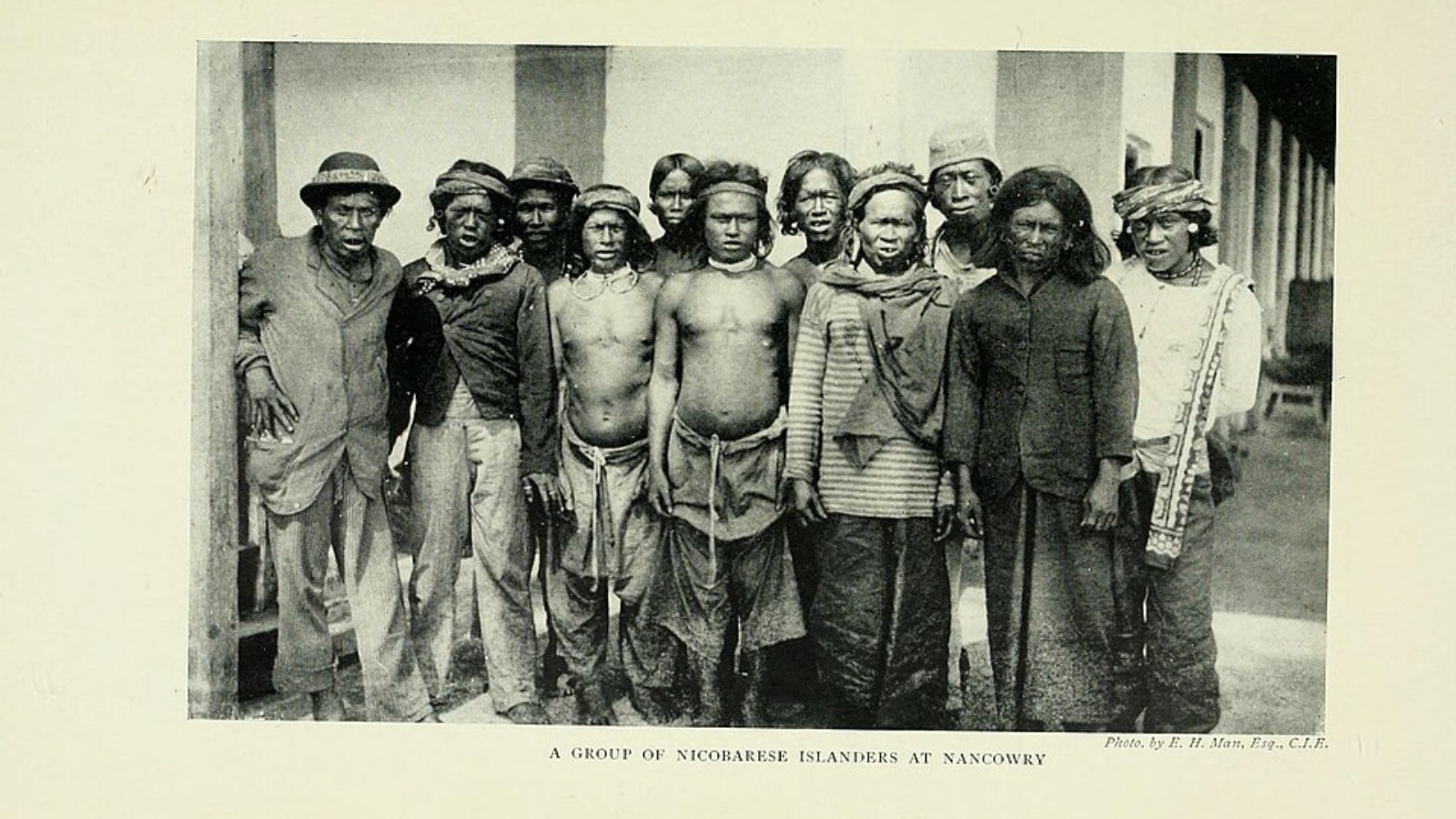
Except for seven revenue villages on the east coast, the island is a reserve for two indigenous communities: The Shompen, a Particularly Vulnerable Tribal Group (PVTG) numbering just 229 according to the 2011 Census, and the Southern Nicobarese, a Scheduled Tribe of about 1,200 people. The destruction of their ancestral forest will not only have environmental costs, but it will also mean the annihilation of a people’s living space, culture, and future.
Great Nicobar is part of the Sundaland Biodiversity Hotspot, one of only four in India, and was declared a UNESCO Biosphere Reserve in 2013. Bordered by coral reefs, it contains over 650 species of angiosperms, ferns, gymnosperms, bryophytes, and lichens. It also hosts one of the largest nesting populations of the endangered leatherback turtle in the Indo-Pacific. A million trees have been marked for felling in these tropical forests that play a critical role as moisture-rich precursors to the southwest monsoon.
Great Nicobar is located in one of the world’s most tectonically active zones — a geological risk that the project has not taken seriously. The island lies perilously close to Banda Aceh, Indonesia, the epicentre of the 9.2 magnitude earthquake that struck off the west coast of Sumatra, where the eastern part of the Indian Plate slides beneath Southeast Asia. It occurred at a depth of 15–20 kilometres, rupturing more than 1,200 kilometres of the plate boundary and displacing trillions of tons of rock beneath the sea. This movement displaced many more trillions of tons of water, generating a massive tsunami. In response to that event, Great Nicobar itself experienced sudden coseismic subsidence of 3 to 4 metres. This was not an anomaly but a manifestation of an ongoing, predictable tectonic cycle.
Our studies, published in peer-reviewed journals such as the Bulletin of the Seismological Society of America, show that the region follows a relentless pattern of strain build-up and release. GPS data show the land slowly uplifting as tectonic strain accumulates beneath the surface. This accumulated stress is released during major earthquakes. Now that the Nicobar region has entered an interseismic period, the land and ocean floor are slowly rising again until the next major earthquake.
Unlike the stable geology of Singapore or Hong Kong, the Great Nicobar region undergoes cyclical movements of slow uplift and sudden subsidence. To build large-scale infrastructure on such unstable ground is to gamble billions on the illusion that engineering can outwit plate tectonics.
This seismic reality is complicated by climate-driven sea-level rise projected for the region. The proposed mega-infrastructure would be situated directly at the intersection of rising seas and sinking land. In an insightful article in Defence Research and Studies, Rear Admiral (Retd.) Sudhir Pillai argues that “building a major port and airfield infrastructure on a seismically active island in one of the world’s most hazardous geological zones is a strategic risk as much as an engineering one. Infrastructure rendered non-operational by a seismic event…is not a forward base; it is a forward liability.”
The National Green Tribunal (NGT) has a clear mandate: To ensure the effective disposal of cases relating to environmental protection, forest conservation, and natural resource management. In the Great Nicobar case, the tribunal failed this mandate. Rather than engaging with the extensive body of expert research, the NGT accepted the government’s assertions at face value. It cleared the project by citing its “strategic importance” and noted the presence of “adequate safeguards,” but did not subject the claims to rigorous scrutiny.
In doing so, the NGT has created a dangerous precedent. Any future project now needs only to be framed as “strategically important” to receive judicial deference, regardless of its ecological cost. The Supreme Court’s concurrence for the Char Dham road-widening project in Uttarakhand was secured on the same excuse. The result in the Himalayas was tragically predictable: Disasters, deaths, and the accelerating destruction of fragile mountain ecosystems.
The NGT’s decision on the Great Nicobar project invites a future where ecological integrity can be sacrificed at the altar of unexamined strategic claims.
The writer is a geoscientist and a communicator on science, politics, environment, and education
