



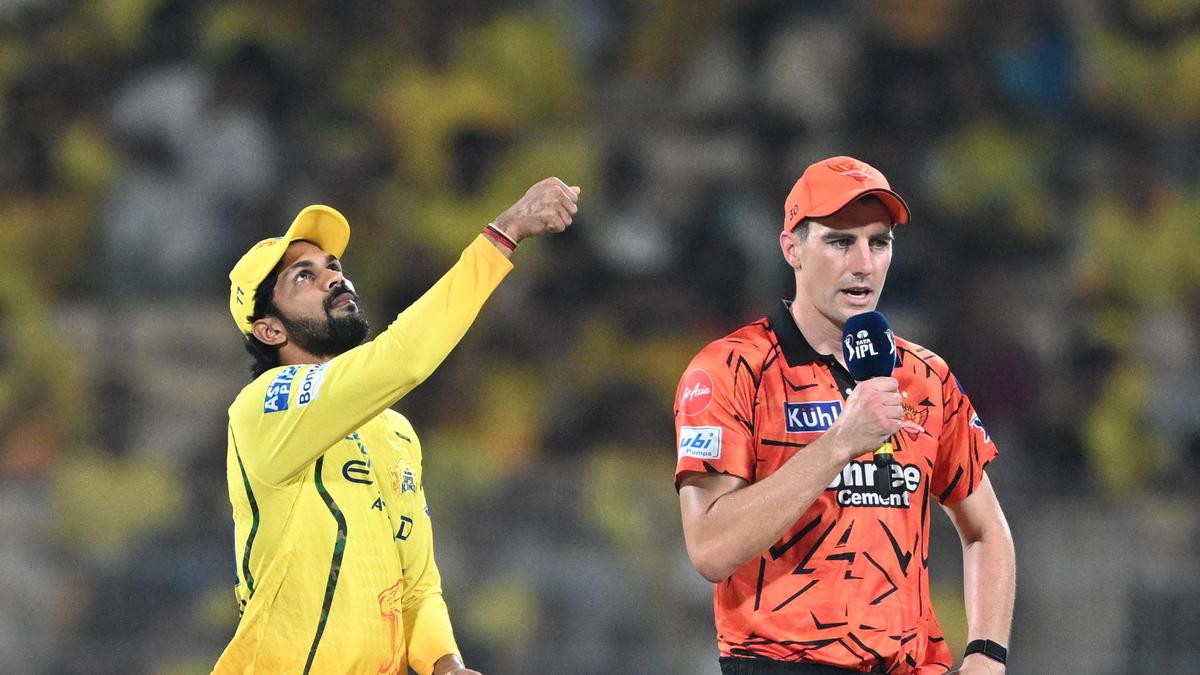

CSK captain Ruturaj and SRH skipper Cummins at the toss on May 19, 2026.
| Photo Credit: B. Jothi Ramalingam
Flip the coin, call it right, point to the field. It has become as predictable as batting fireworks in a PowerPlay. Season after season, captains have surrendered to the same instinct, and IPL 2026 has offered no deviation from that well-worn path.
Of the 62 matches played so far this season (till the Delhi Capitals-Rajasthan Royals clash on Sunday), toss winners have elected to field in 52.
The logic is old: dew in evening games makes it difficult to grip the ball, blunts spin, and tilts the contest decisively in favour of the side batting second. It is a formula that has been applied across editions, and in 2026, nobody has seen fit to discard it.
Teams that chose to field went on to win thirty two of those 52. In the first 48 matches, sides chasing 200 or more held a 12-11 win-loss record, against 4-13 at the same stage last year. IPL 2026 has already produced 38 successful chases in 58 games.
Batting first, meanwhile, has been a lonely road. Only 10 toss winners have gone against the grain and chosen to take first strike, and just one of them has emerged triumphant thus far — Royals against Gujarat Titans on April 4. The other nine went on to lose, a grim ledger that has kept captains firmly wedded to the field-first faith.
Some big moments of the season have only deepened that conviction. Mumbai Indians, sent in to experience the pitch first at Wankhede, made 243 for five — its highest-ever first-innings IPL total — only for Sunrisers Hyderabad to swallow it with eight balls to spare.
Punjab Kings hunted down 265 against Capitals, the highest successful chase in T20 history. K.L. Rahul’s unbeaten 152 off just 67 balls, the highest IPL score by an Indian, was still not enough. His side had batted first.
Decision-making after the toss has become less a gamble and more a script.
Published – May 19, 2026 12:08 am IST

