



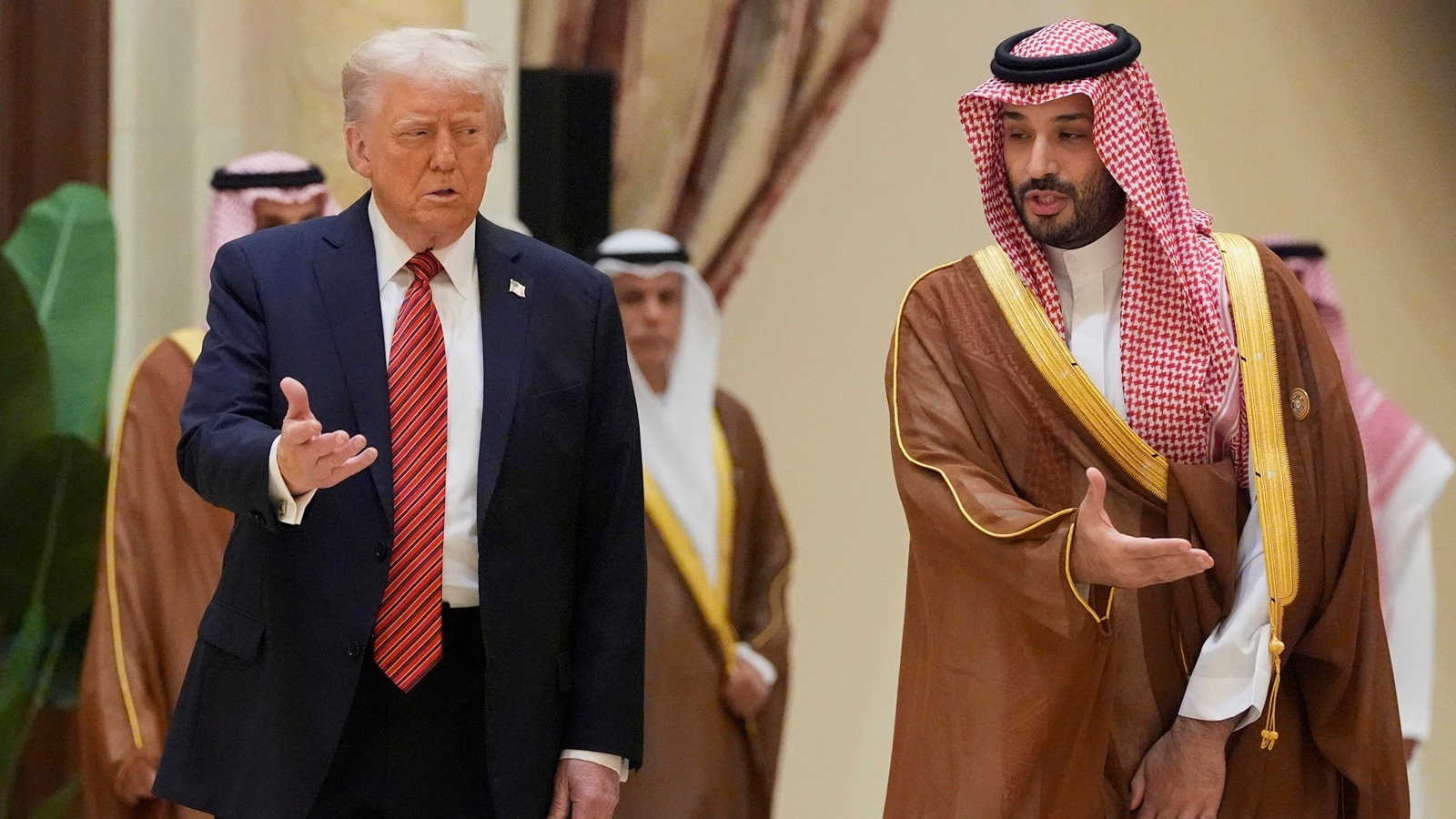
There is a major realignment occurring in the Middle East, one unravelling what US President Donald Trump viewed as a signature achievement at the end of his first term, the so-called Abraham Accords. The Accords nominally “normalised” relations between Israel and several Arab States, beginning with the United Arab Emirates (UAE) and Bahrain, with an expectation that Saudi Arabia (KSA) would join next. Less than six years later, the Accords are irrelevant to an alignment in which Israel and the UAE form one strategic axis, while Saudi Arabia, Egypt, Turkey, and Pakistan form another. The UAE’s recent withdrawal from the Organisation of Petroleum Exporting Countries (OPEC) is a part of this realignment.

The Abraham Accords were ineptly named as they did not encompass a single, comprehensive set of understandings between Israel and the Arab States. Instead, it was an umbrella term that covered widely varying commitments made by various states. For example, in the case of Sudan, no bilateral agreement with Israel ever actually materialised. Moreover, in an utterly meaningless gesture, Kazakhstan was added in 2025, even though it has had full and close diplomatic relations with Israel since Kazakh independence in 1992. On the other hand, for the UAE, the agreement betokened full diplomatic recognition and a de facto military alliance.
This Israel-UAE axis is currently challenging KSA’s power in the region. The two allies are determined, for example, to dominate two maritime chokepoints in the Middle East, the Strait of Hormuz in the Persian Gulf and the access points to the Suez Canal in the Red Sea. Riyadh perceives that these two rivals could easily threaten its interests in controlling these strategic points. In the larger picture, it also perceives that they are targeting the Arab-State system, insofar as Israel/UAE support secessionist movements within Arab League States, contrary to decades-old Saudi policy.
Weeks before the US and Israel launched their war on Iran, KSA and UAE very nearly came to a military confrontation over Yemen and the UAE’s backing of the secessionist Southern Transitional Council, challenging Saudi interests in Yemen. Cooler heads prevailed, and the UAE withdrew its forces. But the Council holds the southwest corner of Yemen on the Bab al-Mandab Strait and can thereby, if unchecked, control access between the Red Sea and the Gulf of Aden and ultimately the Suez Canal. The Council leadership has, moreover, openly spoken of normalising relations with Israel.
On the other side of the Gulf of Aden, Israel/UAE support a secessionist movement in Somalia, also a member of the Arab League. Indeed, Israel is the only State to recognise the independence of Somaliland from Somalia. There were reports that, in exchange, Somaliland will allow Israel basing rights. It was at the precise moment of this announcement that KSA at last noticed that Israel/UAE was effectively surrounding it and sought to control strategic maritime chokepoints in the region. That is when KSA forced the UAE’s withdrawal from Yemen.
The war in Iran temporarily distracted from these fundamental differences between KSA and UAE. Iran, seeking to inflict a high price for Israeli-US aggression, responded by targeting its neighbours’ vital economic interests, including the energy infrastructure of KSA, UAE, Qatar, and Oman. It also targeted Bahrain, Kuwait, and Turkey and mobilised pro-Iranian militias in Iraq. While none of these regional states is a belligerent, Iran’s obvious intent was to roil the oil markets, in which it has succeeded. The combined effect of Israeli, American and Iranian action in the Southern Persian Gulf has resulted in the closure of the Strait of Hormuz to the economic detriment of all regional states. But while KSA and UAE have common interests in protecting themselves from Iranian attacks, the long-simmering disputes between them will survive this war.
It is in this context that the UAE’s departure from OPEC should be seen. It is undoubtedly an escalatory move by the UAE aimed directly at KSA, which dominates OPEC. UAE clearly intends to chart its own path and will seek to maximise its own income at the price of cooperating with OPEC’s quotas. The UAE has a lower break-even point than KSA on the price of a barrel of oil, and its withdrawal from the oil cartel is a sign that it is willing to outproduce and undersell its erstwhile partners, most notably KSA. If it succeeds, it will weaken KSA as an economic power.
In the meantime, openly embracing their military alliance, Israel sent the UAE its Iron Dome aerial defence system, which it produces with the American arms manufacturer, Raytheon. Regional fissures around these developments have already appeared. Turkey has openly sided with KSA on Somaliland, criticising Israel’s diplomatic initiative, just as it announced a multi-billion-dollar renewable energy agreement with KSA. Some pro-Israel voices in Washington, meanwhile, are advocating an Iran-style attack on Turkey. Simultaneously, KSA and Pakistan signed a Strategic Mutual Defence Agreement. The Pakistani Defence Minister let slip that it extended Pakistan’s nuclear umbrella over KSA, a statement he tried to walk back, but that bell cannot be unrung. It is no coincidence that Turkey and Pakistan moved closer to KSA, just as the extent of Israeli-UAE cooperation became overt.
To the extent that KSA-Pakistan-Turkey form a competing axis to Israel-UAE, many regional states will choose KSA over UAE. Egypt relies on KSA’s largess and cannot afford to oppose its policies. Bahrain has relied on KSA forces to quell its restive Shia majority, and it, too, will align with KSA. While Kuwait, Qatar, and Oman generally seek neutrality in regional disputes, none is likely to choose the UAE over KSA. Outside the Gulf region, it is likely Jordan will also align with KSA.
Trump’s second term has thus made the Abraham Accords singularly unimportant. Two of the original Arab States in the Accords, the UAE and Bahrain, are likely to end up on opposite sides of the new alignment. Incredibly, the US is allied with every country involved, and if it took regional diplomacy seriously could likely ameliorate the rising tensions. But America’s Middle East diplomacy is in the hands of three real estate investors, Jared Kushner, Steve Witkoff, and Tom Barrack. As the US is focused on its war of choice in Iran, the alliances it has spent decades nurturing in the region are fraying. And that is true regardless of the outcome in Iran.
The author is the Michael A and Laurie Burns McRobbie Professor in Global Strategic Studies and Founding Director of the Centre for the Study of the Middle East at Indiana University, Bloomington
