



If you start looking up “1893 Chicago” in India, then the predictive autofill suggestions provided by the search engine likely concerns three main subjects. One of these revolve around Swami Vivekananda. It was in the 1893 World’s Parliament of Religions in Chicago that Vivekananda wowed the gathered audience with his historic address – a speech that has since been immortalised.
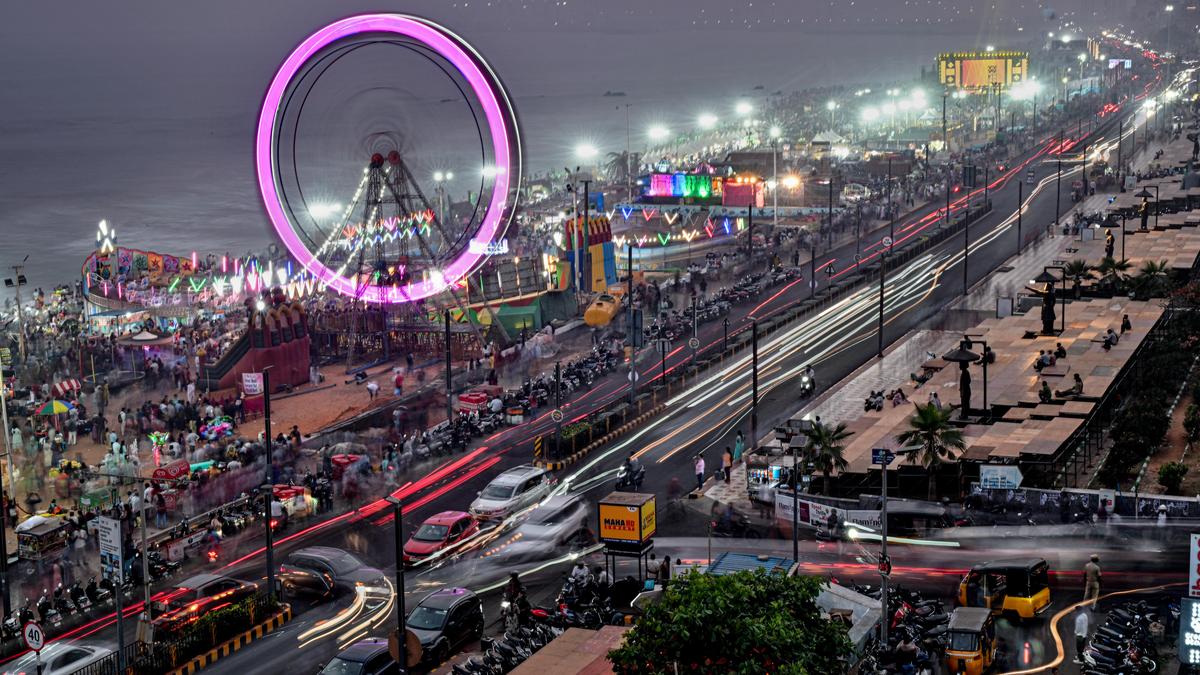
The other two subjects, which are in a way intertwined with the first, are worlds apart from faith. The World’s Parliament of Religions was held in conjunction with the World’s Columbian Exposition that Chicago hosted from May to October in 1893. It was during this exposition, better known as the Chicago World’s Fair, that the Ferris wheel made its debut.
An Eiffel-sized challenge
The mood was grim late in 1890 when American architect Daniel Burnham was tasked with the role of converting a square mile of Chicago into a showpiece that would dazzle the world. It was going to be a rather tough follow-up act, given that the 1889 World’s Fair in Paris had had the Eiffel Tower as its grand entrance arch.
Burnham assembled some of the best designers that the country had to offer at the time and asked them to leave no stone unturned. To his chagrin, the proposals that made its way were far from exclamatory.
When speaking to a group of engineers working on the project, Burnham made his displeasure felt. Among them was a 33-year-old Pittsburgh engineer, George Washington Gale Ferris Jr.
Huge revolving steel wheel
With the call to come up with “something novel, original, daring and unique” loud and clear, Ferris got to work. He was hit with the idea of a huge revolving steel wheel. He sketched it, added specifications to it and shared it with Burnham, who was concerned about its safety owing to fragility.
Ferris wasn’t the first person to imagine such a scheme and smaller wooden versions of similar ideas were already doing the rounds. But what with Burnham’s backing to think big, and the huge attendance expected at the Chicago World’s Fair, Ferris went all out. He got investors on board, invested his own money in order to have skin in the game, hired engineers and conducted safety studies.
The result was positive. On December 16, 1892, his wheel was chosen as the American answer to the Eiffel Tower. With over 1,00,000 parts, including two towers that rose up to 140 feet and an axle that weighed over 40,000 kg, it measured 250 feet in diameter and was fitted with 36 cabins, each with a capacity of 60 people.
The first riders of the Ferris wheel included George, his wife, the invited guests including the entire City Council, and a forty-piece band. On June 21, 1893, the original Ferris wheel was put into action and then ran every day from 8 in the morning to 11 in the night.
Views like never before
The Ferris wheel was a resounding success to say the least with more than 1.4 million people coughing up the 50 cents required over the next 19 weeks. In exchange, they got a 20-minute ride that included two revolutions and an almost indescribable aerial panoramic view that few had experienced before.
Even though the wheel was a super hit and brought in a lot of money and even helped balance the books of the Fair, Ferris got caught in many lawsuits – regarding the debts that the fair owed to him and that which he owed to the suppliers. The financial ruin and immense stress was followed by a bout of typhoid fever, complications due to which led to his death at the age of 37 in 1896. His successful reinvention of the wheel, however, means that his name still remains popular, nearly 130 years after his death.
Science behind these wheels
At its heart, a Ferris wheel is modelled after the structural principles of a bicycle wheel. Accordingly, the bottom half of the wheel holds up the entire structure at any given time in the rotation. Ferris utilised circle geometry and trigonometry for his original design, and it still remains in vogue in the wheels built today.
To ensure a smooth, safe ride, a Ferris wheel leverages centripetal force, gravity, and torque. Being on a Ferris wheel is effectively like watching dynamic forces in action, be it rotational dynamics, gravity, or even apparent weight.
The centripetal force is the force experienced by the riders moving in a circle, towards the centre of the wheel. It is because of this that massive observational wheels rotate slowly, to keep the ride comfortable for those on it.
As far as apparent weight is concerned, a rider feels lighter than their true weight at the top and heavier at the bottom. This is because of the way centripetal and gravitational forces interact with each other.
An operating Ferris wheel thus blends circular geometry, trigonometry, and rotational physics, but you are surely not thinking about any of those when you are on one of these rides.

The completion and success of the London Eye marked a monumental shift in the way Ferris wheels were designed and perceived throughout the world.
| Photo Credit:
AP
The London Eye effect
Even though Ferris wheels of various sizes have made their way since the original one was successful, it was only after the turn of the century that they’ve become the structural icons that they now are in various places. It started with the London Eye, which was ceremonially opened on December 31, 1999, but allowed passengers on it only from March 2000.
When the London Eye was opened, it was the biggest Ferris wheel in the world, with a massive height of 135 m. Since then, the Star of Nanchang (160 m, completed in 2006) in China, the Singapore Flyer (165 m, 2008), the High Roller (167.6 m, 2014) in Las Vegas, and Ain Dubai (250 m, 2021) have successively scaled newer heights.
A subtle difference
While all of these are Ferris wheels for most practical purposes and occupy the top of almost all lists of Ferris wheels in terms of height, some of these are classified slightly differently, especially by those who wish to be technically correct. The London Eye, for instance, could be called a cantilevered observation wheel and the Singapore Flyer as an observation wheel.
Observation wheels have cabins or pods that are completely enclosed and climate controlled. And when they say cantilevered, it is a nod to the fact that the London Eye is solely supported on one side at a single point in the centre, as opposed to having two supporting columns on either side.
Landmarks in their own right
Be it the London Eye, the Star of Nanchang, the Singapore Flyer, the High Roller, or the Ain Dubai, these Ferris wheels have become landmarks in their own right, embracing and elevating the place in which they reside. Wherever they are located, they are part of the skyline of the place.
In addition to the rides on these super-tall structures affording the riders sensational panoramic views like Ferris had imagined, the rides themselves have become massive tourist attractions, drawing people of all ages – barring those fearing heights – towards them. The views and the experience can often be breathtaking, and that explains why many tourists often pick up a fridge magnet featuring these as a souvenir before heading back home.

