



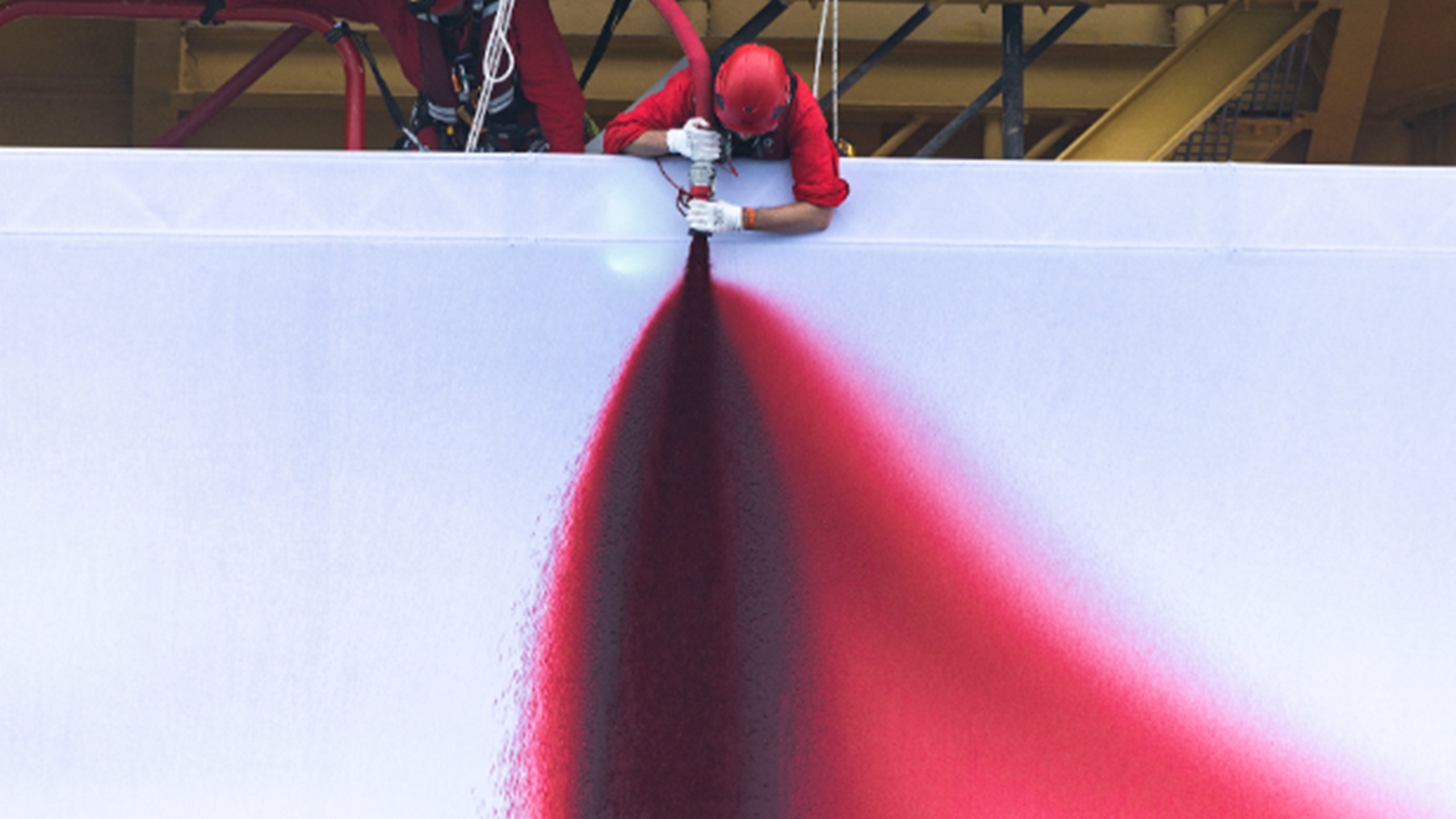
In an interview for his new eponymous solo show at London’s Hayward gallery, Anish Kapoor said, “Global capitalism has robbed art of its radical edge”. While his assertion is accurate and he has made his share of confrontational art, the British-Indian artist has also been among the top beneficiaries of this “evil”, with a net worth of $700 million. Whose responsibility is it, then, to preserve art’s original purpose of questioning and provoking?
In such discussions about art, the onus falls, all too often, on the foundational stakeholder — the artist — of an art market that is currently valued at $59.6 billion globally, according to the 2026 Art Basel and UBS Art Market Report. Meanwhile, the other stakeholders — galleries, universities, museums, art fairs, etc. — accept neither risk nor responsibility. Without institutional solidarity, it is unfair to expect artists to be brave.

Kapoor’s own success remains an exception. He has talent, of course, but he has also been aided by privilege and plain luck. The beginnings of his career coincided with the rapid commodification of art. He flourished at a time when the artist was driving the market. Now, dissent is increasingly a luxury only a few can afford; the market is now driving the artist, and not everybody is as fortunate as Kapoor.
Remember art student Kundan Kumar Mahato, who, in 2022, was rusticated and debarred following his internal project at MSU Baroda? He questioned Indian society’s treatment of women by filling silhouettes of Hindu goddesses with newspaper clippings detailing crimes against women. It did exactly what art is meant to do — provoke, reflect, challenge. Yet, when the university faced attacks from fringe right-wing elements, it chose to abandon a 22-year-old student from rural Bihar, instead of being his shield. Although Mahato was later allowed to resume his course by the court, his incarceration became a cautionary tale for young artists across India.
There are also enough incidents of both mid-career and established artists’ voices being stifled as institutions rush to toe the state’s line. Filmmaker Amol Palekar’s speech at the opening of artist Prabhakar Barwe’s retrospective at NGMA, Mumbai, comes to mind. When Palekar criticised the abolishment of the local artists advisory board at NGMA, he was asked by the curators and other authorities to limit his speech to the artist’s practice. Ironically, Barwe was among the pioneering Indian modernists who constantly challenged traditional teachings.
I was convinced of a systemic rupture about two years ago during a casual conversation with a prominent New Delhi-based gallerist. She explained why she chose to keep her gallery open while her peers went on a day-long strike in solidarity with Gaza, following the Israeli bombing of Rafah in 2024. “I can’t do that. I also have Israeli clients,” she said, adding, “While our artists are free to share their own political opinions, we will never officially amplify them in public.”
This is the loss Kapoor was talking about, where art is perceived solely as a commercial asset and radicalism is acceptable as long as it does not disrupt business, thus completely disassociating art from its indispensable social role. Now imagine being a provocative artist with this gallerist. You either quit or self-censor to survive. Inevitably, artists choose the latter, and rightfully so. As Shah Rukh Khan once said: “Gurbat mein creativity nahin hoti (You can’t be creative while you are struggling to survive).”
In May this year, Finland’s Espoo Museum of Modern Art (EMMA) announced a new support model for artists. Acknowledging that artists today are working in “survival mode”, resulting in “safe” art and “dull museums”, EMMA’s new director, Krist Gruijthuijsen, has said that this model will not just provide artists with financial aid beyond the customary token fee, but also reinvent the support system to encourage them to take risks. Perhaps institutions across India, and the world, can take a leaf out of EMMA’s playbook?
The aim is not to dissociate art from the market, but to decouple creative purpose from survival so that the market can complement art — thoughtful, radical, meaningful art. To rephrase Kapoor’s argument: Global capitalism has not robbed art of its radical edge; rather, it has robbed its custodians of the courage to stand by it. But money makes the mare go. Perhaps, a snub from one of the world’s wealthiest artists may just be the wake-up call the art world needs.
The writer is associate editor, The Indian Express. trisha.mukherjee@expressindia.com
