



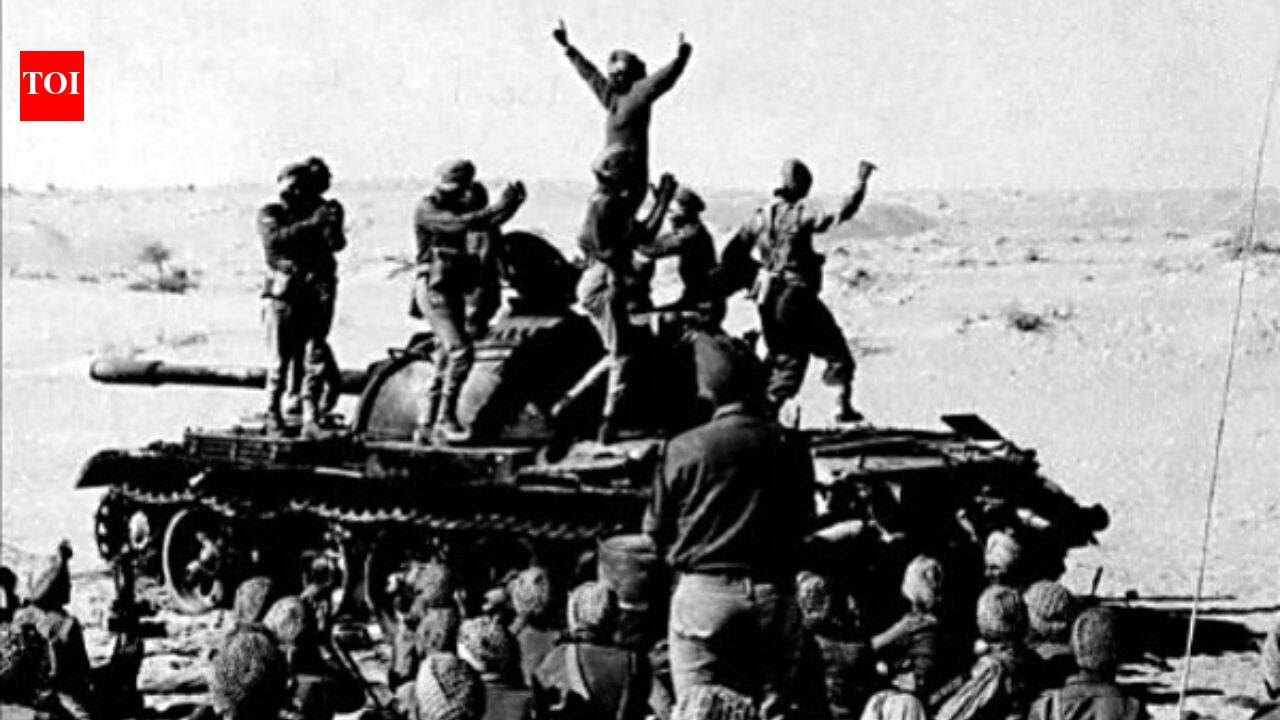
History remembers the brave who refuse to bow in the face of overwhelming odds. The Battle of Longewala is remembered because of the courage of the few who refused to retreat.The Battle of Longewala was one of the major decisive battles fought on the Western sector during the India – Pakistan War of 1971.On the nights of 4-5 December 1971, deep inside the Thar desert, an isolated Indian army post stood directly in front of a heavily armoured Pakistani army coloum.The post was held by 120 soldiers of the alpha company of 23 battalion of the Punjab regiment. The company was commanded by Major Kuldip Singh Chandpuri.The Battle of Longewala was not just a tactical victory, but also the story of extraordinary leadership, unwavering resolve, and seamless coordination between the Indian Army and the Indian Air Force.
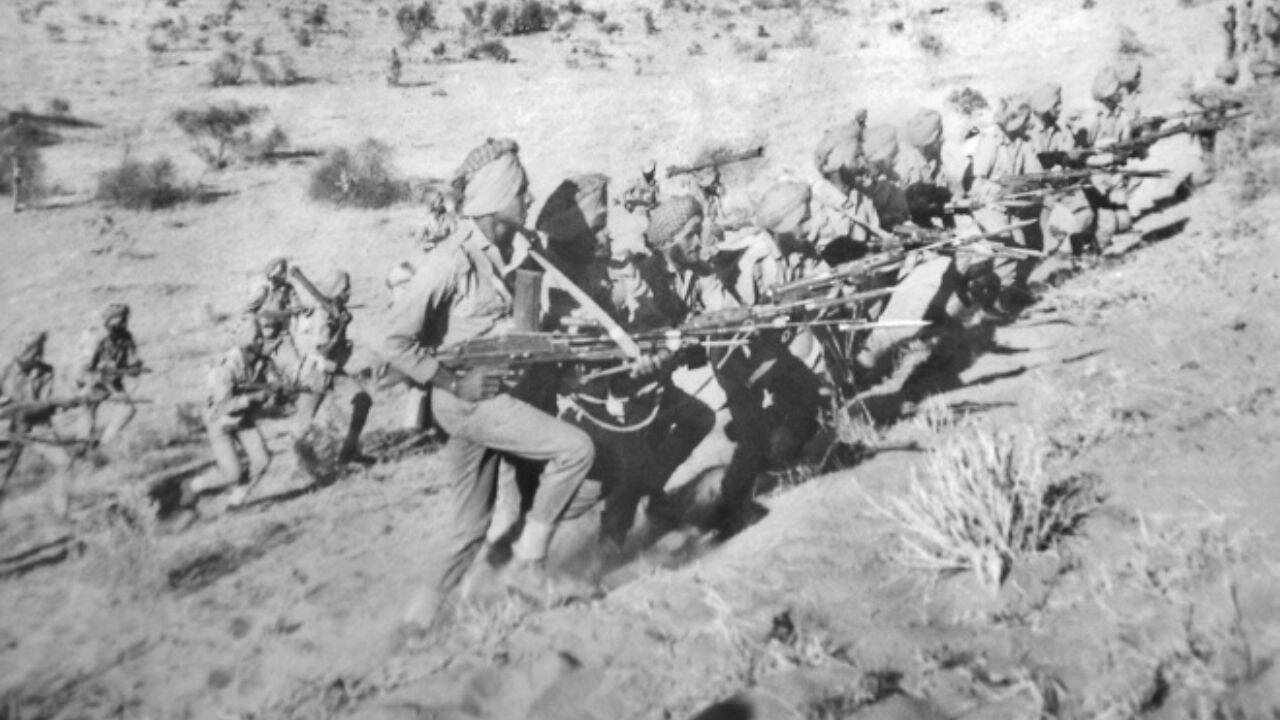
Photo credit: Longewala War Memorial
Why the Battle of Longewala Was FoughtThe battle of fought during the Indo-Pakistan war of 1971. While the main theatre of the war was in East Pakistan (Bangladesh), both India and Pakistan also fought along the Western Front.Earlier in 1971, Pakistan Army launched Operation Searchlight, a military crackdown aimed at crushing the Bengali independence movement.The operation resulted in widespread killings, displacement and a humanitarian crisis. Millions of refugees fled across the border into India, placing enormous economic and security pressure on the country.India extended support to the Mukti Bahini, the Bengali resistance force, while diplomatic efforts to resolve the crisis failed.On 3 December 1971, Pakistan launched Operation Chengiz Khan, a series of pre-emptive air strikes against Indian Air Force bases in the western sector, formally triggering the war.Pakistan ultimate plan was to reach Jaisalmer. At the centre of this plan was the small border post of Longewala, located around 16 kilometres from the India-Pakistan border.Longewala occupied a strategically important position on the road leading to Ramgarh and further east to Jaisalmer.On the night of December 4, under the cover of heavy artillery fire, Pakistani army began its advance towards the Longewala. The Pakistani forces were of combined arms involving of involved two infantry brigades and two armoured regiments. The total force comprises of around 4,000 troops and more than 40 tanks, including Type-59 and Sherman tanks, and a medium artillery battery.Holding Through the NightThe Longewala post was held by 120 troops of Punjab regiment with a handful troops from border security forces. For firepower they were equipped with mounted machine guns, mortars and two M40 recoilless guns.Indian army had already laid anti-tank mines in the fields in front of their post. The initial Pakistani attack stalled almost immediately when the infantry discovered the barbed wire which had not been spotted in the night, and interpreted it as signifying a minefield.Pakistani tanks came under heavy anti-tank fire, forcing the advancing column to slow down. The soft sand of the Thar Desert, with uncertainty over Indian minefields, disrupted the momentum of the Pakistani attack and prevented its armour from launching a coordinated assault.Indian Air force fighters at the Jaisalmer air force station were unable to help the post of Longewala at night of the attack because they were equipped with only Hawker Hunter aircraft which lacked night vision capability, thus risking the friendly forces on the ground in an event night attack.Throughout the night, Pakistani forces made repeated attempts to capture the post but were repulsed by the determined defence of the soldiers of Punjab regiment. Despite being heavily outnumbered, the Indian soldiers maintained their positions and remained in radio contact with brigade headquarters, awaiting daylight and air support.At the first light in the morning, the battle took a decisive turn. The Hunter aircraft based at Jaisalmer wreaked havoc on the Pakistani forces with their devastating fire power.Using there 30mm cannons and rockets, Hunters of 122 squadron flew 18 sorties and destroyed 36 enemy tanks, 100 vehicles and killed 200 Pakistan soldiers in a very short span of time thwarting the advance of Pakistani army.
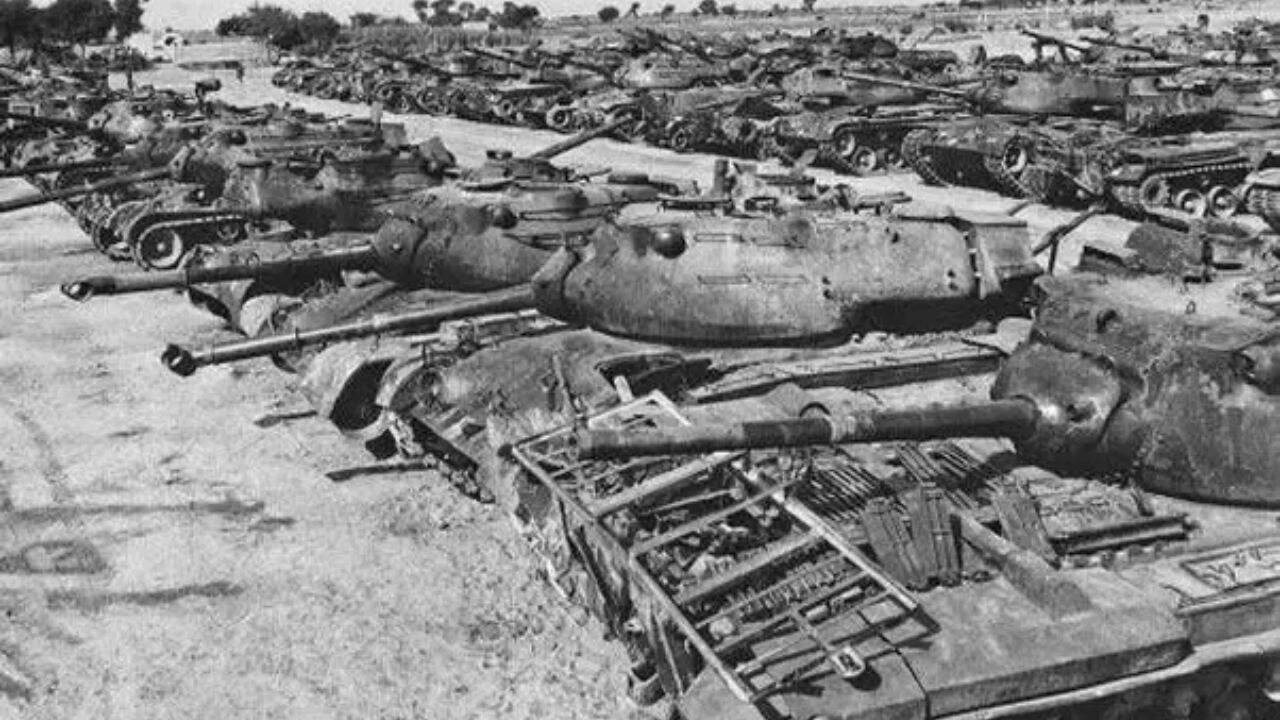
Photo credit: Longewala War Memorial
Without support from the Pakistan air force, the tanks and other armoured vehicles were easy targets for the IAF’s Hunters.By the noon, Pakistani assault has completely shattered and destroyed. The surviving Pakistani forces withdrew towards the international border, leaving behind destroyed and abandoned tanks, armoured vehicles, guns and transport vehicles.The successful defence of Longewala prevented Pakistan from advancing towards Ramgarh and Jaisalmer, effectively ending its offensive in the Rajasthan sector. The stiff resistance of Indian Soldiers on the ground and continuous attack by the Indian pilots, demonstrated the effectiveness of joint operations between the Indian Army and the Indian Air Force.For its leadership during the battle, Major Kuldip Singh Chandpuri was awarded the Maha Vir Chakra, India’s second-highest wartime gallantry award. Several other officers and soldiers were also decorated for their bravery.While the Indian Air Force personnel involved in the operation received gallantry awards for their role in halting the Pakistani advance.On the other side of the border, the failure at Longewala had serious consequence on the commanders of Pakistani forces and they were removed from there command following the unsuccessful operation.More than five decades later, the Battle of Longewala remains one of the finest examples of courage, leadership and joint warfare in Indian military history.Against overwhelming odds, a small company of Indian soldiers held its ground through the night, buying precious time for the Indian Air Force to strike at first light.Their determination not only shattered Pakistan’s offensive in the Rajasthan sector but also demonstrated that superior numbers alone do not guarantee victory.
