




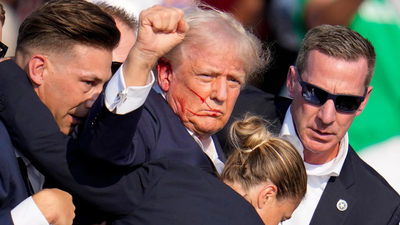
The US Secret Service failed to receive 102 local police radio transmissions about the gunman who attempted to assassinate US President Donald Trump during a campaign rally in Butler, Pennsylvania, in July 2024. It did not establish a joint communications room with local law enforcement, according to a report released on Thursday by the Department of Homeland Security’s Office of Inspector General.The report found that local law enforcement officers were actively sharing information over radio about a suspicious individual, later identified as 20-year-old Thomas Crooks. However, the Secret Service was largely cut off from those communications.Instead of receiving the radio transmissions, the agency was informed about Crooks through only five phone calls and three text messages. “As a result, Secret Service members did not alert President Trump’s protective detail about concerns of a suspicious person,” the inspector general’s report said, as quoted by Reuters.Crooks opened fire while Trump was addressing supporters at the July 13, 2024, rally. One spectator was killed and two others were injured, including Trump, who suffered a graze wound to his ear. Crooks was shot dead by law enforcement officers at the scene.The report said Crooks had gained access to a nearby rooftop that provided a direct line of sight to Trump before opening fire.Investigators also identified failures in the agency’s counter-drone operations. According to the report, Crooks flew a drone over the rally site for nearly nine minutes in the hours before the shooting, but the flight went undetected because the Secret Service’s counter-drone system was inoperable.The system was reportedly operated by a single “under-trained” officer who did not test the equipment before the event. The report said it took the operator several hours to attempt repairs, allowing Crooks to conduct the drone flight without detection.The inspector general recommended improvements in information sharing between agencies and stronger measures to identify and address “line of sight vulnerabilities” before public events.Responding to the findings, the Secret Service said it agreed with the recommendations. “Many of these recommendations were already identified … and have since been implemented as part of our ongoing reform efforts,” a Secret Service spokesperson said.
