



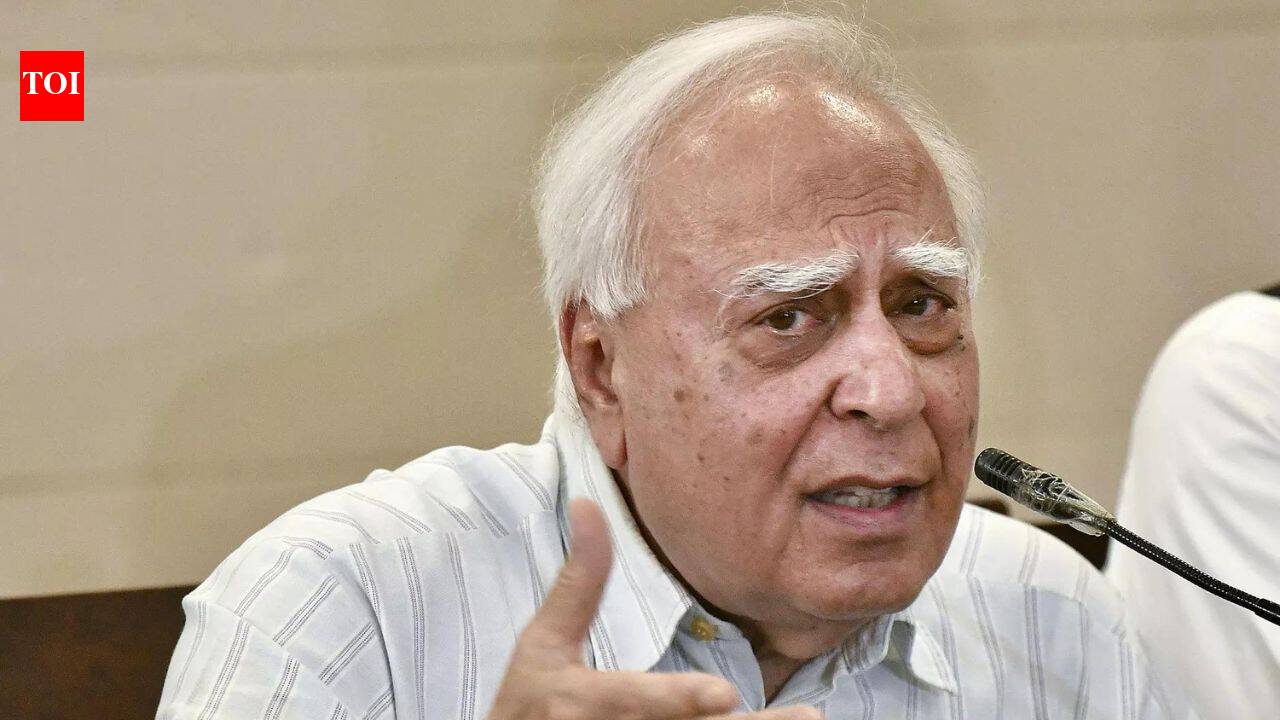
NEW DELHI: The Supreme Court on Monday sought the Centre’s response to a plea filed by independent Rajya Sabha leader and senior advocate Kapil Sibal challenging the interpretation of the Tenth Schedule of the Constitution that allows legislators to avoid disqualification under the anti-defection law by merging their political party with another party.A bench of Justices PS Narasimha and Alok Aradhe issued notice to the Centre on Sibal’s plea and observed that several issues raised in the matter may require consideration by Parliament.Sibal argued that the issue has ‘huge repercussions on our polity’, pointing out that the provision could allow a minority party to become a majority or a majority party to become a minority.The bench observed that the Tenth Schedule, which governs defection by lawmakers, was enacted by Parliament and said it was for the legislature to devise an appropriate mechanism.Sibal also informed the court that a similar matter concerning the defection of MLAs in Goa was pending before the Supreme Court. The bench subsequently tagged his plea with the Goa matter.Sibal has filed the plea in his personal capacity and sought reconsideration of the interpretation of Paragraph 4 of the Tenth Schedule, which deals with disqualification in cases of merger.The plea seeks clarity on whether the existing interpretation permits the composition of Parliament and state legislatures to change through the merger provision without attracting disqualification under the anti-defection law.Sibal had on July 22 sought an urgent hearing of his plea, arguing that the matter concerns the manner in which the composition of Parliament can change under the existing interpretation of the Tenth Schedule.The plea has been filed against the backdrop of recent instances of legislators switching parties by invoking the merger provision under the anti-defection law. It refers to MPs from the Aam Aadmi Party, Trinamool Congress and Shiv Sena (UBT) joining the BJP and other political parties.The Tenth Schedule was introduced through the Constitution (Fifty-Second Amendment) Act, 1985, to curb political defections by elected representatives. Paragraph 4 provides an exception to disqualification where a political party merges with another party and the required conditions under the provision are met.(with inputs from agencies)
