



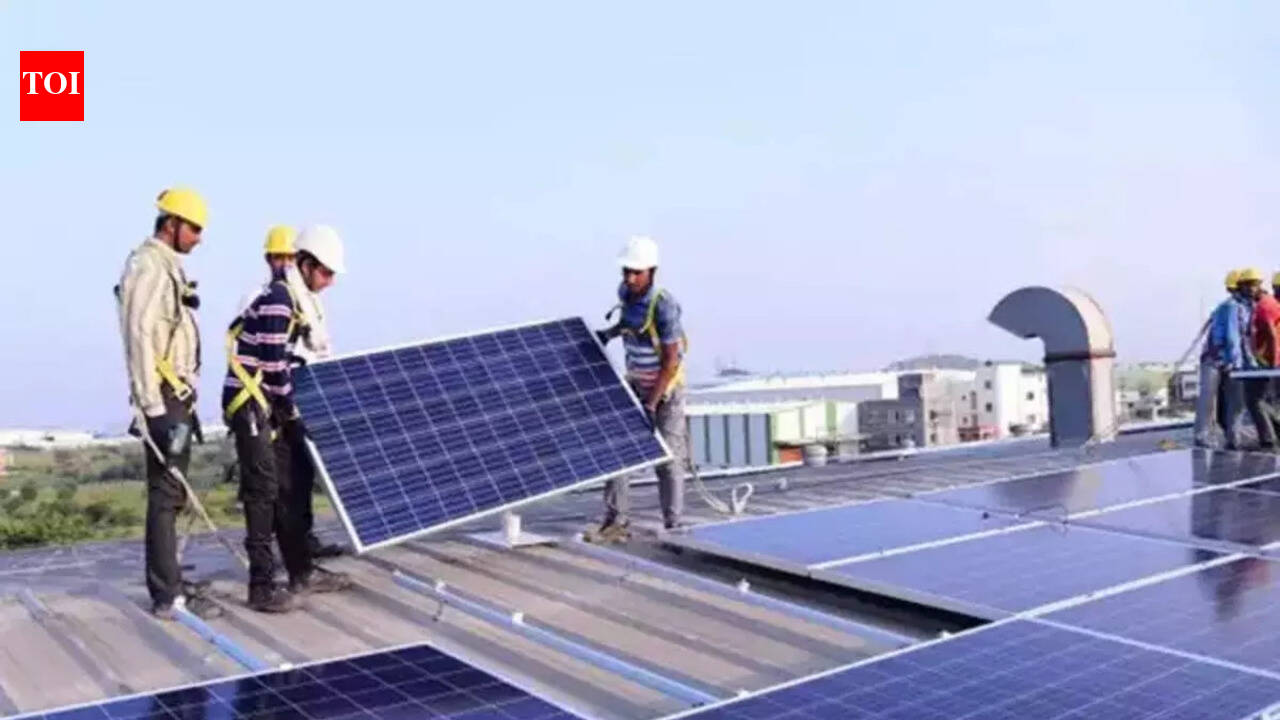
NEW DELHI: As the number of households benefiting from rooftop solar installations under the Pradhan Mantri Surya Ghar Muft Bijli Yojana (PMSG:MBY) nears 50 lakh, govt has begun deliberations to accelerate adoption and enhance the scheme’s impact in its second phase.The ministry of new and renewable energy (MNRE) held a stakeholder consultation on Thursday, acknowledging the scheme’s success in creating demand and establishing residential rooftop solar as a national market. It also identified the next set of challenges, including battery storage, grid integration, discom readiness, consumer access, asset performance, financing, quality assurance and long-term market sustainability.Launched on Feb 13, 2024, with a financial outlay of Rs 75,021 crore, the current phase of PMSG:MBY aims to install rooftop solar systems in one crore households by March 2027. So far, more than 40 lakh installations have been completed, benefiting over 48 lakh households.At the brainstorming session chaired by MNRE joint secretary JVN Subramanyam, ministry officials and industry stakeholders discussed changes that could shape PM Surya Ghar 2.0.One proposal is to ensure long-term maintenance and service support for consumers. Officials noted that many homeowners are unable to get repairs or warranty services because vendors that installed their systems have shut down or exited the business. The next phase may therefore include stricter maintenance obligations and a mechanism to guarantee electricity generation over the life of the system.The scheme may also be expanded to apartment residents and households without suitable rooftops through group and virtual net metering, allowing multiple consumers to benefit from a shared solar installation instead of individual rooftop systems.Battery energy storage systems (BESS) also figured prominently in the discussions. While batteries can store excess daytime solar power for use after sunset, they remain expensive. An official said batteries were deliberately kept out of the current scheme as they could have added to the cost and created an access barrier. With rooftop solar installations increasing rapidly and the need to better manage power during solar and non-solar hours, the role of BESS now requires fresh evaluation.The ministry plans to study whether battery storage should be deployed at the household, neighbourhood transformer or utility level before deciding the most suitable model.To improve transparency, govt may also consider digital monitoring of rooftop solar systems, while stressing the need to improve installation quality, standardise equipment and simplify financing to keep rooftop solar affordable and reliable.Officials said the suggestions will be be examined before a detailed policy paper is prepared for PM Surya Ghar Muft Bijli Yojana 2.0.
