



Chinese President Xi Jinping, speaking in Beijing during a meeting with the UAE Crown Prince, warned that the world must not revert to the “law of the jungle” and that the global order was slipping into “disarray”. Hours earlier, China’s foreign ministry had condemned the US naval blockade of Iranian ports as a “dangerous and irresponsible act”. Taken together, these mark a departure from China’s usual strategic ambiguity — revealing the limits of staying on the sidelines when core economic interests are at stake.
For a country that prefers to operate from the shadows, this unusually sharp public rebuke is striking. Beijing has long relied on calibrated ambiguity — working through backchannels and avoiding overt positioning. That script has now been disrupted.

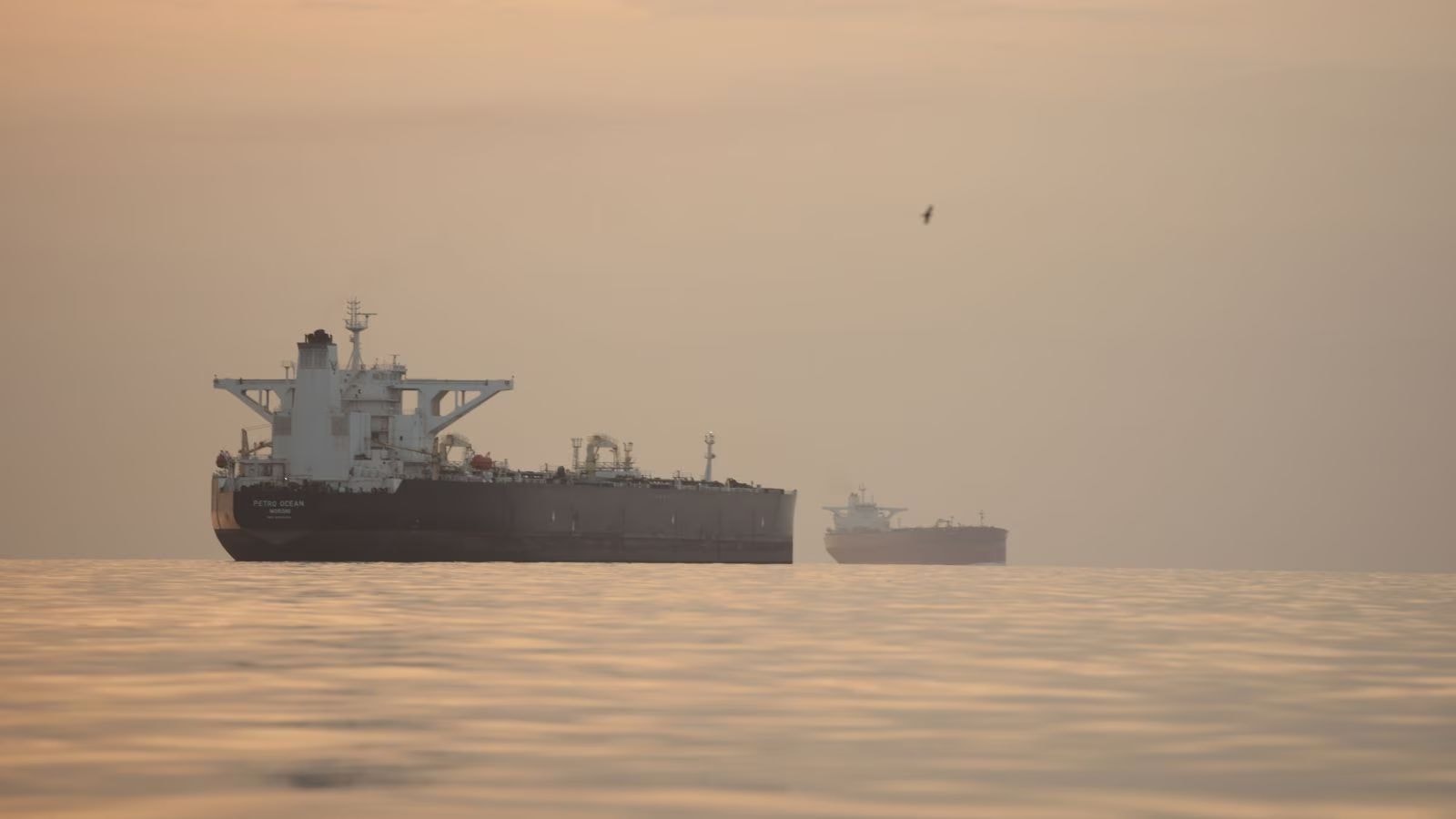
The immediate trigger is clear. The US naval blockade of Iranian ports has transformed a regional conflict into a direct challenge to China’s economic lifelines. Chinese-flagged vessels face interception, and more critically, China’s energy supply chain is exposed. Beijing purchases the bulk of Iran’s oil exports. What could earlier be treated as a distant geopolitical crisis has become a material economic threat.
Yet, even as Beijing sharpened its criticism of Washington, it did not distance itself from Tehran. Instead, it signalled pressure — on its own terms. In a rare move, Chinese Foreign Minister Wang Yi urged his Iranian counterpart to reopen the Strait of Hormuz and guarantee freedom of navigation, with Beijing choosing to make this communication public. For a state that foregrounds non-interference, publicly leaning on a strategic partner is not routine. It underscores a deeper constraint: China is not stepping away from Iran, but nor is it willing to bear the economic costs of disruption.
The answer lies in the point China appears to have reached — where the costs of the crisis can no longer be managed from the sidelines. While Beijing has condemned the blockade, its operational posture remains cautious — consistent with its doctrine of “calibrated ambiguity”. But that ambiguity is now under strain. Economic security is beginning to outweigh diplomatic optics, even as China hedges against deeper entanglement.
When economics forces strategy
The most immediate pressure point is energy. China’s dependence on Iranian crude — much of it purchased at a discount — has long been managed through opaque channels. But the blockade alters that equation. What Beijing could earlier hedge through reserves and quiet procurement is now exposed to disruption. A prolonged choke on Hormuz would drive up energy prices and transmit costs across China’s industrial economy, raising input costs and weakening export competitiveness. At that point, the crisis is no longer external — it becomes domestic.
This vulnerability runs deeper than headline trade flows. A significant share of Iranian crude is absorbed by China’s independent refiners — the so-called “teapots”, largely based in Shandong — which operate through discounted, sanction-sensitive channels. These refiners have historically absorbed the risks of US sanctions in exchange for cheaper oil, relying on financial networks that have so far kept flows intact. The blockade raises the stakes. It threatens not just supply but also exposes these networks — and Chinese financial intermediaries — to intensified US scrutiny and secondary sanctions. It is this tightening squeeze that explains Beijing’s shift from silence to public rebuke.
Seen in this light, China’s sharper rhetoric is less a strategic pivot than a response to economic pressure. Beijing is not signalling a willingness to lead, but an inability to remain insulated. When supply chains are at risk, diplomatic optics become secondary.
China’s decision to press Iran flows from the same constraint. The Strait of Hormuz is not a distant chokepoint — it is a strategic lifeline. With a substantial share of its crude routed through the Gulf, any disruption carries immediate consequences. Iran’s signalling of selective closures, combined with the blockade, raises the risk of a sustained choke on maritime flows. Beijing’s response reflects a clear prioritisation: Pragmatic balancing over ideological alignment.
This also explains the limits of China’s support for Tehran. Unlike its relationship with Iran, Beijing’s stakes across the Gulf are broader and far more consequential — spanning energy supplies, logistics hubs, and long-term investments. China has therefore calibrated its position: Sustaining Iran economically, but withholding direct military backing; signalling support, but avoiding commitments that could endanger its ties with Gulf states.
The limits of calibrated ambiguity
The stakes are sharpened further by uncertainty surrounding high-level US–China engagement. US President Donald Trump’s proposed visit to Beijing — already delayed once — remains precarious, with Washington signalling that progress on reopening Hormuz could determine its fate. For Beijing, the visit is an opportunity to stabilise ties and secure economic “breathing room”. By openly criticising the blockade while stopping short of full alignment, China is effectively risking that window.
This strategy, however, carries real risks. China’s ability to remain on the sidelines depends on keeping the conflict contained — a condition it does not control. A wider escalation would force Beijing into strategic choices it has so far avoided. Even without escalation, prolonged disruption risks triggering energy shocks that could dampen global demand and expose China’s export dependence. At the same time, Beijing’s posture risks provoking Washington, raising the possibility of tariffs or financial restrictions.
The bigger risk lies in the contradiction China is trying to manage. Beijing seeks to sustain its partnership with Iran while protecting far larger economic stakes across the Gulf. As tensions escalate, this balancing act becomes harder to sustain. Calibrated ambiguity offers flexibility, but only up to a point.
Finally, China is also using the crisis to advance its geopolitical positioning at the expense of the United States. By rebuking the blockade as a “dangerous and irresponsible act”, Beijing casts Washington as a destabilising power, while presenting itself — particularly to Europe and the Global South — as a defender of stability and international law. But this sits uneasily with its own cautious, interest-driven approach.
China is seeking to shape outcomes without owning them. The Hormuz crisis suggests that this balance may not hold for long.
The writer, a Fulbright and Institute of Chinese Studies (ICS) fellow, is professor at IIM Indore. Views are personal
