



Often in India we worry about a two front war involving Pakistan and China acting collusively. Have we ever thought what is China worried about? We must. That will give us an idea of what China can really do against India on the LAC and elsewhere.The global perception of Xi Jinping’s China is that of a rising military dragon with the world’s largest standing army, the largest naval fleet and a bevy of missiles which will either invade Taiwan or India depending upon its mood of the day. This fiery image masks a growing strategic vulnerability of China. It now faces a Four Front Dilemma in real time. This dilemma is not new. Chinese planners have always spoken of it. It is now apparent.
The Geography of the Dilemma
The four fronts on China’s perimeter knock on its Pacific “front door” and its Himalayan “back door”. Each presents a unique set of adversaries and military requirements. These are as under: –
- The
Taiwan Strait : This is China’s priority front, where it faces the combined strength of the United States, Japan, and Taiwan. - The
Korean Peninsula : Four nuclear powers and two potential ones crowd the Korean Peninsula. Any war here might result in China facing US troops across the Yalu River one fine morning. This front is scary and keeps Xi Jinping “awake at night.” - The South China Sea: In this maritime theater China confronts increasingly assertive regional actors like the Philippines and Vietnam.
- The Southwest Border (India): Beyond the Tibetan plateau, the strong Indian military stands direct across Chinese territorial expansionist ambitions.
The Resurgent Japan and the Taiwan Porcupine
The strategic temperature across the Taiwan Strait and along the first Island Chain is high. China’s ambition of annexing Taiwan is being met by a “porcupine strategy”. Taipei has drawn lessons from Ukraine and is focused on making any blockade or landing attempt prohibitively costly through asymmetric warfare. USA’s “hellscape” drone concept adds to the problem. Simultaneously, Japan is undergoing its most significant military transformation since World War II. Tokyo is creating specialized amphibious brigades and deploying long-range missiles along the first island chain to forestall any Chinese “island-grab”. China also faces the reality of Japan’s increased defense cooperation with Philippines, Vietnam and most importantly India. Very significantly Japan and Taiwan might have entered into an unofficial defense agreement.
The Danger Which Exposes the Heartland
The Korean Peninsula is arguably China’s most dangerous front because it potentially “hits the heart of China”. Beijing is only 700 km from the North Korean border. The primary fear is the collapse of the Kim regime, which would bring US forces directly to the banks of the Yalu River. Furthermore, the longstanding trilateral cooperation between the US, South Korea, and Japan, offsets the shaky triangle of China, Russia, and North Korea. As it stands, North Korea has leaned more towards Russia since the Ukraine war and is less reliant on China. It is now seeking to modernize and further expand its nuclear capability. In this scenario if Japan and South Korea go nuclear and alter the regional nuclear balance, Chinese strategic calculations will go for a toss.
Resistance in the South China Sea
In the South China Sea, China’s “bullying” tactics are facing a new form of resistance. The Philippines has pioneered a “name and shame” transparency initiative, weaponizing public information by broadcasting live footage of Chinese maritime aggression to the world. Manila is also modernizing its fleet and has acquired the BrahMos missile (a weapon for which there is currently no defense). Vietnam is similarly defiant, engaging in its own island-building projects and fortifying reefs with airstrips. Vietnam is also in an advanced stage of Brahmos procurement from India. China’s South China Sea strategy puts it in a zone of over stretch against multiple adversaries since the USA is also active here.
The Indian Squeeze on the Himalayan Front
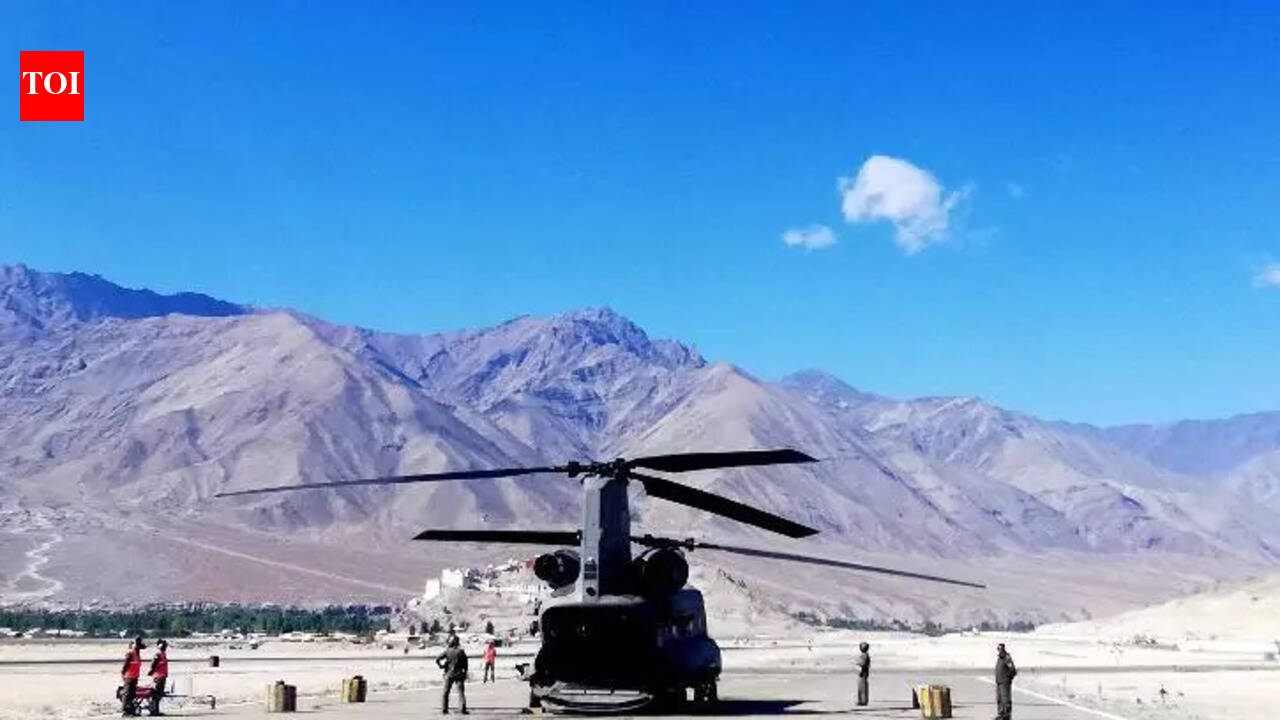
China’s military balance with India has shifted significantly since 2020. India’s rapid rebalancing of forces and sustained infrastructure development India along the LAC has enabled parity with Chinese deployments. India now holds the “second mover” advantage. Beyond the tactical level, China remains deeply concerned about the “Tibet Card”. Chinese strategists worry that a conflict elsewhere, specifically in a Taiwan situation, would embolden Tibetan secessionists, potentially aided by India, to spark a “color revolution”. Most importantly India’s increasing heft in global affairs troubles China. Recent visits of heads of state or other high-ranking officials from South Korea, Indonesia, Laos, Vietnam, Philippines, Myanmar to India makes China uneasy. Increasing defense cooperation of India with these countries and Japan is problematic for China. Further the recent QUAD foreign ministers meeting in India will be an ominous sign for China.The Leadership Vacuum and the “Peace Disease”Compounding these external threats is a profound crisis within the PLA. Chinese military equipment has failed in Pakistan, Venezuela, Iran and Cambodia. That puts a question mark on Chinese weapon reliability in battle. More importantly, Xi Jinping has conducted extensive “Stalinist purges,” hollowing out the upper echelons of Chinese military leadership. Very surprisingly the axe has fallen on operational commanders. The military leadership is at present in a limbo.The PLA also suffers from “peace disease”—a lack of actual combat experience—and a rigid command structure that requires almost every tactical decision to be cleared by the CMC in Beijing. All the purges of Xi Jinping have voided the Chinese command structure and largely lacking the capacity necessary for complexities of modern warfare.
Chain Reaction Warfare and The Defence Expenditure Trap
The ultimate dilemma for China is what its own analysts call “Chain Reaction Warfare”. Because China is “porous all around,” it cannot afford to focus entirely on one door without the risk of someone entering through one or more of the other three. If in a scenario, China commits a large part of resources to a Taiwan invasion, it leaves its other borders vulnerable. The regional military and economic dynamics are also shifting. As China’s defense budget has grown, the rest of Asia begun matching that growth. China’s belligerence has forced countries to arm themselves and push back individually and collectively as well. Hence China finds itself in a geographic and political vice, where any significant military action on one front risks a catastrophic “chain reaction” across the others. It appears that China has set a trap for itself.Very clearly China’s “Four Front Dilemma” is critical. The combination of a solidified Indian border, a remilitarizing Japan, a reactive Philippines, and a hollowed-out internal leadership has left Beijing with few good options. The perception of China as a “fiery dragon” capable of attacking everywhere at once is a myth. China is a constrained power amidst determined neighbors. Indian planners will do well to take note of this.
