



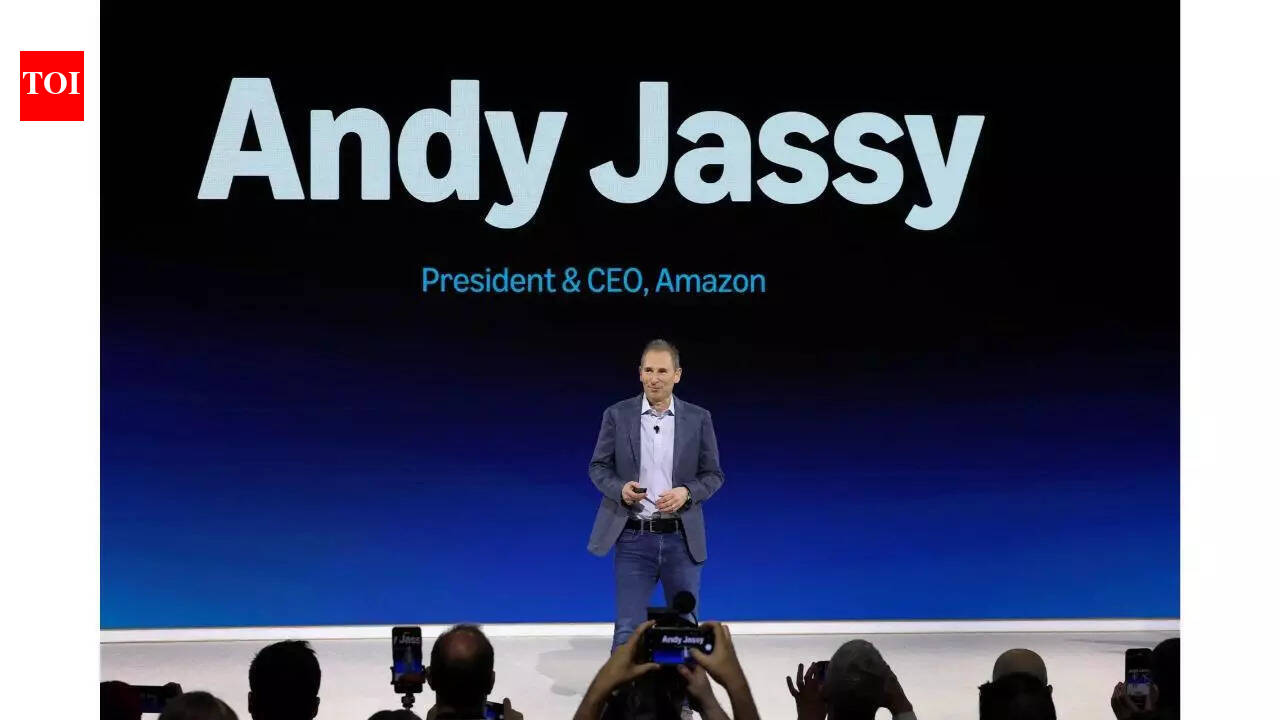

Amazon CEO Andy Jassy made his ambition to take on chip giant Nvidia with the company’s in-house AI chips earlier this year in a letter to Amazon shareholders. Months later, Amazon’s AI chief Peter DeSantis told Bloomberg that Amazon Web Services (AWS) is in talks to sell its AI chip Trainium to other companies for use in data centers. Amazon’s AI chief DeSantis said that the world’s largest cloud computing company AWS has begun discussions but declined to name potential customers.“We view AI infrastructure as rapidly evolving,” he said in an interview in Paris. “And we’re constantly looking at ways to get to more customers,” said DeSantis. Launched in 2020, buyers for Amazon’s AI chips Trainium include OpenAI, Anthropic and Uber. These companies use Amazon Trainium chips via Amazon Web Services. In April, Amazon said that the chip has produced more than $225 billion in revenue commitments. Same month, CEO Andy Jassy wrote in his annual letter to shareholders that it’s “quite possible” that Amazon would sell racks of its chips to third parties. According to DeSantis, Amazon is doing with Trainium what many other technology giants are doing with their AI chips, in part, due to the growing demand outside of the US for computing resources. In April, Alphabet CEO Sundar Pichai said that Google will begin to deliver its Nvidia GPU rival chips, called Tensor Processing Units (TPUs), to a “select group of customers” for use in their own data centers.DeSantis further claimed that the third version of the Trainium chip, which began shipping earlier this year, is “largely sold out”. Amazon AI chief said that there’s already strong interest in a fourth version that’s expected to debut next year.
Amazon CEO Andy Jassy to shareholders: Our chip business is on fire
In is annual letter, Amazon CEO Andy Jassy told shareholders that the company’s chips business is on fire, changes the economics for AWS, and will be much larger than most think. “Our chips business is on fire, changes the economics for AWS, and will be much larger than most think. Virtually all AI thus far has been done on NVIDIA chips, but a new shift has started. We have a strong partnership with NVIDIA, will always have customers who choose to run NVIDIA, and we will continue to make AWS the best place to run NVIDIA. However, customers want better price-performance. We’ve seen this movie before. In the CPU space, virtually all of the workloads ran on Intel chips until we invented Graviton in 2018. Graviton, which has up to 40% better price-performance than other x86 processors, is now used expansively by 98% of the top 1,000 EC2 customers. The same story arc is unfolding in AI. Our second version of our custom AI silicon (Trainium2) had about 30% better price-performance than comparable GPUs, and has largely sold out. Trainium3, which just started shipping at the start of 2026 and is 30-40% more price-performant than Trainium2, is nearly fully-subscribed. A significant chunk of Trainium4, which is still about 18 months from broad availability, has already been reserved. And, Amazon Bedrock, AWS’s primary (and very fast-growing) inference service, runs most of its inference on Trainium. Demand for Trainium is booming,” he wrote.He added, “Having our own hotly demanded AI chip opens up many possibilities, but perhaps none larger than the ability to lower costs for customers and secure better economics for AWS. At scale, we expect Trainium will save us tens of billions of capex dollars per year, and provide several hundred basis points of operating margin advantage versus relying on others’ chips for inference.”Jassy further wrote, “Our annual revenue run rate for our chips business (inclusive of Graviton, Trainium, and Nitro—our EC2 NIC) is now over $20 billion, and growing triple digit percentages YoY. To dimensionalize this versus other chips companies, that run rate is somewhat understated by our currently only monetizing our chips through EC2. If our chips business was a stand-alone business, and sold chips produced this year to AWS and other third parties (as other leading chips companies do), our annual run rate would be ~$50 billion. There’s so much demand for our chips that it’s quite possible we’ll sell racks of them to third parties in the future.”
