



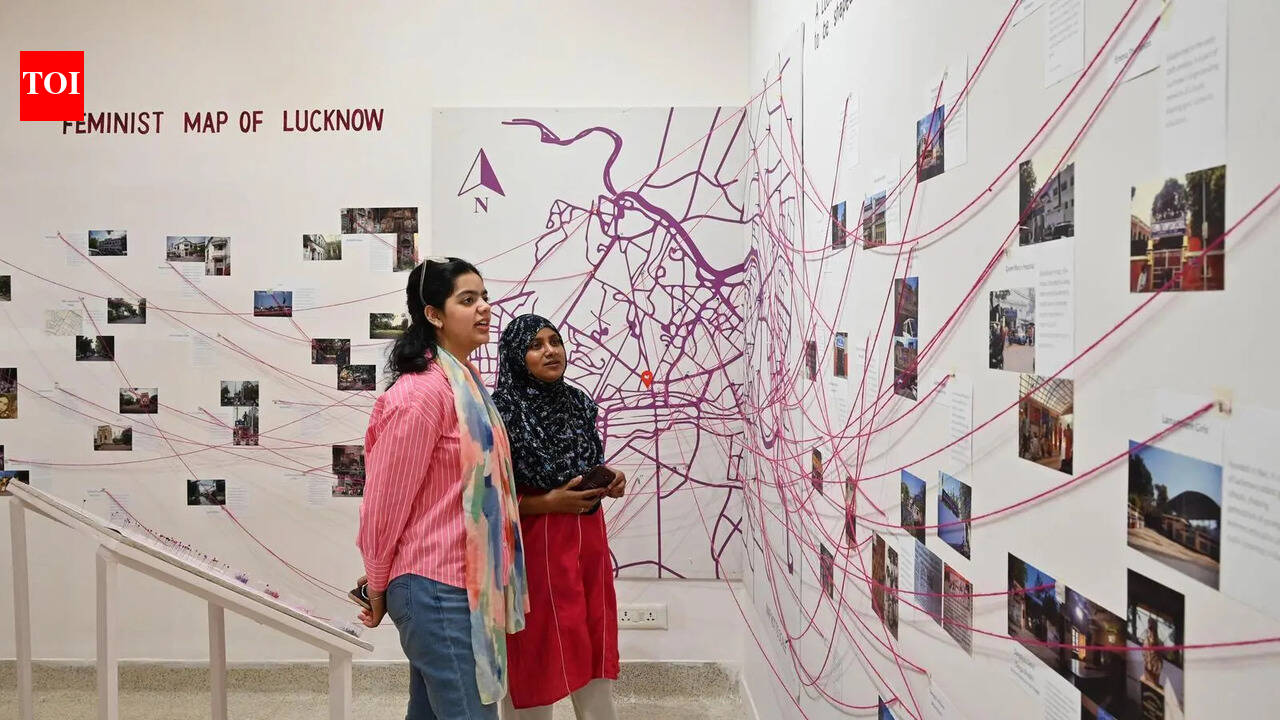
Lucknow: An exhibition titled ‘Feminists of Awadh Par Salaam’, currently on display at the Lucknow Bioscope Museum in Kaiserbagh, showcases the women who shaped Awadh’s history in art, literature, culture, and politics.The exhibition that highlights the lives of 40 notable women will run for the next three months, opening daily from 1pm.Visitors can also view the personal belongings of these women, displayed to bring their stories to life. From Capt. Lakshmi Sehgal’s coat and Charlotte Freni Cutting’s reading glasses to Nadeem Iqtidaar Ali’s handbag and Begum Hamida Habibullah’s bangles, each item is presented by the exhibition team, who guide the public through their legacies.Some have been given special recognition, with a dedicated wall paying tribute to their contributions. The wall features photographs of these women, while members of Lucknow Bioscope guide visitors through interesting facts about their lives and achievements.Among them is Gaura Pant, also known as Shivani, one of Hindi literature’s most widely read voices, who portrayed women as thinking, feeling individuals negotiating between duty and dreams. When her book ‘Krishnakali’ appeared in 1968, it stood out for placing a woman’s emotional and moral dilemmas at the centre.This thread of questioning can be traced back to earlier writers like Rashid Jahan, a doctor and author who marked a turning point in 1932 with her contribution to the book ‘Angarey’. The publication, later banned, openly addressed themes of gender and social constraint. She is known for her refusal to soften uncomfortable truths, bringing conversations around women’s rights into society at a time when silence was the norm. As part of the Progressive Writers’ Association (formed in 1936), her work and activism were tied to anti-colonial thought.This determination to step beyond conventional limits found a different expression in Constance Prem Nath Dass, who took on a role few Indian women held when she became the first Indian principal of Isabella Thoburn College in 1939. Leading the institution during the years around Independence, she stood at a moment when women were beginning to claim space in decision-making.Similarly, Savitri Sahani worked within the emerging space where livelihood and public health began to intersect. Associated with small-scale, women-led initiatives, her efforts linked micro-enterprise with sanitation awareness, addressing hygiene as a matter of dignity. She is acknowledged for connecting economic independence with well-being, showing that one could not exist without the other.When Begum Aizaz Rasul became the only Muslim woman in the Constituent Assembly in 1946, she spoke on minority rights and strongly opposed separate electorates. Her decision to step out in 1937, when she contested and won elections, carried its own message — that participation, not seclusion, would shape women’s future.“These women hold a special place in the exhibition, as their legacy inspires a womanhood that is lived, seen, and claimed,” said Alisha Asif, curator of the exhibition.
