



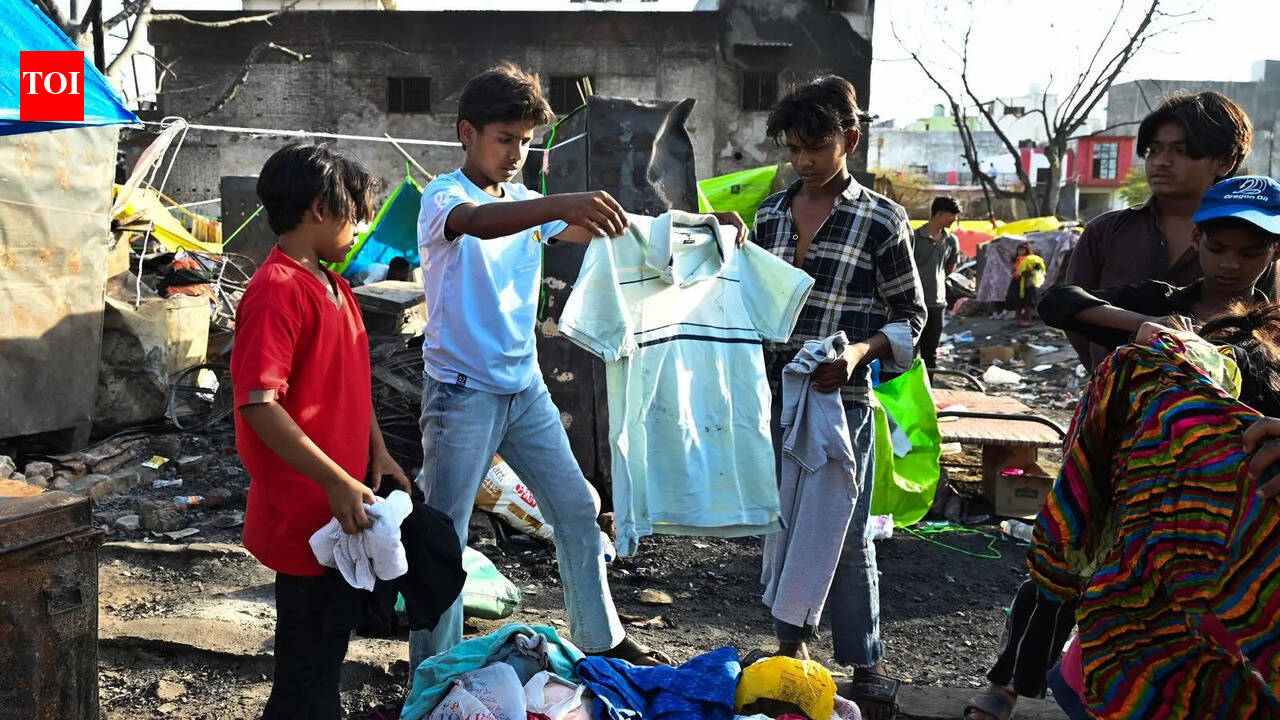
Lucknow: In the aftermath of the devastating Vikas Nagar fire, urban planners and architects have called for a fundamental rethink of how informal settlements and temporary housing clusters are developed and rehabilitated in the city.Pointing out that such shanty clusters often emerge around large construction projects and labour hubs, experts said the focus must be on sustainable rehabilitation without uprooting residents from their existing socio-economic networks.“Whenever there is major construction activity, clusters of informal housing come up because labour needs to stay close to work. Ignoring this reality only leads to repeated disasters. Instead of eviction or relocation, authorities must adopt in-situ redevelopment as a long-term solution,” said Aditi Mitra Ghosh, PhD, Department of Civil Engineering, IIT Kharagpur.“In-situ” means “in the original place”. Thus, “in-situ rehabilitation” refers to the rehabilitation of slum-dwellers without relocating them to a different location, she said.She warned that shifting displaced families to far-off locations disrupts livelihoods, especially for those working as domestic helps, street vendors, drivers or daily-wage labourers in nearby areas.A certified urban planner from SPA, Delhi, Suresh Nagpal, emphasised the urgent need for low-cost yet fire-resilient housing designs. He recommended replacing highly flammable materials such as plastic sheets and cloth with safer alternatives like insulated tin roofing or fibre cement boards, along with brick or concrete block walls.“Design plays a crucial role in preventing fire disasters. Basic planning, like leaving 3-6 metre-wide firebreak lanes between clusters, can stop flames from spreading rapidly and allow fire tenders to access the site,” he said.Meanwhile, Neha Kumari, an independent urban planner from IIT Roorkee, suggested developing “small group housing” models—compact, planned clusters with essential services, safer materials and regulated layouts—specifically designed for low-income and migrant populations working in urban areas.“If we rebuild the same way, we are only waiting for the next fire,” an urban designer said. “But if we integrate planning, safety and livelihood needs, we can transform these vulnerable clusters into resilient communities,” said Piyali Dasgupta of Centre for Urban Disaster Studies (SPA).
