



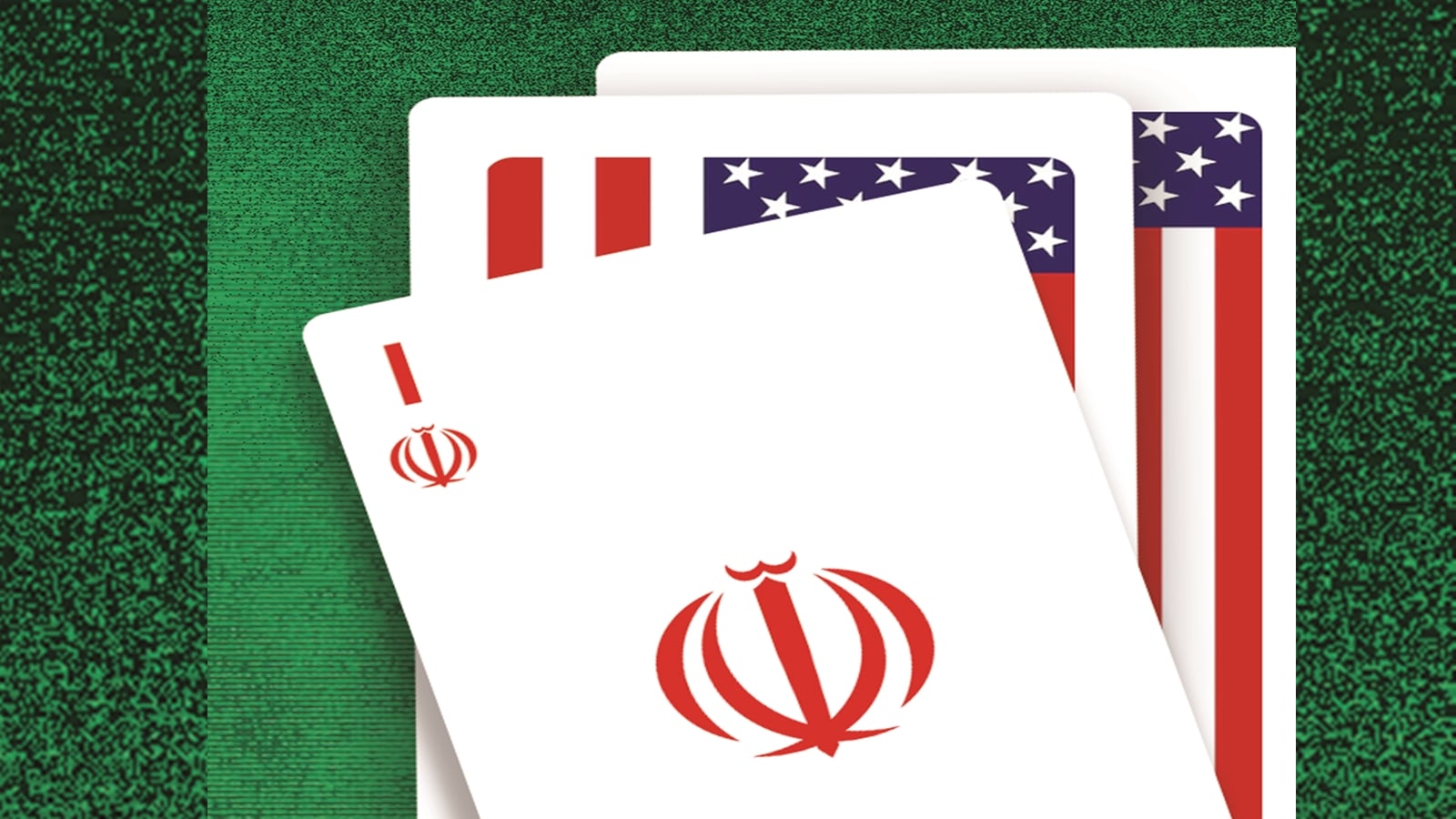
While the Iran-US talks in Islamabad failed, a deal was and is in plain sight. That the Iranians and Americans sent high-level delegations suggests that the two sides had already made substantial progress towards a deal. Both were in search of clinching commitments from the other but failed to get them. The meeting was not necessarily a waste of time, though, and we should not easily conclude that Tehran and Washington were insincere. There are times when real differences exist, and bridging those differences can be a genuine challenge.
In the aftermath of the Islamabad talks, US President Donald Trump has initiated a blockade of the Strait of Hormuz and promised to resume air attacks on Iran. Those and other actions could jeopardise the prospects of a peace deal, but they may also strengthen the imperatives for a deal.

What is the deal that was in plain sight and that could yet eventuate?
Going into the Islamabad meeting, three issues were crucial: Iran’s highly enriched uranium (HEU) and its nuclear future; the reopening of the Strait of Hormuz; and Israel’s war in Lebanon.
Iran has about 400 kg of HEU enriched to a 60 per cent level. Enriched further to the right level, this could be enough for 10-12 nuclear bombs. There are only three ways that the HEU can be removed from Iran — by conquering the country or by regime change; by a military raid; or by Iranian cooperation. If we rule out conquest or regime change, neither of which looks anywhere near possible, the only realistic options are an extraction raid or Iran handing the HEU over to the US.
There is a view that the US’s combat search and rescue (CSAR) mission on April 3 to bring home its downed airman was also an attempt at removing Iran’s HEU. This is almost certainly wrong. The US armed contingent reportedly consisted of 200 special forces personnel, a number that is too small to have located and removed up to 400 kilograms of HEU in a hostile environment, especially if the HEU is dispersed to various sites.
What is plausible is that in addition to the CSAR mission, the Americans attempted a military probe to assess whether an HEU raid is feasible. In the event, US forces came under heavy fire, lost two C-130 transport aircraft, and four helicopters. A real HEU raid would be much larger, more visible, and more targetable than the April 3 operation. If so, its chances of success, against Iranian forces ready and waiting, including at heavily protected nuclear sites, are low.
If the HEU cannot be extracted, Iran must hand it over. Under the 2015 Joint Comprehensive Plan of Action (JCPOA) between Iran, the US, and others, the HEU problem was to have been dealt with in several ways. But the JCPOA is anathema to Trump and the Republican Party, and any resurrection of it seems politically impossible.
The only option, then, is for Iran to hand over the HEU — but for a price. That price is the lifting of all US nuclear sanctions. To sweeten the deal further, the US could help rebuild Iran’s electricity-generation capabilities.
Removing the HEU is only part of a deal to ensure that Iran does not go nuclear. The other part, Trump has insisted, is for Tehran to convincingly renounce nuclear weapons capability by committing not to enrich uranium beyond 3.67 percent — the US reportedly wants a 20-year commitment, Iran a five-year commitment.
Leaving aside the time-period issue, convincingly renouncing nuclear weapons is only possible either through regime change or the current regime’s acceptance of full-scope safeguards under the IAEA (or some other arrangement).
Since regime change is unlikely, full-scope safeguards or more limited, critical safeguards are the way to go. Washington has little faith in the IAEA and other inspectors in this regard. Iran-US joint inspections would then seem to be the only possibility. If Iran can hand over its HEU to the US for a price, can it not also accept joint bilateral inspections?
The second key part of the Iran-US talks was about Hormuz. Here too there was daylight. Prior to the talks in Islamabad, Trump had suggested that the US could join Iran in a joint venture to enable safe passage of maritime traffic and to share revenue from a toll.
India and others have opposed a toll on shipping. A toll would contravene international law and set a dangerous precedent. Littoral countries elsewhere could come into conflict, as they each separately charge a toll. For shippers, and perhaps insurers as well, toll charges would be disastrous, financially and procedurally.
There is still room to resolve the Hormuz problem. Iran’s militarisation of the strait is aimed at exercising strategic leverage and at generating funds to rebuild damaged infrastructure. With a peace deal, the need for leverage would disappear. As for the funding of Iran’s infrastructure, the US could help by lifting all non-nuclear sanctions and by releasing frozen Iranian assets (in partnership with others who have sanctioned Iran).
Finally, ending Israel’s war in Lebanon may be achievable. On April 9, Prime Minister Benjamin Netanyahu offered peace talks with Hezbollah aimed at the militia’s disarmament. While Hezbollah rejected the offer of talks, Iranian and US pressure on their respective allies could bring them to the table. As part of an Iran-US peace deal, Tehran and Washington would commit to bring about an Israel-Hezbollah negotiation within a stipulated period.
In sum, all may not yet be lost.
The writer is visiting professor of International Relations, Ashoka University, and emeritus professor at the Lee Kuan Yew School of Public Policy, National University of Singapore
