



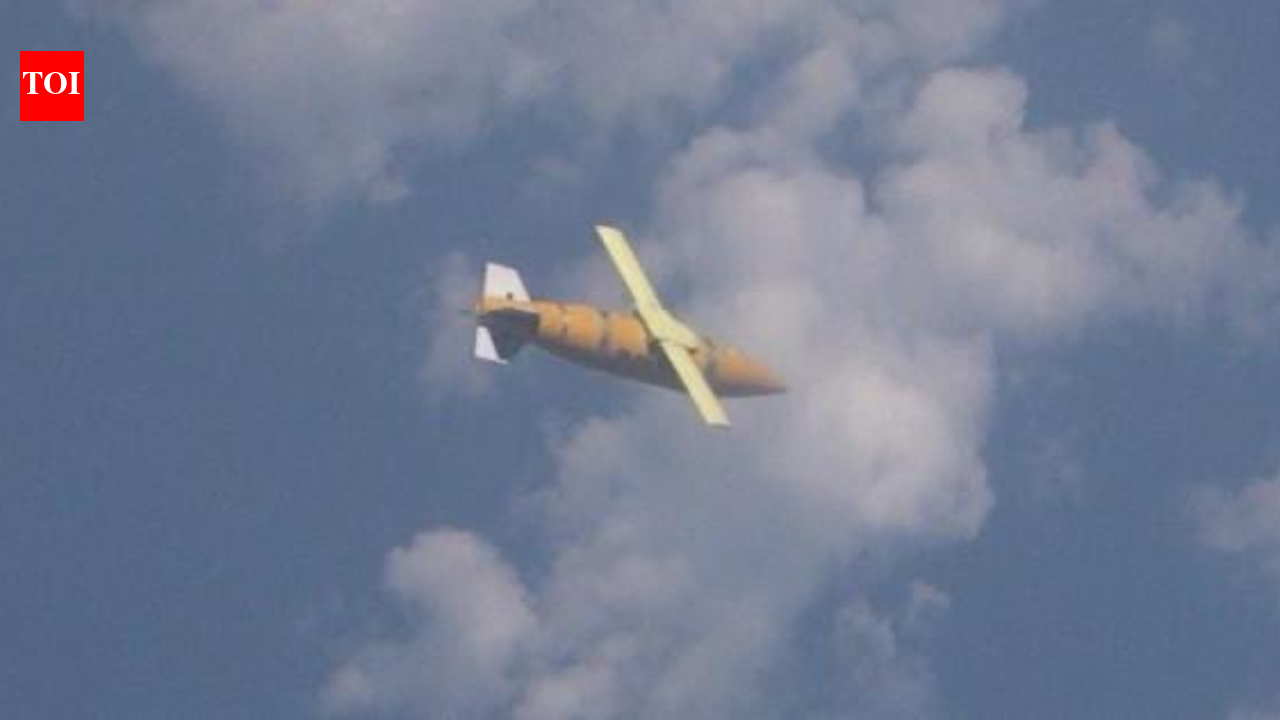
The conflict in Ukraine has demonstrated several innovations in modern warfare. Among the most significant innovations is the use of different types of autonomous systems performing various roles both in the air and on the ground. Another key development has been the extensive use of glide bombs, particularly by Russia. These weapons have provided the Russian Air Force the ability to strike targets from stand-off ranges. More importantly, they have enabled Russian fighter pilots to release their weapons from well within Russian-controlled territory. This significantly increases the safety margin for Russian aircraft by keeping them relatively insulated from the threat posed by Ukraine’s formidable air defences.Glide bombs differ from traditional unguided munitions because they use aerodynamic surfaces, such as deployable wings, to extend their range. Once released, the wings unfold, allowing the bomb to glide over extended distances towards its target. Guidance systems, typically combining satellite and inertial navigation, provide sufficient accuracy for tactical purposes while enabling launch aircraft to remain outside the reach of enemy air defences. This stand-off capability has proven critical, allowing Russia’s Su-34 and Su-35 fighters to deliver heavy payloads without exposing themselves to immediate risk.These weapons can broadly be divided into two categories: conversion kits that retrofit legacy bombs, and purpose-built glide munitions. Russia’s Unified Gliding and Correction Module (UMPK), priced at roughly $20,000, converts Soviet-era FAB-500 and FAB-1500 dumb bombs into precision glide weapons. The UMPK provides Moscow with a cost-effective way to leverage its vast stockpiles of legacy munitions. More recently, Russia introduced the Universal Interspecific Glide Munition (UMPB), a purpose-built bomb with improved aerodynamics and a range approaching 90 km. Many of these weapons carry large explosive warheads comparable to those of cruise missiles while achieving accuracy similar to far more expensive cruise missiles.Cost-effective stand-off weapons, when employed at scale, can impose severe dilemmas on even advanced air defence networks. Countering them requires a layered approach that combines concealment, electronic warfare, low-cost interceptors, and credible counter-air capabilities.India, too, is developing its own family of glide bombs in different weight classes to engage various targets. One such weapon is the Defence Research and Development Organisation’s (DRDO) Smart Anti-Airfield Weapon (SAAW). According to its manufacturer, Bharat Dynamics Limited, the SAAW has a range of up to 100 km. Plans are also underway to develop a variant powered by a small turbojet engine, extending its range to around 200 km. The DRDO is also developing the Gaurav series of glide bombs in 500 kg and 1,000 kg variants, each with a range of around 100 km. These weapons will provide the Indian Air Force with the ability to strike targets deep inside hostile territory while reducing the risk to aircraft and aircrew.
